HTAP (Hybrid Transactional/Analytical Processing) brings transaction processing and analytics together so applications can run analytical queries on current operational data without waiting for batch data pipelines. This architecture addresses the delay caused by traditional separation of OLTP and OLAP systems, where data had to be copied into a data warehouse before analysis. HTAP designs vary: converged systems use a single database engine for both workloads, while composed systems use separate engines connected through shared storage or replication. The central challenge is providing analytical access to fresh operational data without compromising transactional performance and reliability. For workloads needing independent scaling, Lake Transactional/Analytical Processing (LTAP) offers a unified storage layer under one governance model, reducing the need for change data capture and replication pipelines.
Context
Traditional architectures separate OLTP and OLAP systems, requiring data to be moved via batch ETL pipelines before analysis, introducing latency that reduces the value of real-time decisions.
Approach / What changed
HTAP systems use either a converged engine that runs both workloads in a single database or composed engines connected through shared storage or replication, with mechanisms like row and column stores, intelligent query optimization, and workload-specific isolation to synchronize data representations.
Takeaways
1
HTAP reduces the need for batch ETL pipelines by allowing analytical queries to run on operational data while it is still current.
2
Converged HTAP uses a single database engine for both workloads, while composed HTAP uses separate engines connected through shared storage or replication.
3
LTAP provides a unified storage layer under one governance model, allowing transactional and analytical compute to scale independently on the same data foundation.
FAQ
What is HTAP?
HTAP stands for Hybrid Transactional/Analytical Processing, a database architecture that brings OLTP and OLAP together to allow applications to analyze operational data while it is still current, reducing reliance on batch ETL pipelines.
What is the difference between OLTP and OLAP?
OLTP processes high volumes of small transactions using row-oriented storage with low latency, while OLAP runs complex queries over large datasets using columnar storage, accepting longer latency for efficient scans and aggregations.
What is LTAP?
Lake Transactional/Analytical Processing serves both transactional and analytical workloads from a unified storage layer in the lake under one governance model, removing the need for CDC and replication pipelines while allowing independent scaling.
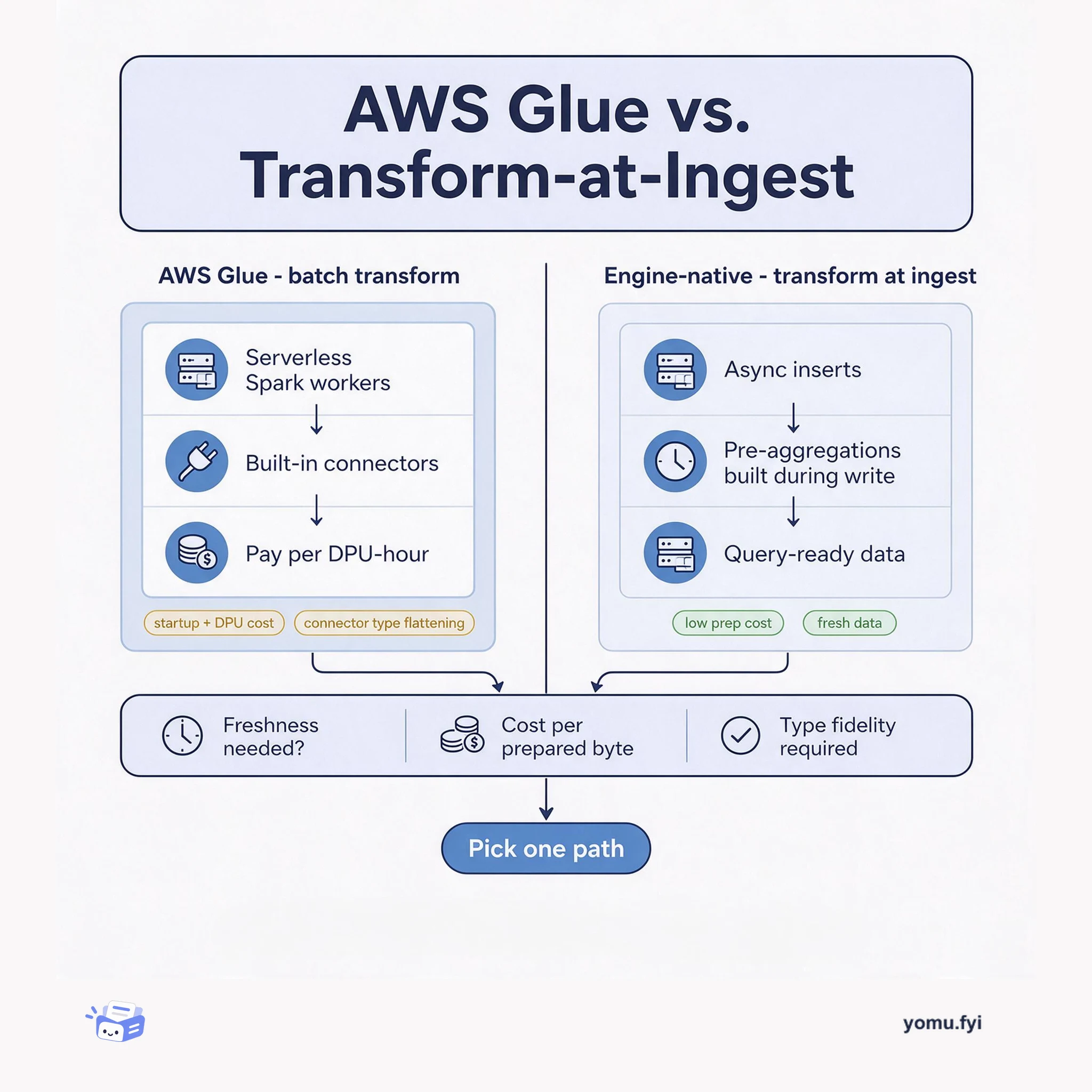
AWS Glue runs serverless Spark jobs that transform data in batches; engine-native pipelines transform during ingestion. This comparison shows how to pick between them by freshness, cost, and data fidelity.
Keep reading
Related reading
The Good Stuff
Paid picks we use ourselves. Links carry a referral code — a subscription through one earns us a commission at no extra cost to you.