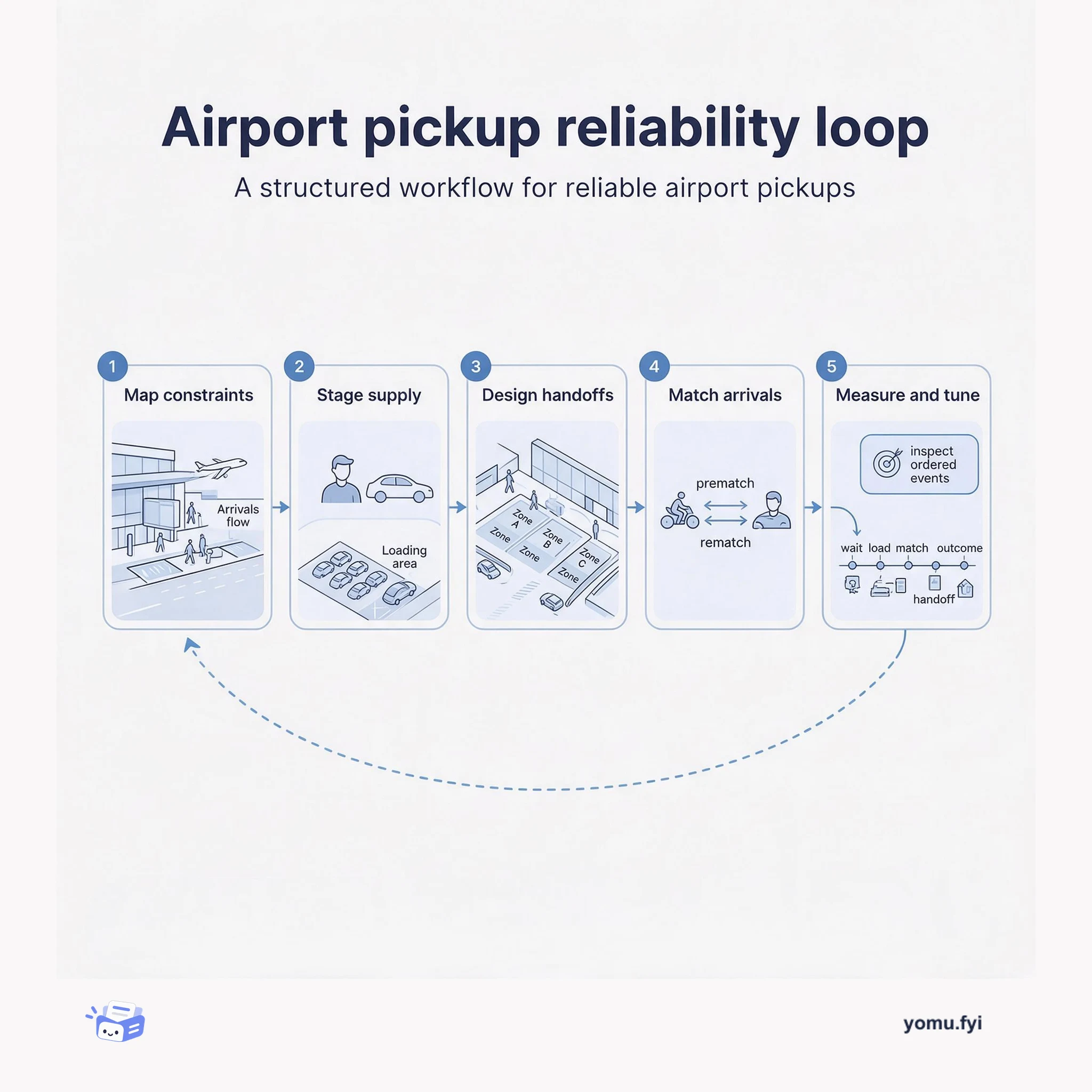
How to Turn Airport Pickup Into a Reliability Loop
A practical checklist for designing reliable airport pickups: map curb constraints, stage drivers, simplify matching, and measure each handoff so improvements target the real bottleneck.
 NVIDIATanya LenzTutorial
Preparing a Blender scene for robotics simulation requires more than exporting attractive assets: the world needs semantic labels, simulation-aware materials, sensors, collision geometry, physics properties, and validation against a target profile. The described workflow uses Codex or Claude as an orchestration agent, NemoClaw to coordinate specialized Hermes subagents, and NVIDIA Omniverse Libraries to inspect, modify, render, and validate the scene. Blender MCP supplies a structured inventory, while OpenUSD becomes the shared scene contract; ovphysx handles physics authoring and checks, and ovrtx produces visual preflight views. Safe mechanical repairs can be automated, but ambiguous choices such as semantic labels or physical behavior are escalated to a human, with follow-up checks run after approved changes. The intended handoff is a simulation-ready USD world for NVIDIA Isaac Sim or NVIDIA Isaac Lab.
Robotics simulation workflows can stall before policy training because a visually complete Blender scene may lack semantic labels, collision meshes, meaningful materials, configured sensors, physics properties, or clean USD export. Preparing and validating those details is repetitive and can fall outside a robotics simulation engineer’s scope.
Set an orchestration objective with the Blender input, USD output, Isaac Sim or Isaac Lab destination, and visual and SimReady validation criteria. Blender MCP inventories the scene, specialized NemoClaw subagents use Omniverse Libraries to author OpenUSD metadata and physics, configure sensors, render preflight views, and validate the result. Safe repairs are automated, while ambiguous decisions go to a human before relevant checks are rerun.
Blender MCP gives inspection agents a controlled interface for inventorying objects, collections, transforms, materials, cameras, lights, and scene metadata instead of relying on screenshots or manual exports.
The workflow separates coordination from specialized work: Codex or Claude orchestrates, NemoClaw coordinates Hermes subagents, and Omniverse Libraries perform OpenUSD, physics, rendering, and validation operations.
Automatic repair is limited to safe, mechanical issues. Uncertain semantic labels and physical behavior are escalated to a human with context and a proposed next step.
OpenUSD serves as the shared scene structure and contract for the simulation-ready world. The intended output is a USD-based world that can be handed to NVIDIA Isaac Sim or NVIDIA Isaac Lab.
OpenUSD operations establish shared scene structure, ovphysx authors and checks physics properties, and ovrtx renders visual preflight views. SimReady validation evaluates the resulting assets against a target simulation profile.
Safe, mechanical issues can be fixed automatically, but decisions depending on developer intent are escalated. Examples include an uncertain semantic label or physical behavior; approved changes are followed by relevant checks.
Summaries are generated from the original by a language model. Check the original before relying on it.
See the idea
A practical checklist for designing reliable airport pickups: map curb constraints, stage drivers, simplify matching, and measure each handoff so improvements target the real bottleneck.
Keep reading
The Good Stuff
Paid picks we use ourselves. Links carry a referral code — a subscription through one earns us a commission at no extra cost to you.
One useful email. Unsubscribe anytime.
