OLTP handles high-volume, low-latency transactions on current operational data for online banking, e-commerce, and inventory, while OLAP handles complex analytical queries on large historical datasets for financial analysis and business intelligence. OLTP databases ensure data integrity through ACID compliance and use normalized row-oriented tables; OLAP systems use denormalized dimensional models and columnar storage for efficient scans and aggregations. Data pipelines such as ETL or CDC tools like Debezium connect OLTP and OLAP systems, but latency and pipeline complexity rise with analytical freshness requirements. For mixed workloads, HTAP or lakehouse architectures can reduce synchronization overhead and analytical lag. The choice between OLTP and OLAP depends on the workload’s read-write pattern, latency needs, and data volume, with TPC-C and TPC-H as reference benchmarks.
Context
The decision between OLTP and OLAP affects architecture choices as operational and analytical workloads move closer together, with AI agents needing both transactional session state and analytical historical context.
Takeaways
1
OLTP databases use normalized, row-oriented storage with ACID compliance for write-heavy workloads, while OLAP systems use denormalized, columnar storage for read-heavy analytical queries.
2
Data pipelines such as ETL or CDC introduce latency and complexity that increase with analytical freshness requirements, motivating architectures like lakehouses to reduce overhead.
3
For mixed workloads, HTAP or lakehouse architectures can support both transactional and analytical processing without forcing a two-stack model.
FAQ
What is the difference between OLTP and OLAP in databases?
OLTP databases favor short transactions, frequent updates, and focused lookups against current operational records. OLAP databases prioritize scans and aggregations across larger historical datasets.
Is a data warehouse OLTP or OLAP?
A data warehouse is an OLAP system. It consolidates data from multiple OLTP sources into a centralized data store optimized for analytical queries, historical retention, and reporting.
Can OLTP and OLAP work together?
Yes. A common architecture runs OLTP and OLAP in separate systems and transfers transactional changes through ETL or CDC. HTAP or lakehouse approaches can also support both workloads within the same system.
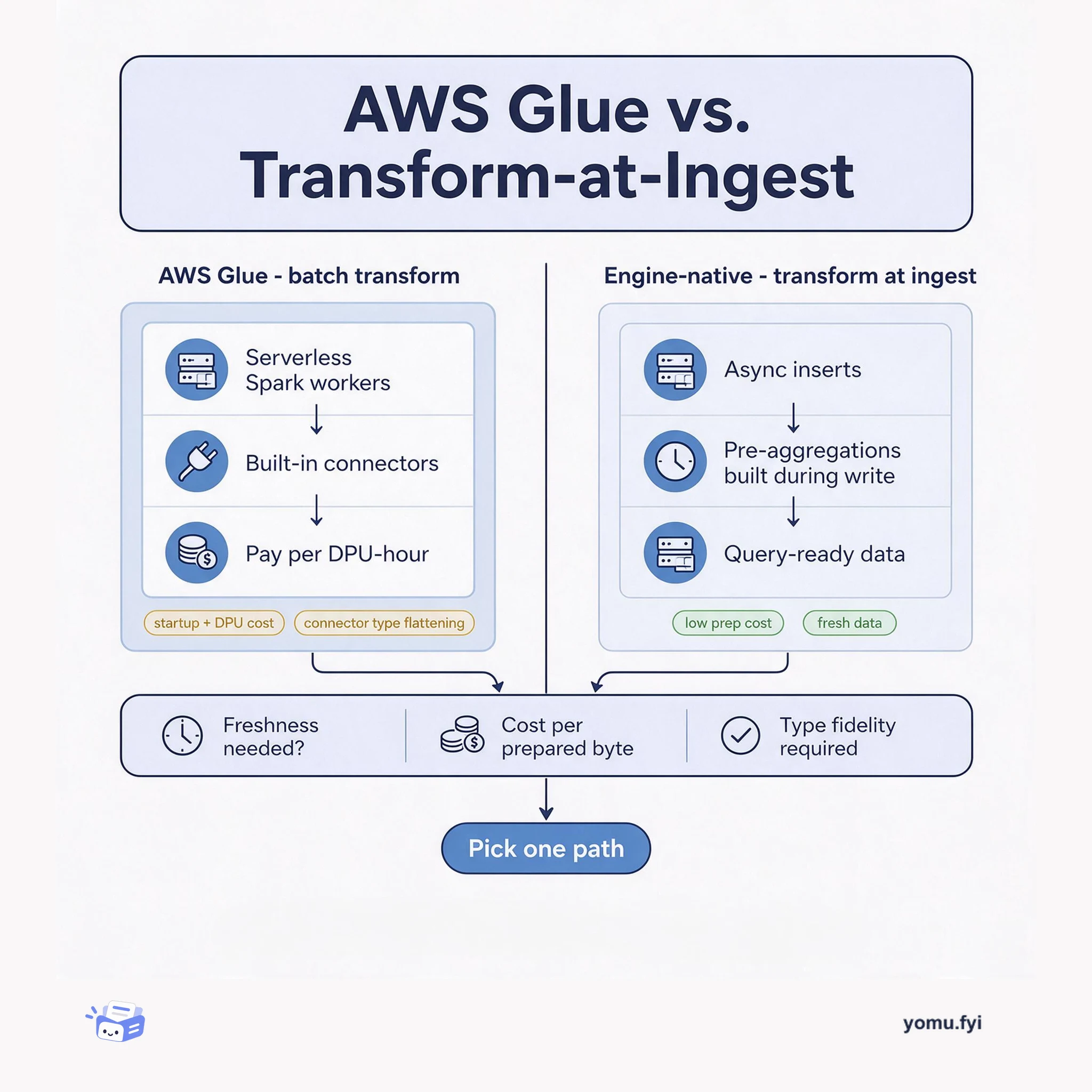
AWS Glue runs serverless Spark jobs that transform data in batches; engine-native pipelines transform during ingestion. This comparison shows how to pick between them by freshness, cost, and data fidelity.
Keep reading
Related reading
The Good Stuff
Paid picks we use ourselves. Links carry a referral code — a subscription through one earns us a commission at no extra cost to you.