Databricks
Databricks says it was recognized as a Customers’ Choice in Gartner Peer Insights’ Voice of the Customer for Analytics and Business Intelligence Platforms, based on verified reviews from customers using platforms in production. The post reports a 4.8 out of 5 overall rating and 94% willingness to recommend, while noting that the designation reflects customer adoption and overall experience meeting or exceeding market averages. It presents Databricks AI/BI, AI/BI Dashboards, Genie Spaces, and Genie as a unified architecture combining governed live data, AI, business intelligence, and Unity Catalog controls without moving or duplicating datasets. The described use cases include conversational exploration, dashboard and visualization development, consolidating fragmented reporting, and expanding governed analytics access, with the company positioning these capabilities as a foundation for agentic analytics.
Databricks
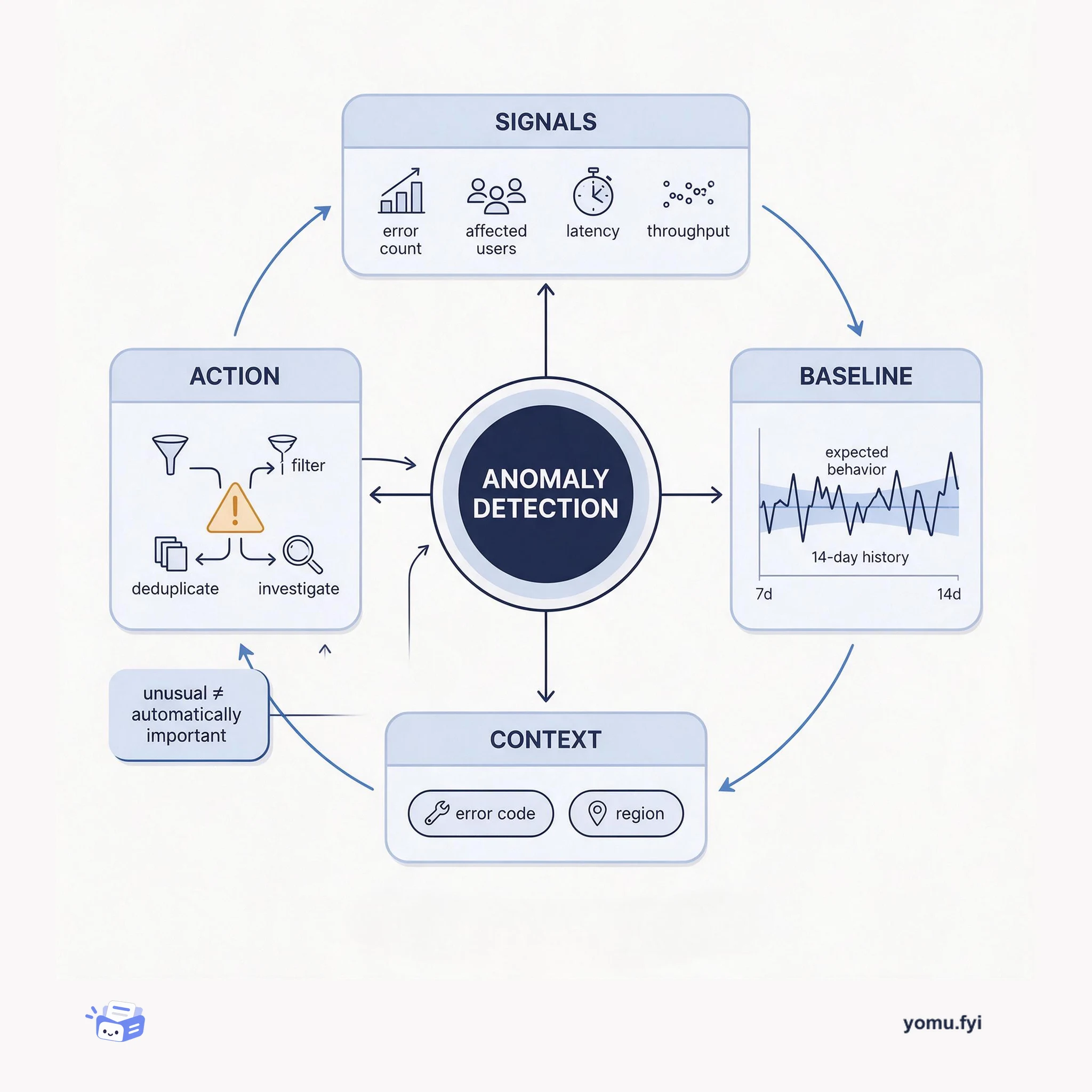
Agentic analytics is an approach in which autonomous AI agents continuously monitor data, detect patterns and anomalies, generate contextual insights, and take actions with minimal human intervention. Unlike traditional business intelligence, which relies on people to query dashboards and interpret reports, these systems operate as goal-directed decision loops that can recommend or trigger alerts, forecasts, workflows, and system changes within defined boundaries. Their architecture combines data access, agent orchestration, LLM-based reasoning, a semantic layer, action integrations, and feedback signals. The source identifies faster insight, lower reporting overhead, reduced analytics backlogs, and potentially better forecasting as benefits, while stressing governance, auditability, security, monitoring, and human oversight to control errors and unintended outcomes.
Databricks
Agentic analytics increases the need for trustworthy semantics and governance because AI systems must interpret business definitions, trace outputs, and support follow-up questions beyond static dashboards. Nick Eayrs argues that fragmented metrics across BI tools, proprietary semantic layers, and duplicated pipelines erode trust, slow decisions, and increase engineering cost. The proposed foundation is an open, interoperable semantic layer where certified metrics such as revenue, churn, and customer lifetime value are explicitly defined, reusable, and accessible through SQL to BI, AI interfaces, notebooks, and agents. Organizations should establish governed data foundations and a catalog first, certify metrics next, then add AI and evaluate its outputs. Examples include NTT Docomo reducing manual log-analysis time from 66 hours to 6 hours and Net One Systems cutting support response time by 75 percent.