Genie Ontology is presented as a way to give enterprise AI agents shared business context beyond a semantic model, including definitions, relationships, business rules, authoritative sources, and permissions. It combines Unity Catalog Semantics—Metric Views, Pages, and Domains—with context inferred from governed tables, queries, dashboards, notebooks, and other supported assets. The guidance recommends six progressive layers, beginning with clean gold data and resolved golden records, then metadata, semantic modeling, enterprise context, governance, and evaluation. Critical implementation details include declaring informational primary and foreign keys, defining canonical measures in Metric Views, adding synonyms and example queries, and using permissions plus human-reviewed automation. Rather than waiting for complete coverage, it advises starting with one high-value domain and metric, then using feedback, telemetry, benchmarks, and drift reviews to strengthen trust over time.
Context
Enterprise AI agents need more than connections to enterprise data or a deliberately defined semantic model. They also need reliable business definitions, relationships, rules, authoritative sources, permissions, and broader context from the assets teams already use. The guidance addresses how to build that shared understanding progressively without requiring all six layers before Genie begins delivering value.
Approach / What changed
Build the authoritative core through a sound physical data foundation, resolved entities, enriched Unity Catalog metadata, declared relationships, Metric Views, Domains, and Pages. Extend that core with inferred context from governed assets, permissions, human-reviewed automation, feedback, evaluation, telemetry, and drift management. Start with one high-value domain and metric, then expand as trust and evidence accumulate.
Takeaways
1
Metric Views define governed measures and dimensions as code, resolving aggregations at query time so consumers use consistent KPI definitions.
2
Primary and foreign key declarations tell agents how tables relate, but they are informational rather than enforced, so governance must keep them accurate.
3
The recommended rollout starts with one high-friction domain and metric, using certifications, authoritative assets, access controls, evaluation, and feedback to guide expansion.
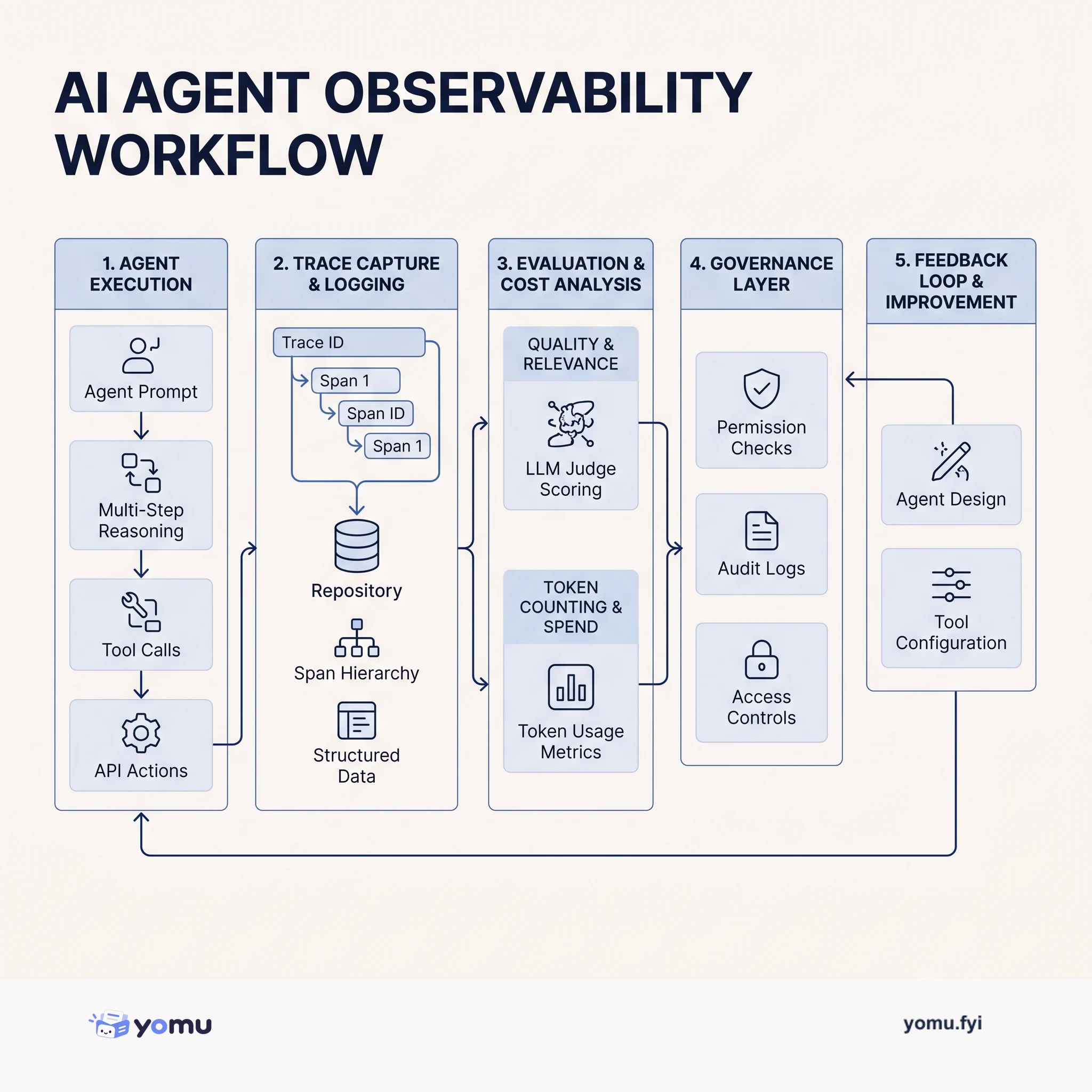
AgentOps is the operational discipline of building, deploying, and monitoring production AI agents. Learn how tracing, evaluation, and governance turn raw agent behavior into reliable, cost-controlled systems.
Keep reading
Related reading
The Good Stuff
Paid picks we use ourselves. Links carry a referral code — a subscription through one earns us a commission at no extra cost to you.