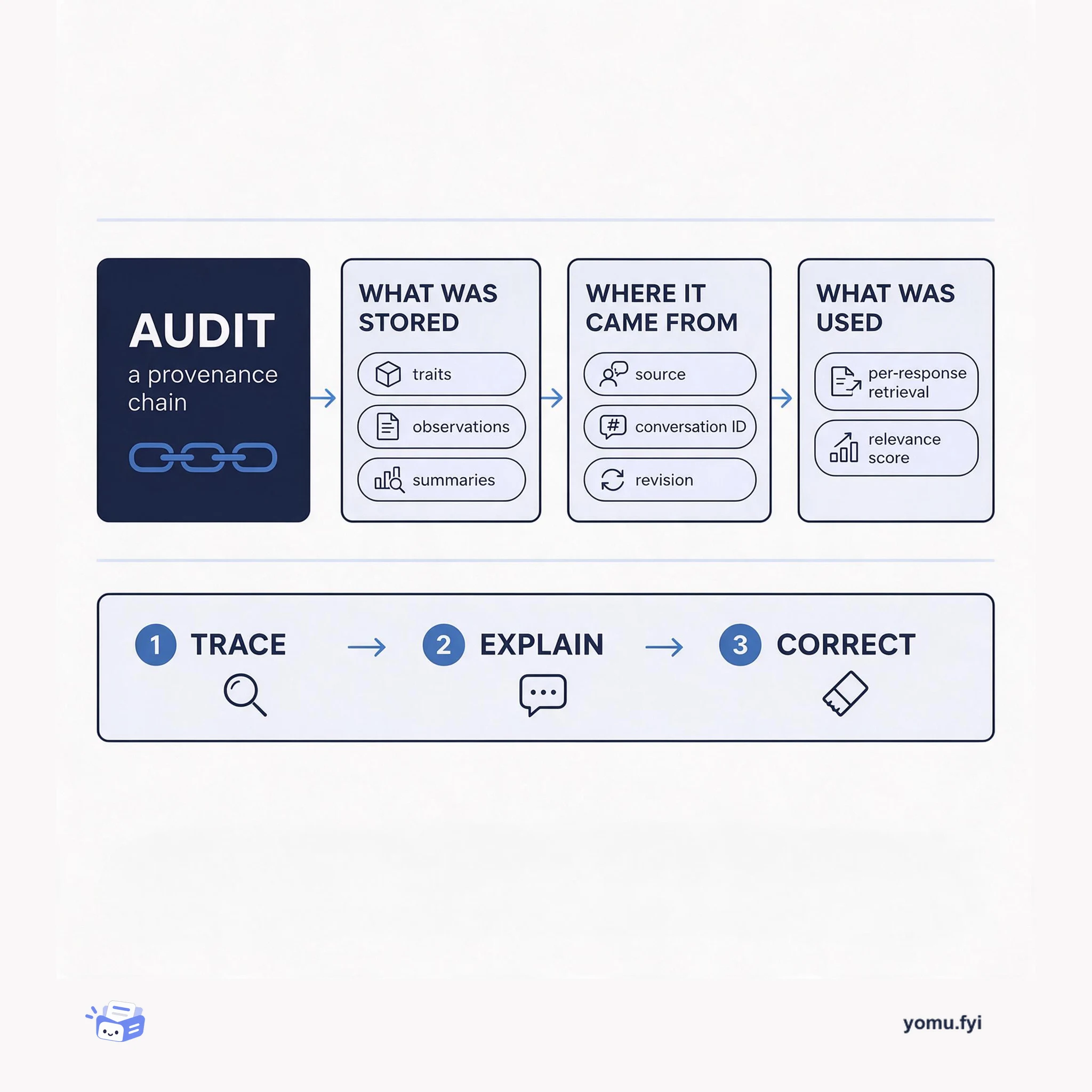
Audit Is a Provenance Chain, Not a Log File
An audit is a provenance chain: what was stored, where each fact came from, and what was used for each decision. This explainer maps the three links that keep agent behavior traceable and fixable.
 JetbrainsMarija RakonjacExplainer
Omi Health Tech, a Vietnam-based company, builds the Omi Health Platform (OHP) and Omi LGSP, which standardize clinical data from hospitals and connect it to the Ministry of Health and the National Data Exchange Platform. The company transitioned from a service-based model to a product-based model, a shift that required aggressive refactoring and ownership of architecture. Vietnam’s new data protection law and AI law necessitated updates to data-access layers, audit trails, and consent flows across multiple repositories on a tight timeline. The Java core of the platform, which maps and transforms clinical data, is schema-heavy and refactor-intensive, making IntelliJ IDEA’s refactoring depth such as multi-file refactors and Find Usages critical. For example, a regulatory update requiring explicit consent capture for patient data reads was implemented in days rather than weeks using IntelliJ IDEA’s Change Signature and Find Usages.
Interview with Phan Manh Hung, CEO of Omi Health Tech, JetBrains Startup Program member, discussing their health data infrastructure platforms, shift from services to products, and use of IntelliJ IDEA.
Transitioned from a service-based to a product-based model, building the Omi Health Platform (HL7 FHIR) and Omi LGSP to standardize and connect clinical data in Vietnam. Used IntelliJ IDEA Ultimate for refactoring the Java core, enabling efficient multi-file refactors and faster compliance updates.
Omi Health Tech’s shift from services to products required aggressive refactoring and ownership of architecture, not just code changes.
IntelliJ IDEA’s refactoring depth allowed implementation of a regulatory consent-capture update in days instead of weeks, with no rollback.
The Java core is schema-heavy; IntelliJ IDEA made multi-file refactors a normal sprint activity, speeding reviews and onboarding.
The shift required a mindset change from shipping customer specs to aggressive refactoring and architecture ownership. Tools like IntelliJ IDEA made refactoring cheap and safe, enabling the team to embrace product work. The company established a separate product team about three years ago.
Vietnam's data protection law and AI law came into effect within months of each other, requiring updates to data-access layers, audit trails, and consent flows. Using IntelliJ IDEA's Change Signature and Find Usages, the team implemented a consent capture update in days instead of weeks.
The Java core maps and transforms clinical data, making it schema-heavy and refactor-intensive. IntelliJ IDEA provides deep refactoring capabilities like multi-file rename and Find Usages, which are critical for correct changes in a regulated environment. Other editors do not offer the same depth.
Summaries are generated from the original by a language model. Check the original before relying on it.
See the idea
An audit is a provenance chain: what was stored, where each fact came from, and what was used for each decision. This explainer maps the three links that keep agent behavior traceable and fixable.
Keep reading
The Good Stuff
Paid picks we use ourselves. Links carry a referral code — a subscription through one earns us a commission at no extra cost to you.
One useful email. Unsubscribe anytime.
