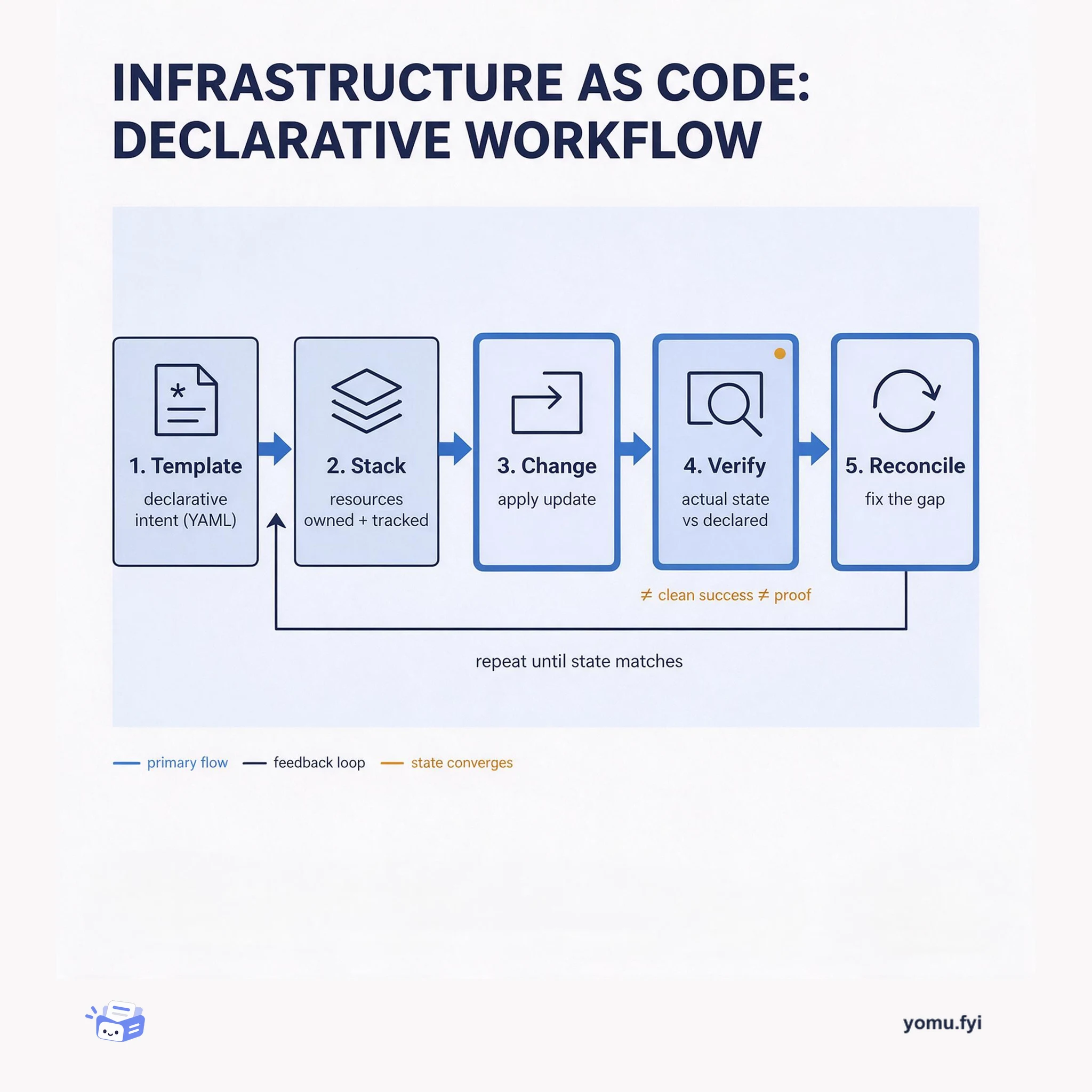
How AWS CloudFormation Turns a Template Into a Reconciled Stack
CloudFormation is a declarative reconciler: you describe the target state in a template, and it provisions, updates, and reports on the stack that results. Here is the loop.
Loading…
Topic
1 post about Configuration Management. Every summary links to the original.
See the idea
CloudFormation is a declarative reconciler: you describe the target state in a template, and it provisions, updates, and reports on the stack that results. Here is the loop.
The Good Stuff
Paid picks we use ourselves. Links carry a referral code — a subscription through one earns us a commission at no extra cost to you.
Newest first
Uber’s corporate network spans offices across six continents and around 5,000 devices, creating a configuration-management problem involving continuous updates, regional variation, and hardware from multiple vendors. The post explains why Uber uses Ansible for on-premises network configuration while Terraform handles cloud provisioning and Puppet manages configuration on running machines. Its Daily Nightly Enforcement workflow backs up each region’s running configuration to a private GitHub repository, gathers device facts, renders vendor-specific golden configurations through inventory variables and Jinja templates, and pushes them overnight, with failures triggering alerts. Inventory groups encode desired state across regions, functions, and operating systems, while custom roles, formatters, cleanup jobs, and occasional Ansible or Python modules address scale and vendor-specific gaps. The conclusion says this automation makes the diverse network manageable, stable, updated, and ready for daily use, although some hardware still requires other portals.
The best engineering reads, once a week.

