How AWS CloudFormation Turns a Template Into a Reconciled Stack
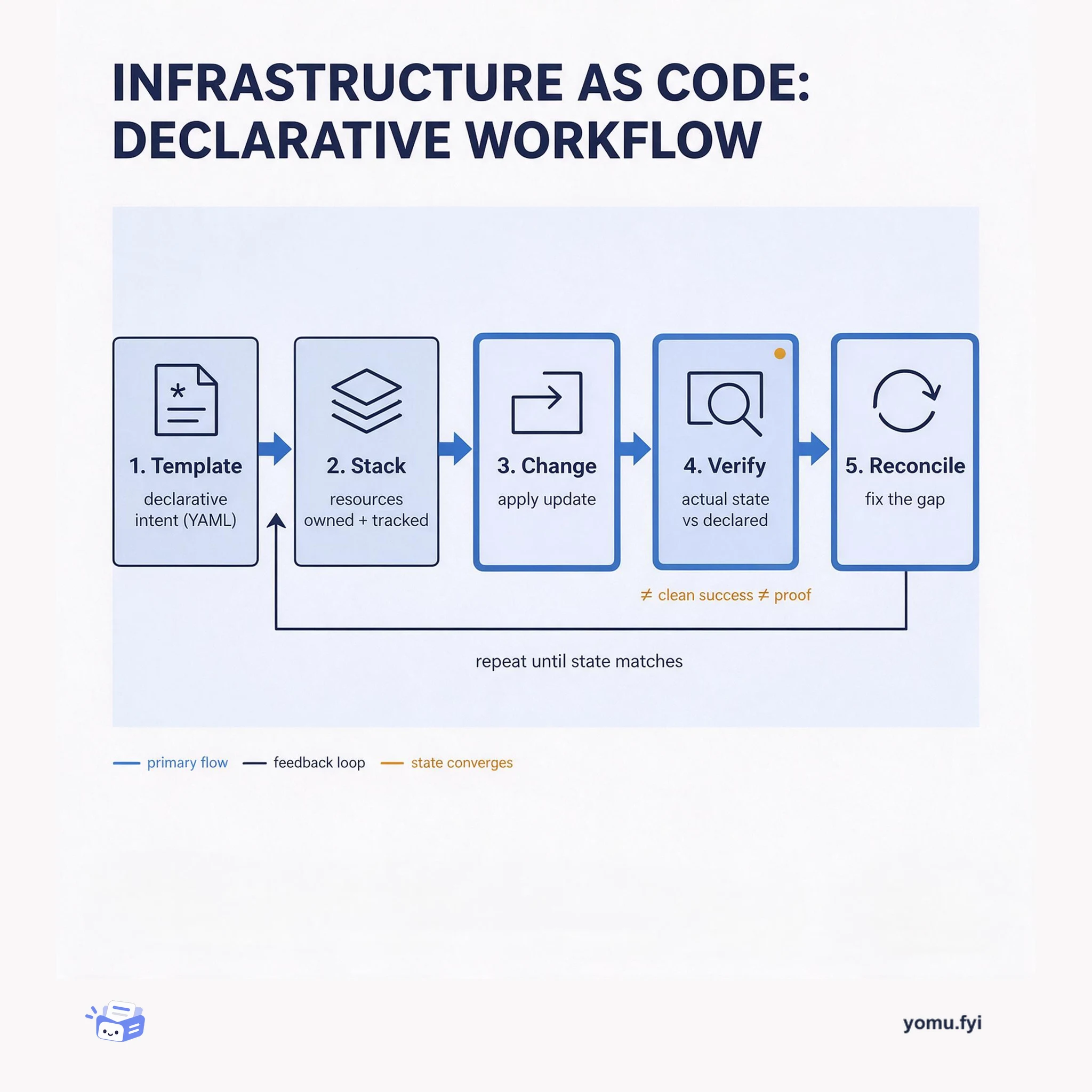
CloudFormation is a declarative reconciler: you describe the target state in a template, and it provisions, updates, and reports on the stack that results. Here is the loop.
 AWSStefan JanjicTutorial
Teams building multi-Region architectures on AWS need to know which services are available per Region, but want that data deployed inside their VPC under their governance. This post introduces Capability Insights for AWS, a self-hosted dashboard that auto-refreshes Regional availability data every 24 hours, and Workload Analysis, which scans CloudTrail and CloudFormation to filter services to only those your account uses. Capability Insights deploys a static website backed by API Gateway, Lambda, and EventBridge within your VPC, pulling data from the centralized AWS Capabilities by Region S3 bucket. Workload Analysis reduces the scope from over 200 services to typically 20-30, attributing each resource type to the specific CloudFormation stacks that deploy it and showing property configurations in use. The dashboard provides a targeted view of service availability, API operations, and CloudFormation resource types per Region, enabling focused gap analysis for Regional expansion planning and helping identify service-availability gaps.
Teams building multi-Region architectures need a way to check service availability per Region, but want that data as infrastructure they own inside their VPC, refreshing on their schedule.
Deploy Capability Insights for AWS and Workload Analysis as CloudFormation stacks in your AWS account. Capability Insights provides a self-hosted dashboard that auto-refreshes every 24 hours, pulling data from AWS’s centralized S3 bucket. Workload Analysis scans CloudTrail logs and CloudFormation stacks to narrow the service list to those your account actually uses.
Capability Insights for AWS deploys a searchable Regional availability dashboard that auto-refreshes every 24 hours, covering services, features, API operations, and CloudFormation resource types per Region.
Workload Analysis reduces the service list from over 200 to typically 20-30 by scanning your account’s CloudTrail logs and CloudFormation stacks, attributing resource types to specific stacks.
The dashboard runs entirely within your VPC using Lambda, API Gateway, and EventBridge, with data stored in your own S3 bucket and refreshed on a schedule you control.
You need an AWS account with permissions to deploy CloudFormation stacks, a VPC with DNS resolution enabled, one public and one private subnet with S3 gateway endpoint, Node.js, and an S3 bucket for deployment assets.
Workload Analysis scans your AWS CloudTrail logs and CloudFormation stacks to identify which services and resource types your account actually uses, then narrows the dashboard to those 20-30 services.
The dashboard shows service and feature availability status, expected launch dates, API action availability per Region, and CloudFormation resource types per Region.
Summaries are generated from the original by a language model. Check the original before relying on it.
See the idea
CloudFormation is a declarative reconciler: you describe the target state in a template, and it provisions, updates, and reports on the stack that results. Here is the loop.
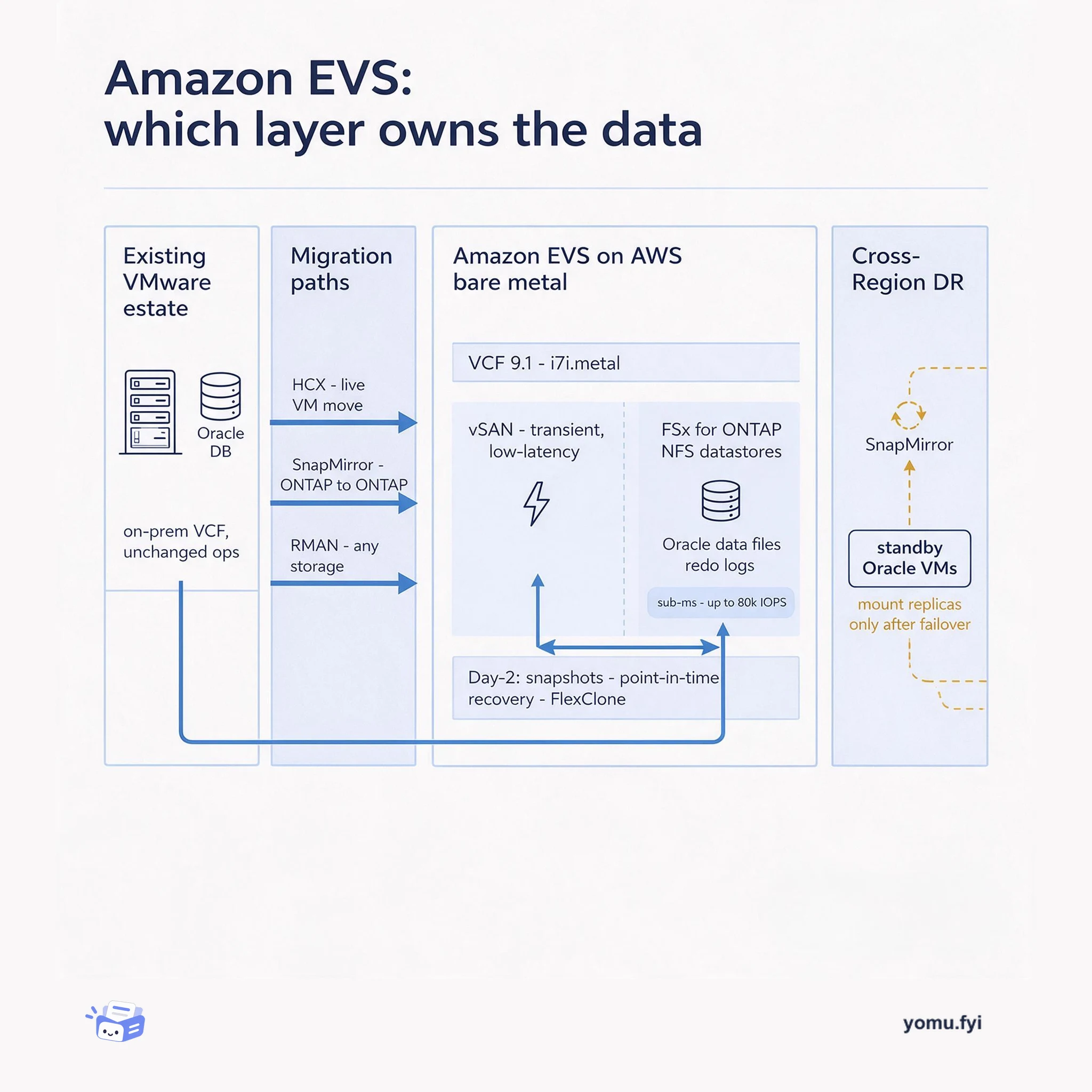
Amazon EVS runs VMware Cloud Foundation on AWS bare metal, so the design question becomes where each workload's data lives. This layered diagram shows how vSAN, FSx for ONTAP, and cross-Region DR divide the work.
Keep reading
The Good Stuff
Paid picks we use ourselves. Links carry a referral code — a subscription through one earns us a commission at no extra cost to you.
One useful email. Unsubscribe anytime.