Anka CI Architecture: From Layered Images to Disposable macOS Builds
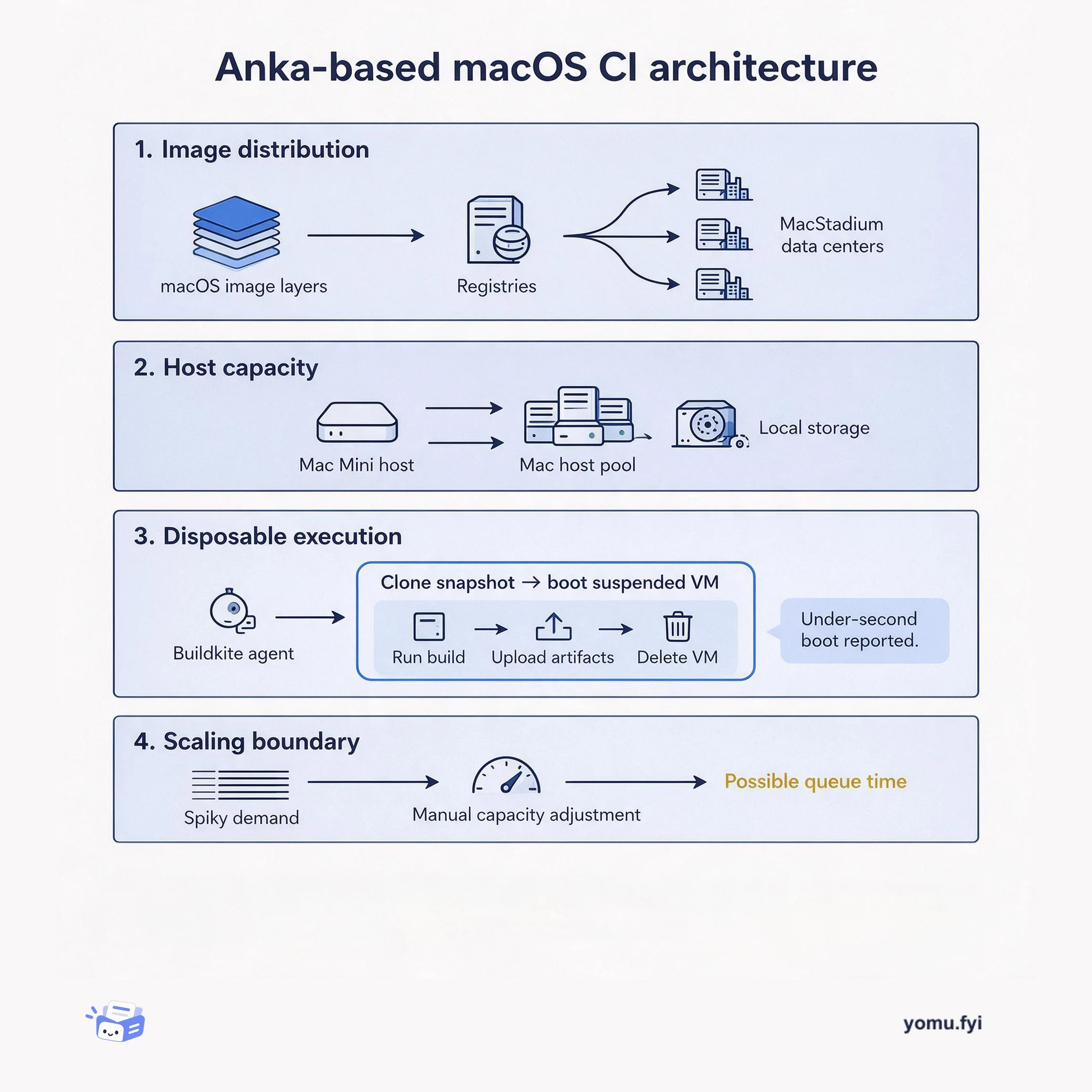
Anka is a Docker-like macOS virtualization layer for disposable CI environments. This architecture shows how images, Mac hosts, snapshots, build agents, and artifacts connect.
 AWSChhavi KaushikProblem & solution
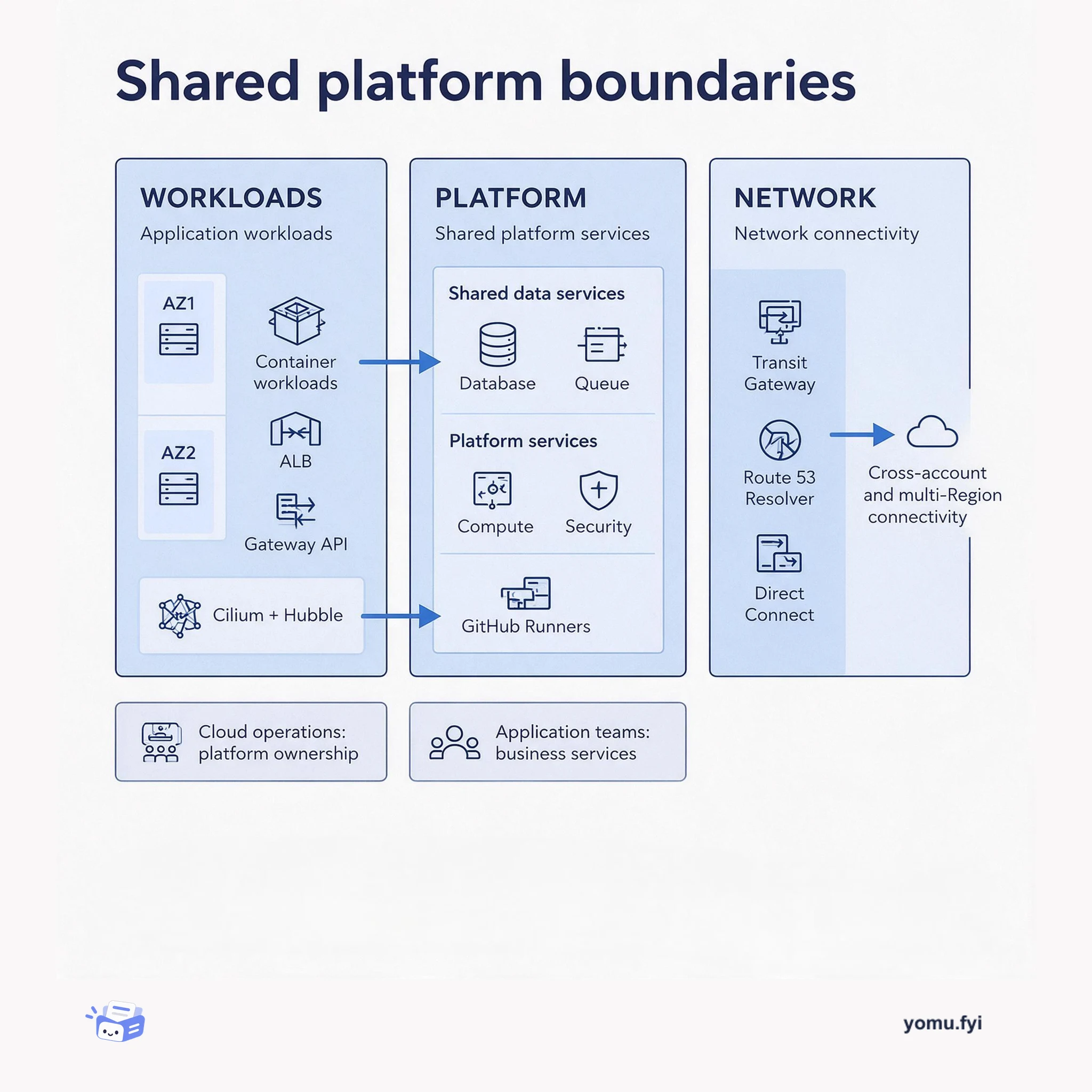
Equinix replaced its self-managed Kubernetes environment on Amazon EKS to address operational sprawl caused by independently managed clusters and inconsistent infrastructure practices. The new shared services architecture assigns platform ownership to a cloud operations team while application teams focus on business services. It uses separate Workloads, Platform, and Network accounts: workloads run across two Availability Zones with ALB, Gateway API, Cilium, and Hubble, while shared data services, GitHub Runners, and platform services reside in the Platform account. The Network account provides cross-account and multi-Region connectivity through AWS Transit Gateway, Route 53 Resolver, and Direct Connect. Equinix reports 40% lower operational overhead, 4x higher deployment frequency, and adoption of a unified architecture across multiple business organizations.
Equinix’s earlier model gave individual application teams responsibility for provisioning and operating separate self-managed Kubernetes clusters. The resulting duplication, inconsistent governance, independently implemented shared services, and recurring cluster lifecycle work made the environment difficult to manage, secure, and scale.
Equinix migrated to a multi-account Amazon EKS design with separate Workloads, Platform, and Network accounts. The cloud operations team centrally manages shared data services, GitHub Runners, networking, and governance, while application workloads use dedicated namespaces, Cilium network policies, Hubble observability, ALB and Gateway API ingress, and controlled connectivity through AWS Transit Gateway, Route 53 Resolver, and Direct Connect.
The Platform account centralizes Amazon RDS, Amazon MSK, Amazon OpenSearch Service, Amazon MQ, Amazon S3, GitHub Runners, and other shared services for application teams.
Cilium provides pod-level network isolation and Hubble supplies unified network-flow visibility across the Workloads and Platform environments.
The migration is reported to have reduced operational overhead by 40%, increased deployment frequency fourfold, and enabled onboarding in days rather than weeks.
Application workloads run in the Workloads account, while shared infrastructure services run in the separately owned Platform account. Cross-account communication is controlled through AWS Transit Gateway attachments, and Cilium network policies provide pod-level isolation.
A dedicated Network account acts as the connectivity hub. AWS Transit Gateway spans us-west-1 and us-east-2 with peering between regions, while Route 53 Resolver supports DNS resolution and AWS Direct Connect provides hybrid connectivity to on-premises Equinix routers.
Equinix reports a 40% reduction in operational overhead and a 4x increase in deployment frequency. It also reports a unified architecture across multiple business organizations and onboarding in days instead of weeks.
Summaries are generated from the original by a language model. Check the original before relying on it.
See the idea
Anka is a Docker-like macOS virtualization layer for disposable CI environments. This architecture shows how images, Mac hosts, snapshots, build agents, and artifacts connect.
See how a shared Amazon EKS architecture separates workloads, platform services, and network connectivity so teams can scale delivery without multiplying operational ownership.
Keep reading
The Good Stuff
Paid picks we use ourselves. Links carry a referral code — a subscription through one earns us a commission at no extra cost to you.
One useful email. Unsubscribe anytime.