Audit Is a Provenance Chain, Not a Log File
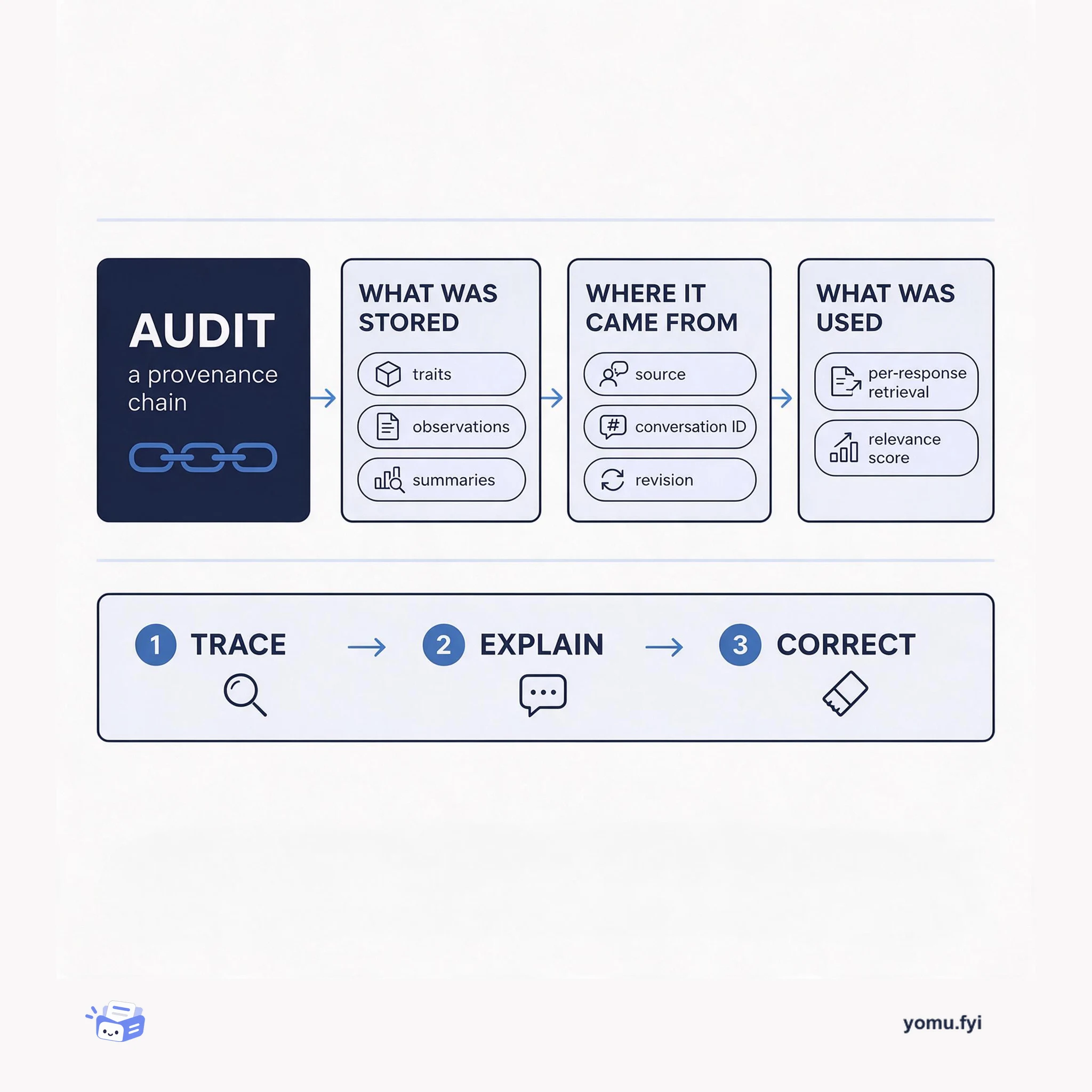
An audit is a provenance chain: what was stored, where each fact came from, and what was used for each decision. This explainer maps the three links that keep agent behavior traceable and fixable.
 DropboxDaniel Reiter Horn,Rich ChanExplainer
Two Dropbox engineers, Daniel Reiter Horn and Rich Chan, independently built prototypes giving coding agents controlled access to Dropbox files while retaining oversight. Daniel created a sandbox with Ubuntu and specialized software, using rclone to let the agent work with online files as if stored locally. Rich built a graphical interface inside the Dropbox desktop app with permission controls and connections to folder pickers, live previews, and revision history. They combined these approaches into a system where an agent runs in an isolated workspace on Dropbox servers, bound to existing permissions, version history, and rollback capabilities. The resulting experience lets customers ask questions about files and request tasks like organizing folders, with changes traceable to conversations and reversible through undo.
Two Dropbox engineers independently built prototypes to give coding agents controlled access to Dropbox files, combining a sandbox for running software with a graphical interface for permission controls and revision history.
The system uses an isolated Ubuntu workspace on Dropbox servers where the agent runs, connected to Dropbox files through a trusted host layer that enforces permissions. A chat interface built on the Codex App Server API exchanges structured JSONL messages for activity updates. An adapter translates between agent harness protocols and the common interface. Changes are recorded per conversation, enabling precise undo via version history.
The agent runs in an isolated sandbox on Dropbox servers, with permission controls enforced outside the sandbox by a trusted host layer.
Changes made by the agent are recorded per conversation, allowing precise undo that leaves unrelated files untouched.
The interface uses a common protocol (Codex App Server API with JSONL) so different agent harnesses can be swapped without rebuilding the interface.
The agent calls a folder-access tool, and the app displays an Allow or Deny card. If approved, the trusted host layer grants access to that location inside the sandbox. The agent does not grant itself access.
Dropbox records which conversation produced each version of a file. When undoing, it identifies changes belonging to that conversation and restores those files to their state before the change, saving a separate copy if the file was edited by someone else.
Yes, an adapter translates messages from other harnesses like Pi into the Codex protocol the interface understands. Permissions are enforced in the trusted host layer outside the sandbox, so new harnesses inherit the same controls.
Summaries are generated from the original by a language model. Check the original before relying on it.
See the idea
An audit is a provenance chain: what was stored, where each fact came from, and what was used for each decision. This explainer maps the three links that keep agent behavior traceable and fixable.
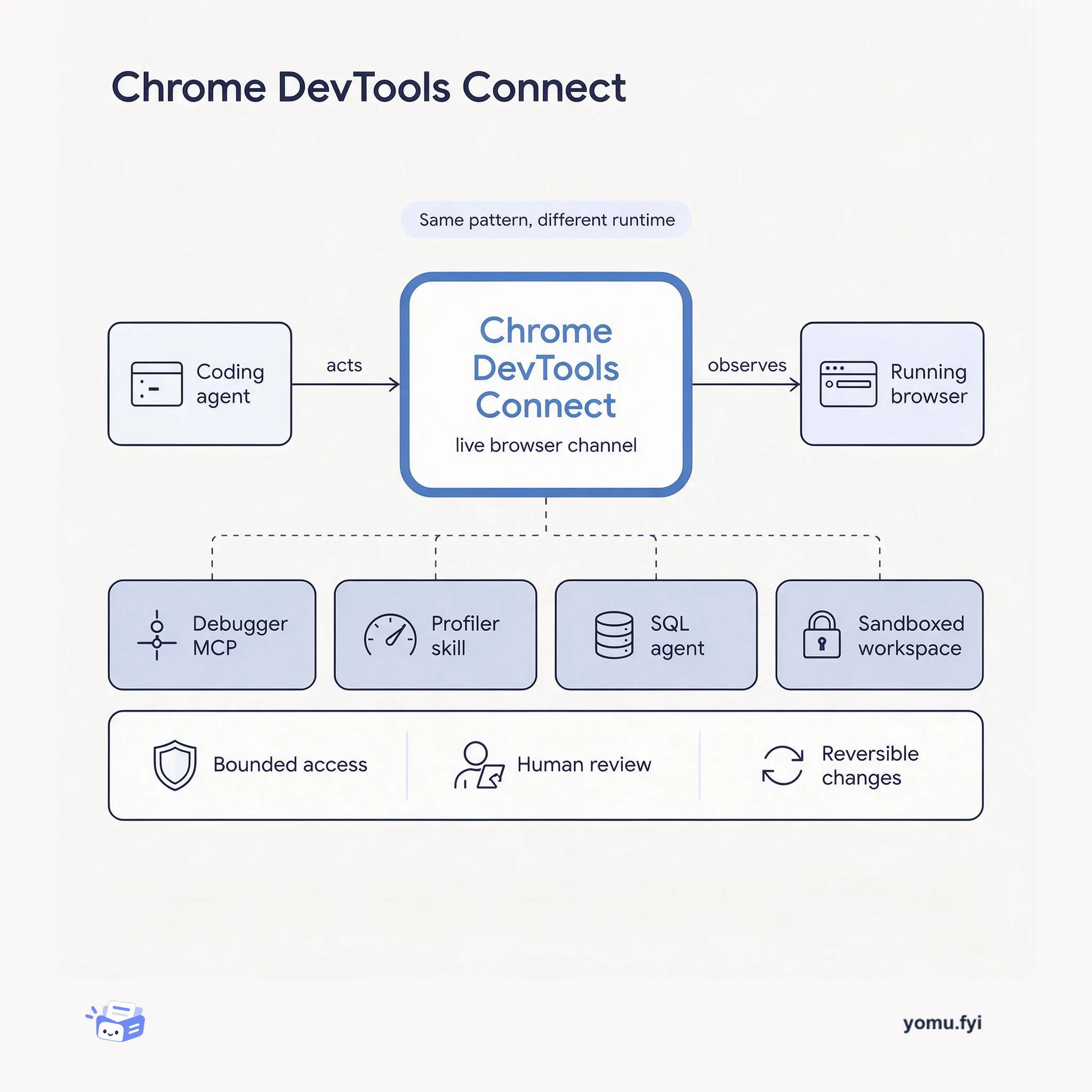
Chrome DevTools Connect gives coding agents a live channel into the browser's DevTools so they can run browser tests and drive fix cycles instead of reasoning from source alone.
Keep reading
The Good Stuff
Paid picks we use ourselves. Links carry a referral code — a subscription through one earns us a commission at no extra cost to you.
One useful email. Unsubscribe anytime.