Business concepts like active customer or completed trip are often defined differently across teams, scattered in Slack threads and spreadsheets, causing AI agents to guess confidently when answering questions. Databricks introduces Unity Catalog Pages as a governed home within Genie Ontology where data stewards with Genie Code define the authoritative meaning of those terms and entities. Pages complement existing semantics — metric views how to calculate, domains where to look, and certification what to trust — by capturing what each concept means. Genie Code can bootstrap Pages by extracting definitions from Confluence, Slack, Google Docs, or GitHub via MCP-connected tools, turning weeks of work into minutes. When Genie One uses a Page to ground an answer, the Page is cited as a clickable source so users can inspect the definition and verify the reasoning.
Context
Business concepts are often defined inconsistently across teams, leading AI agents to guess. Genie Ontology automatically learns context, but critical terms need explicit human curation. Unity Catalog Pages provide a governed home for these definitions.
Approach / What changed
Unity Catalog Pages allow data stewards to define authoritative meanings of business concepts in a governed manner. Pages include structured fields (owner, synonyms, description) and a rich body with links and references. Genie Code can bootstrap Pages by extracting definitions from sources like Confluence, Slack, and Google Docs via MCP.
Takeaways
1
Unity Catalog Pages capture the meaning of business concepts, while metric views define how to calculate them, domains scope where to look, and certification marks trustworthiness.
2
Genie Code can bulk-import Pages from source material such as Confluence pages, Slack messages, or Google Docs via MCP-connected tools.
3
When Genie One uses a Page to ground an answer, the Page is cited as a clickable source, making the reasoning verifiable.
FAQ
How do Unity Catalog Pages differ from metric views?
Metric views define how to calculate a KPI, while Pages define what a concept means. They are complementary: metric views tell the agent how to compute, Pages tell it what the concept is.
Can I create Pages automatically?
Yes, Genie Code can author Pages by extracting definitions from source material like Confluence pages, Slack, Google Docs, or GitHub via MCP, turning weeks of work into minutes.
How does Genie One use Pages?
When a question touches a concept defined in a Page, Genie One retrieves the Page and uses its definition to interpret the request, rather than relying solely on inference. The Page is cited as a clickable source.
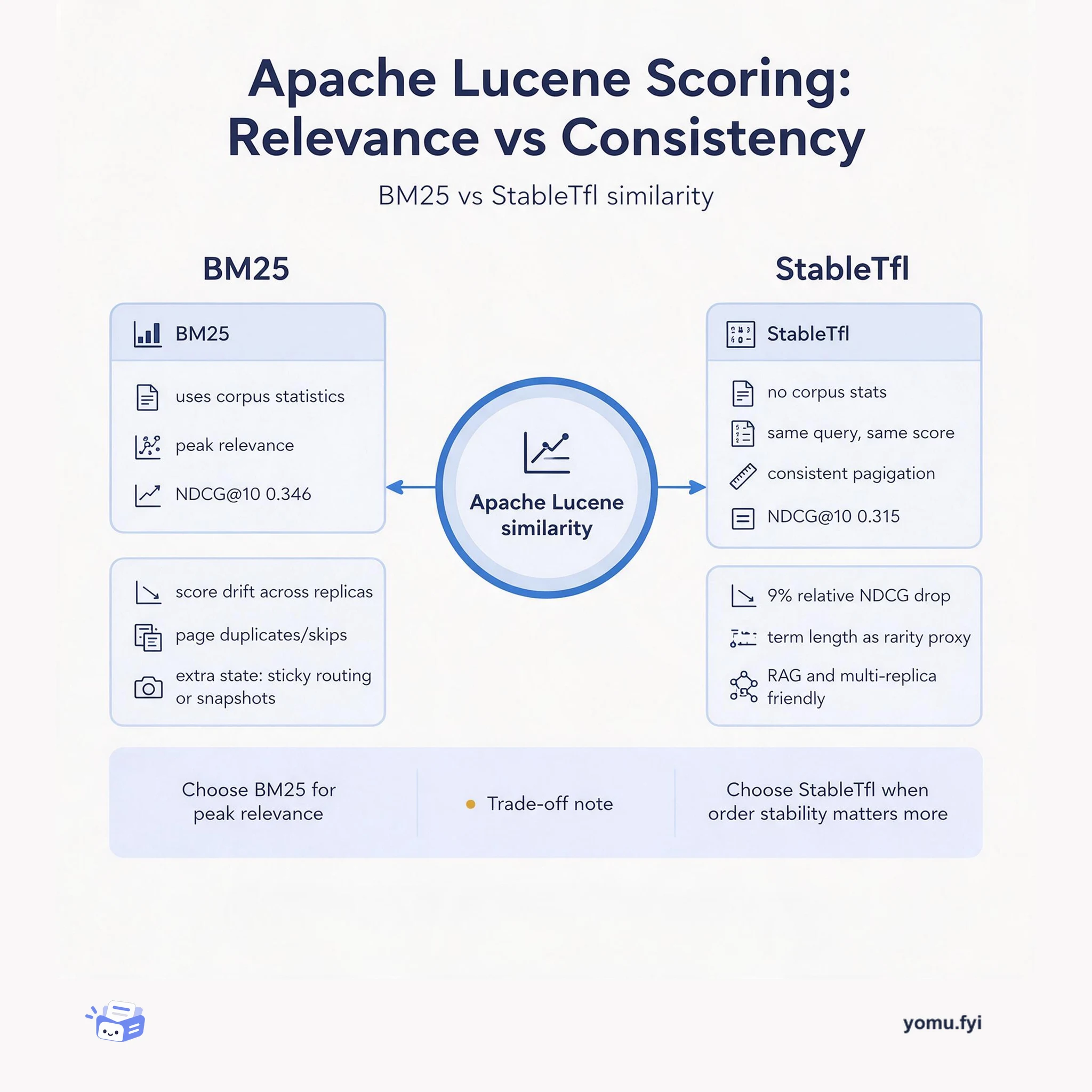
A comparison of Apache Lucene's BM25 scoring and StableTfl for paginated search: BM25 maximizes relevance, while StableTfl trades a small relevance drop for consistent ranking across replicas and pages.
Keep reading
Related reading
The Good Stuff
Paid picks we use ourselves. Links carry a referral code — a subscription through one earns us a commission at no extra cost to you.