AI agent orchestration coordinates multiple AI agents working on a single task, deciding routing, carrying context, resolving contradictions, and escalating to humans when needed. It operates at two levels: the agent level, where frameworks like LangGraph route between specialized agents, and the conversational AI level, which preserves customer identity and history across Voice, SMS, and WhatsApp channels. Orchestration comprises four jobs: routing, shared memory and state, conflict resolution, and human escalation, with parallel execution requiring robust memory management. Twilio’s Conversation Orchestrator provides a shared conversation record as a system of record, while Conversation Memory extracts observations and resolves conflicts by updating records with the most recent version. The FAQ section addresses differences from workflow automation, comparison criteria for orchestration tools, and the mechanism for agent-to-human handoffs within the same session without callbacks.
Context
Coordinating multiple AI agents working on a single task, especially maintaining context and identity as conversations move across channels like Voice, SMS, WhatsApp, and Chat, presents challenges such as context loss, contradictions in shared state, and seamless handoffs between agents or to humans.
Approach / What changed
Use a shared conversation layer (Twilio Conversation Orchestrator) as a system of record, combined with Conversation Memory for semantic extraction and conflict resolution via versioned observations, and Agent Connect for documented handoff payloads between agents and humans, integrating with frameworks like LangGraph.
Takeaways
1
AI agent orchestration requires coordination at both the agent routing level and the conversational identity level; neglecting the latter causes customers to repeat information across channels.
2
Shared memory and conflict resolution are essential for parallel agent execution; Twilio Conversation Memory resolves contradictions by comparing new observations against existing profiles and updating with the most recent version.
3
Agent-to-human handoffs via Twilio Agent Connect occur within the same call or chat session, with an AI-generated summary passed to the human agent, eliminating callbacks and context loss.
FAQ
What's the difference between AI agent orchestration and workflow automation?
Twilio distinguishes the two by who decides: workflow automation follows a predefined path built in advance, while AI agent orchestration lets agents reason about which step comes next and then coordinates routing, shared memory, and handoffs.
How fast can an AI agent hand a conversation off to a human?
Twilio Agent Connect transfers control within the same call or chat session, eliminating callbacks or requeues. The LLM calls a handoff tool, Studio routes the task to Flex, and the human receives an AI-generated summary. Wait time then depends on staffing.
How do AI agents in parallel share memory without overwriting each other?
Twilio Conversation Memory compares every new observation against the customer profile. Non-conflicting observations are added; contradicting ones update the existing record with the most recent version winning, ensuring parallel agents preserve each other's work.
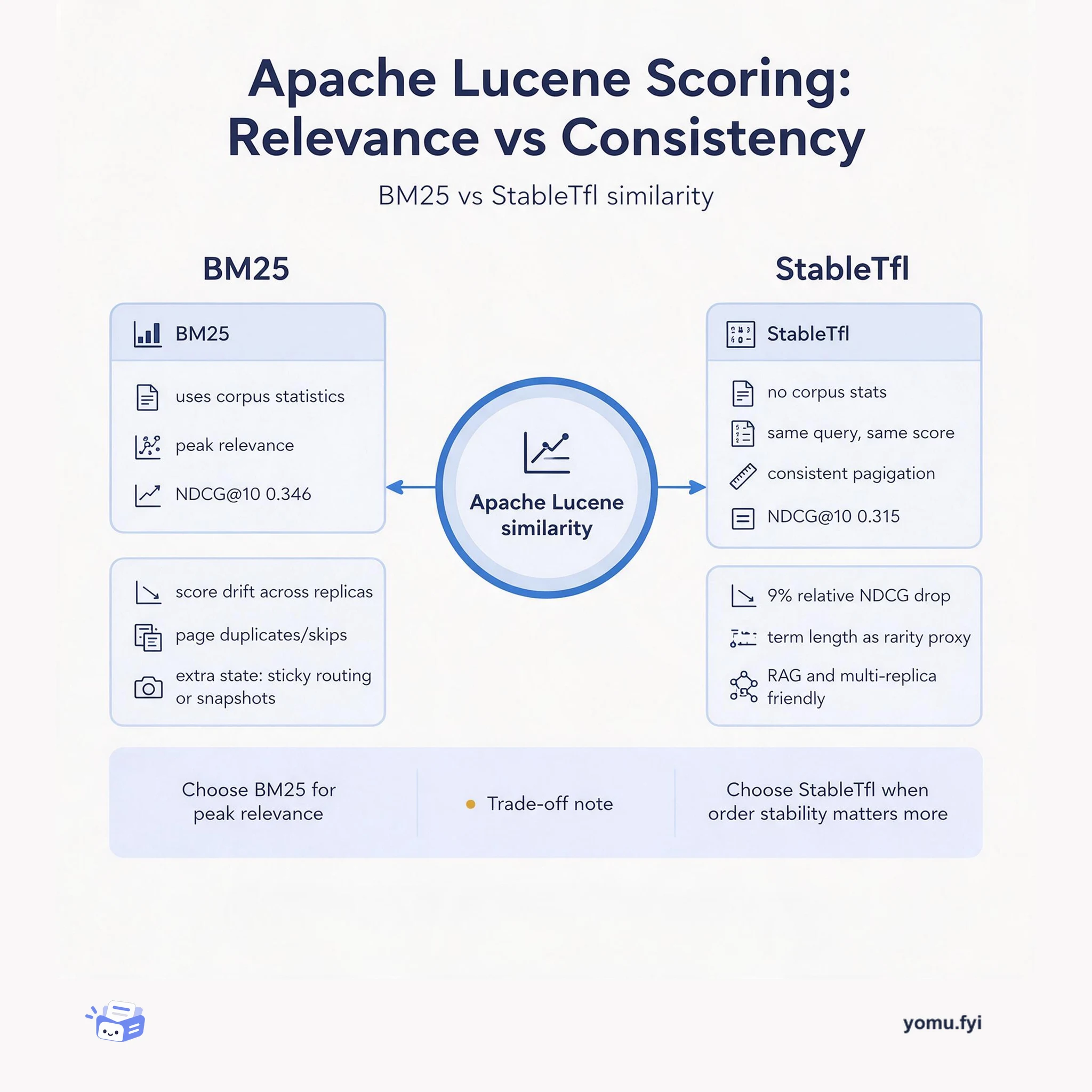
A comparison of Apache Lucene's BM25 scoring and StableTfl for paginated search: BM25 maximizes relevance, while StableTfl trades a small relevance drop for consistent ranking across replicas and pages.
Keep reading
Related reading
The Good Stuff
Paid picks we use ourselves. Links carry a referral code — a subscription through one earns us a commission at no extra cost to you.