An open catalog requires storage you own, full features on that storage, and the ability to move tables without copying data. Unity Catalog in Databricks’ Open Lakehouse meets all three by keeping managed tables in customer-owned cloud storage. It supports REGISTER and UNREGISTER from the Apache Iceberg REST catalog spec, enabling tables to enter or leave without data movement. Databricks contributed UNREGISTER to the Iceberg REST catalog spec, making this an open standard. On other platforms, customer-owned storage often lacks features like fail-safe recovery or automatic compaction, pushing users toward provider-controlled storage.
Context
The post argues that an open catalog requires three things: storage you own, best features on that storage, and the ability to move tables without copying data. It contrasts Unity Catalog with other platforms that use provider-controlled storage or limit features on customer-owned tables.
Approach / What changed
Unity Catalog keeps managed tables in customer-owned cloud storage, supports REGISTER and UNREGISTER from the Apache Iceberg REST catalog spec for no-copy table movement, and provides full features such as fail-safe recovery, automatic optimizations, and orphaned file cleanup on those tables.
Takeaways
1
An open catalog requires three things: storage you own, best features on that storage, and the ability to move tables without copying data.
2
Unity Catalog supports REGISTER and UNREGISTER from the Iceberg REST catalog spec, allowing tables to move between catalogs without data movement.
3
On other platforms, customer-owned storage often lacks full features such as fail-safe recovery or automatic compaction, pushing users toward provider-controlled storage.
FAQ
Does using Apache Iceberg prevent vendor lock-in?
No, because an Iceberg table in provider-controlled storage can be as hard to move as a proprietary table, and an Iceberg table in your own storage may get fewer features. Avoiding lock-in also requires storage you own, full features on those tables, and a catalog that supports a clean, no-copy handoff.
Can I move tables out of Unity Catalog without copying data?
Yes. With UNREGISTER, you can remove a table from Unity Catalog and register it in another Iceberg REST catalog, without copying data files.
What's the difference between Unity Catalog managed tables and managed storage?
In Unity Catalog, 'managed' means the catalog maintains the table, but files stay in a cloud storage account you own. On some other platforms, 'managed storage' means storage the provider owns and often keeps in proprietary table formats.
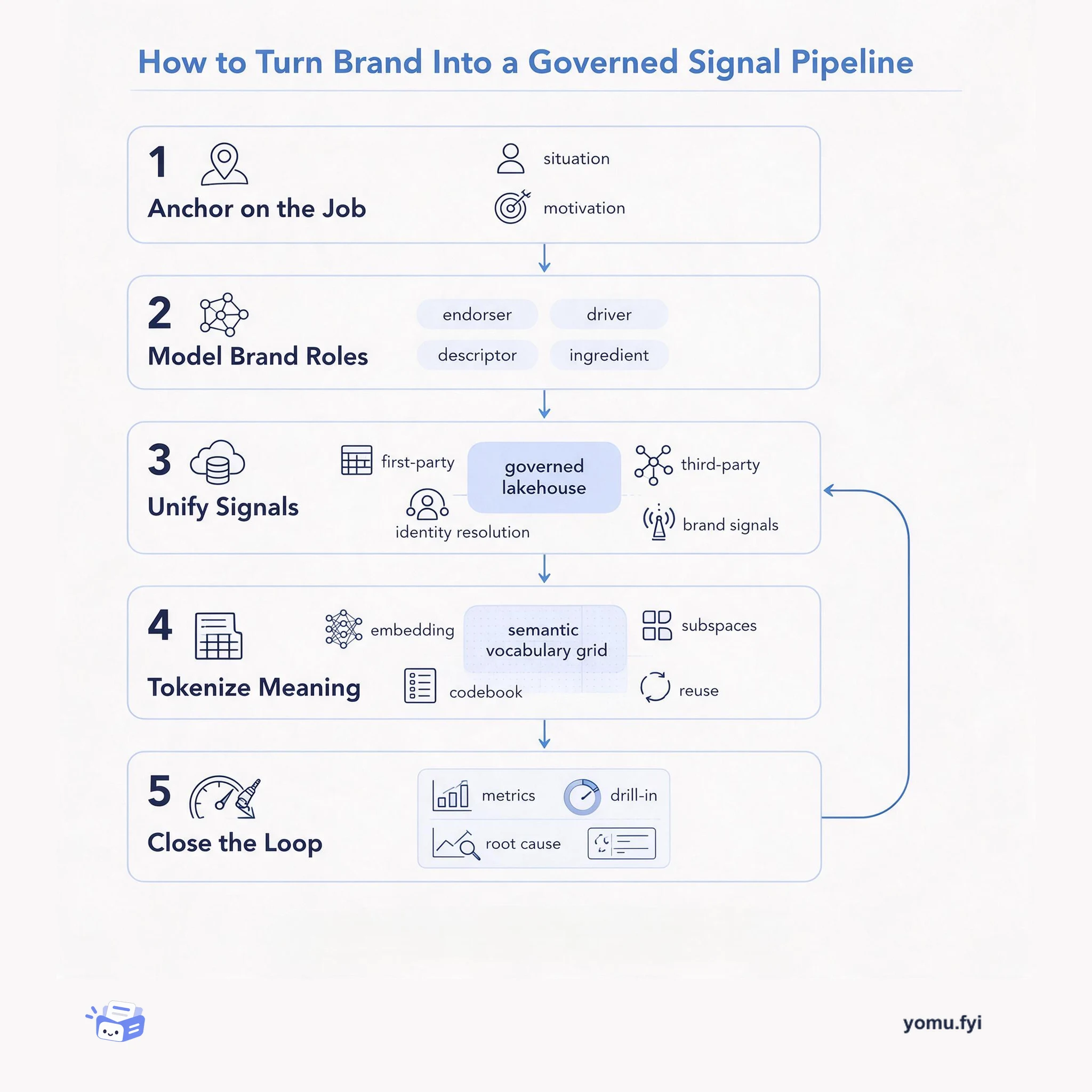
A practical how-to for engineers who need to turn brand from a style guide into a governed signal pipeline: anchor on jobs, model brand roles, unify signals, tokenize meaning, and close the loop with measurement.
Keep reading
Related reading
The Good Stuff
Paid picks we use ourselves. Links carry a referral code — a subscription through one earns us a commission at no extra cost to you.