Branch Like Production: Five Checkpoints Before You Trust It
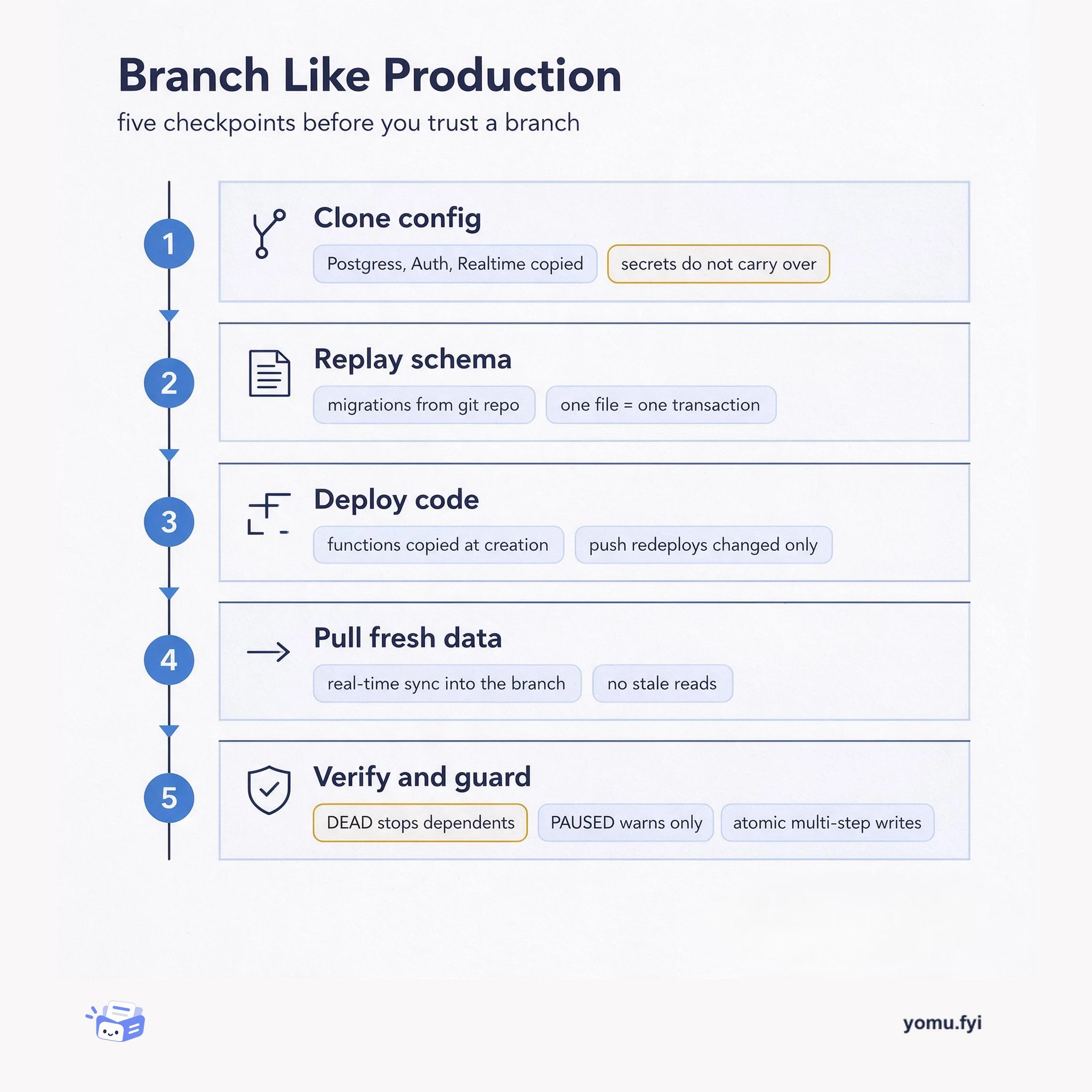
A five-checkpoint workflow for spinning up a database branch that behaves like production: clone config, replay migrations, deploy code, pull fresh data, then verify before you trust it.
A practical how-to for engineers who need to turn brand from a style guide into a governed signal pipeline: anchor on jobs, model brand roles, unify signals, tokenize meaning, and close the loop with measurement.
Branding usually lives in decks, but engineers meet it as data: labels, audiences, recommendation tokens, and reporting metrics. This explainer shows a five-step pipeline that starts with the job the customer is trying to do, encodes brand roles such as endorser, driver, descriptor, and ingredient, unifies first-party and third-party signals in a governed lakehouse, tokenizes meaning so new items can reuse existing vocabulary, and closes the loop with metrics and root-cause analysis. The goal is a portable brand layer that can be measured, activated, and governed without copying data or guessing.
The JTBD interview describes branding as endorser, driver, descriptor, and ingredient roles that communicate the job a product solves. Encoding those roles as structured fields helps teams decide when to split products or messages based on how consumers measure value, rather than just adding campaign tags.
HP's CustomerLake unifies customer data and third-party brand signals in a governed Marketing Lakehouse with identity resolution and published attributes. An open catalog such as Unity Catalog keeps storage customer-owned and supports register or unregister without copying data, so governance travels with the signals.
Meta's GenRecs Tokenization replaces per-item IDs with a stable semantic vocabulary that describes what an item is. Similar items share tokens, which accelerates learning for new entities and enables cross-campaign transfer; in production it delivered a +0.35% lift in conversions across surfaces.
The posts behind it
 Databricks · · Explainer
HP is building an AI-ready go-to-market data foundation on Databricks, unifying customer data and third-party signals in a governed Marketing Lakehouse after consolidating hundreds of data repositories. The company estimates that consolidating CDP capabilities with CustomerLake could reduce total cost of ownership by up to 40% compared to its former Composable CDP approach. HP expanded available marketing data with 90% net-new signals across media, brand, intent, and technographic sources. In the first session of using CustomerLake, HP configured data models, published attributes, and became ready to build audiences in two hours, a process that previously could take two to three months. HP is also bringing identity resolution into its Databricks environment to create a governed foundation for measurement, audience activation, and model improvement, and using AI/BI Genie to bridge the gap between technical readiness and business usability.
Databricks · · ExplainerAn open catalog requires storage you own, full features on that storage, and the ability to move tables without copying data. Unity Catalog in Databricks’ Open Lakehouse meets all three by keeping managed tables in customer-owned cloud storage. It supports REGISTER and UNREGISTER from the Apache Iceberg REST catalog spec, enabling tables to enter or leave without data movement. Databricks contributed UNREGISTER to the Iceberg REST catalog spec, making this an open standard. On other platforms, customer-owned storage often lacks features like fail-safe recovery or automatic compaction, pushing users toward provider-controlled storage.
 Meta · · Explainer
GenRecs Tokenization replaces per-item IDs with a stable semantic vocabulary of tokens that describe what an item is, enabling generative recommender models to reason about ad content and user preferences together. The tokenization pipeline encodes each item into a semantic embedding, decomposes it into independent subspaces, and quantizes each subspace to a codebook entry, producing discrete tokens that similar items share. This approach accelerates learning for new entities with no engagement history, enables cross-campaign transfer, and allows the system to benefit from LLM scaling and world knowledge. In production, paired with Meta’s Generative Ads Model and Adaptive Ranking Model, GenRecs Tokenization delivered a +0.35% lift in conversions across surfaces. The tokenization flywheel improves tail ad predictions, which enriches training data and further improves predictions for all ads, creating a self-reinforcing feedback loop.
 Intercom · · Announcement
Intercom has launched new reporting features including 74 new metrics, customizable chart types like donut and area charts, and advanced root-cause analysis tools via chart drill-in. The update is a response to its Customer Service Trends Report 2024, where a quarter of support teams cannot track needed metrics and 75% believe traditional metrics are changing due to AI. New teammate performance metrics enable tracking of individual strengths and improvement areas, while team inbox metrics measure responsiveness, workload history, and allow benchmarking across different teams. Custom aggregation methods such as percentile and sum, along with goal-tracking metric targets, provide more nuanced data analysis compared to basic line and bar charts. The chart drill-in feature lets users click data points to see underlying conversation details and calculations, integrating high-level stats with specific customer interactions.
Intercom · · ExplainerBob Moesta, who works with Clay Christensen to develop an online course on Jobs-to-be-Done (JTBD), applies the framework through his company The ReWired Group, which helps Fortune 500 companies find innovation whitespace and incubates technology startups. JTBD is gaining popularity because Christensen promotes it, markets are saturated, and traditional marketing methods target large markets rather than seeding niches from existing consumer struggles. The method starts with the consumer’s situational context and motivation, stopping abstraction when the consumer cannot think about the problem, as in the milkshake example of solving commute boredom. Products often perform multiple jobs; the decision to split products depends on conflicts in how consumers measure value, not just benefits. Branding can be structured with endorser, driver, descriptor, and ingredient brands to clearly communicate the job a product solves, as with IBM Thinkpad and Intel Inside.
More like this
A five-checkpoint workflow for spinning up a database branch that behaves like production: clone config, replay migrations, deploy code, pull fresh data, then verify before you trust it.
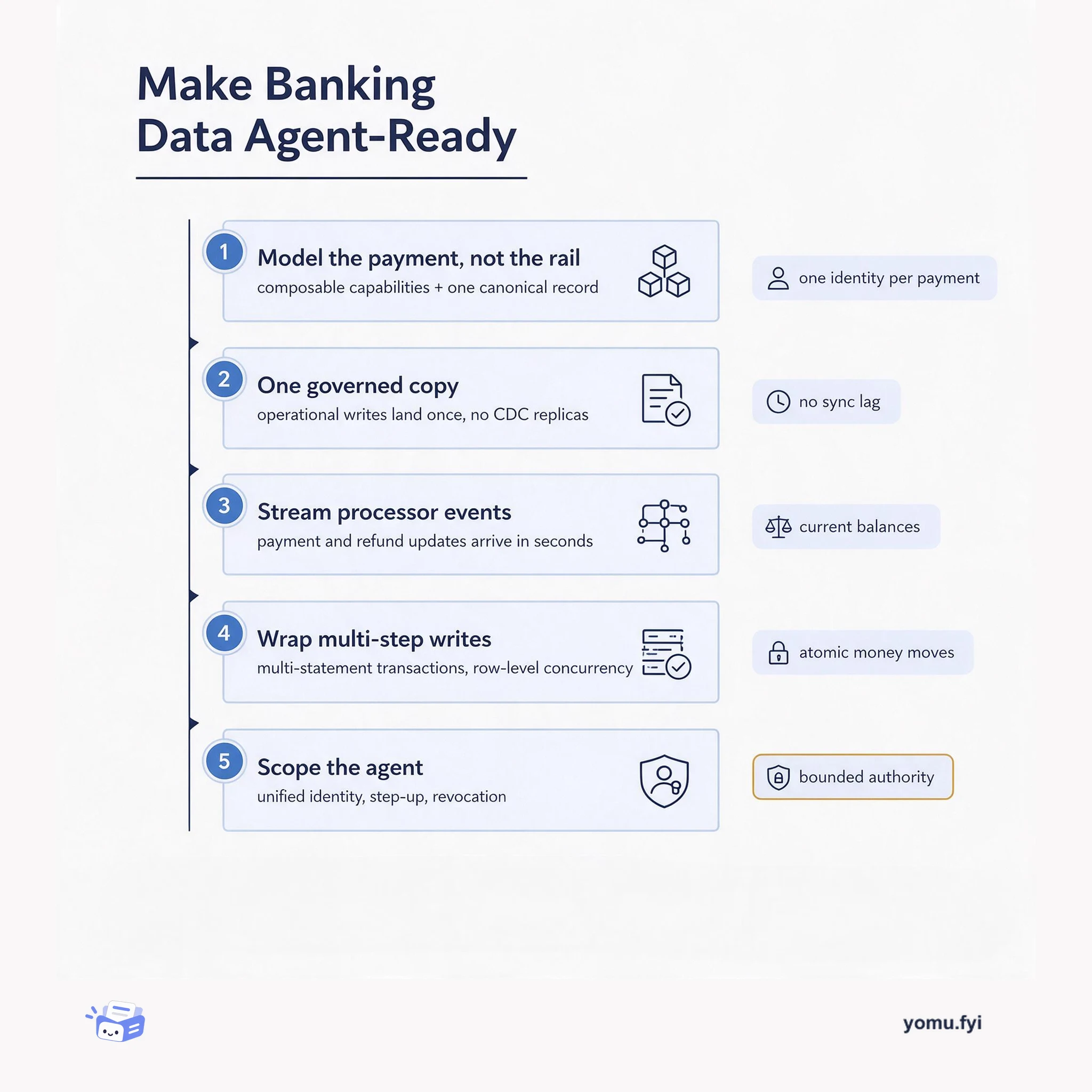
A five-step path from fragmented payment silos to a canonical, governed record that AI agents can act on: model the payment, unify the copy, stream events, wrap writes in transactions, and scope agent authority.
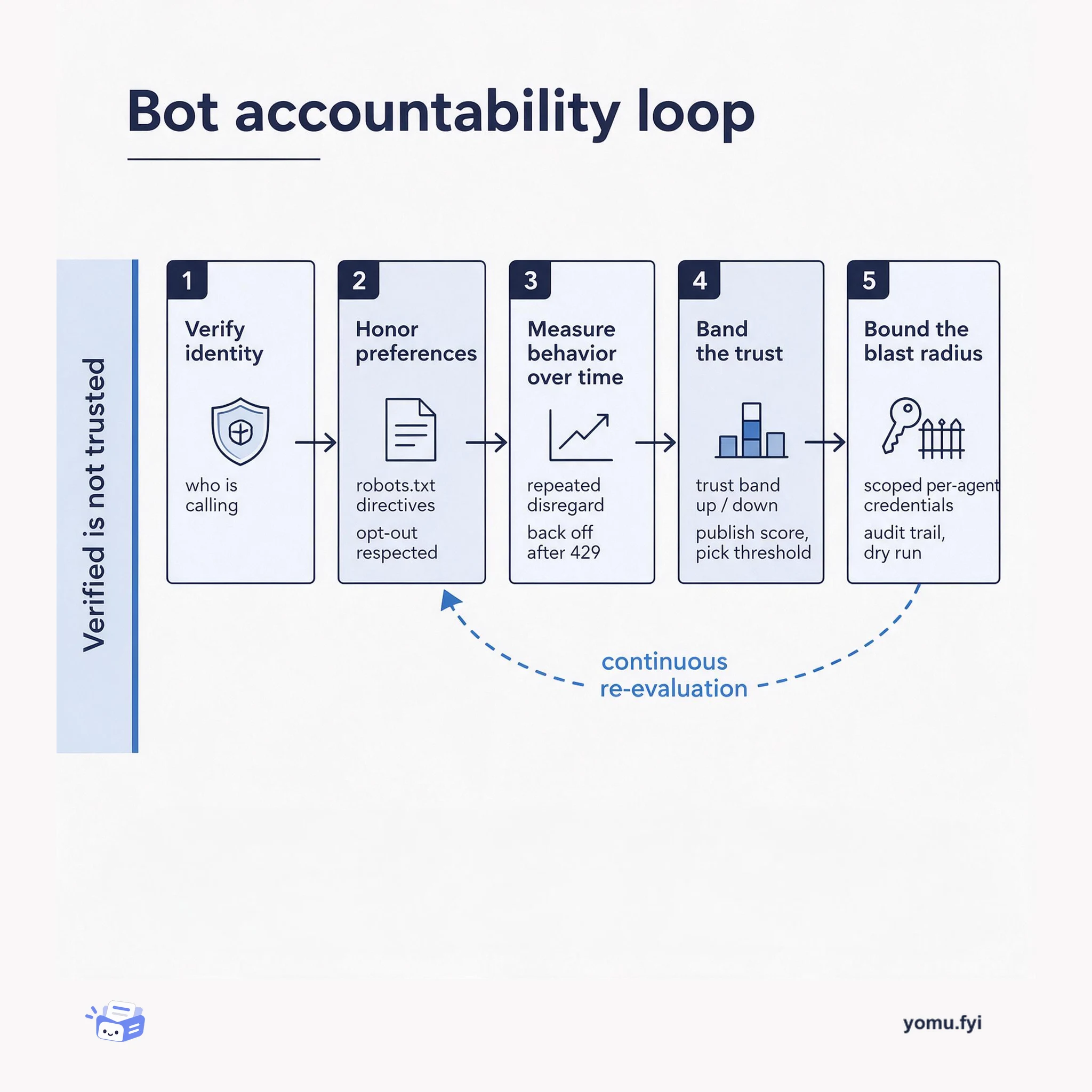
A five-step loop for treating bots as accountable actors: verify identity, honor opt-out preferences, measure sustained behavior, band trust, and bound blast radius.
The Good Stuff
Paid picks we use ourselves. Links carry a referral code — a subscription through one earns us a commission at no extra cost to you.
One useful email. Unsubscribe anytime.