 Twilio
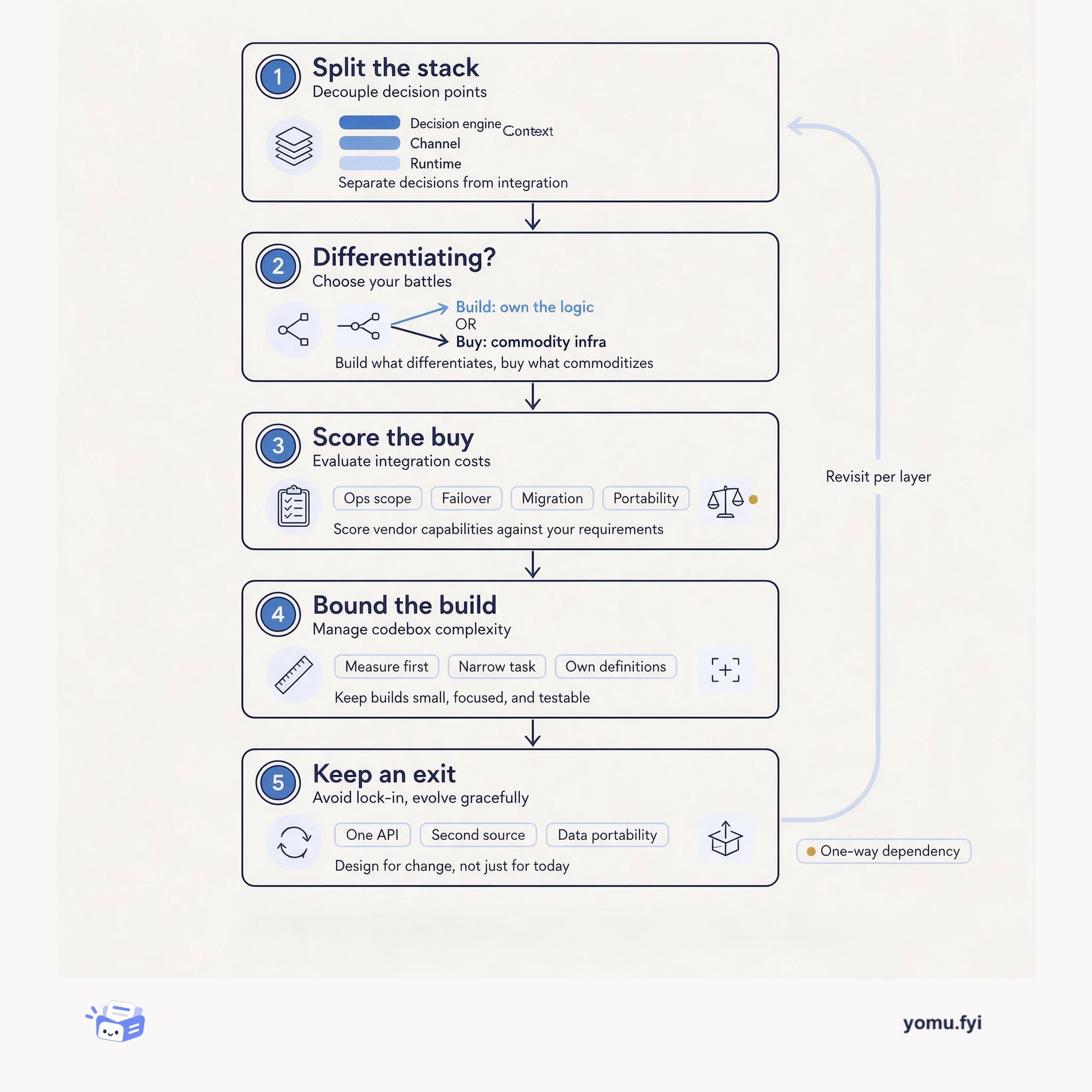
The orchestration layer comprises four distinct components—decision engine, context layer, channel layer, and agent runtime—each requiring a separate build-versus-buy decision rather than a single platform choice. The decision engine, which encodes core business logic such as eligibility rules and risk thresholds, should be built and owned in-house to avoid outsourcing the part that differentiates the business. The context layer, responsible for identity resolution and customer profile freshness, should be bought as infrastructure while the business owns the definition of customer attributes; 48% of companies cite cross-channel data connection as their top obstacle. The channel layer, handling carrier relationships, number provisioning, and per-market compliance, is almost always better bought because it requires specialist maintenance that changes frequently. The agent runtime, including speech pipelines and interruption handling, should be bought as infrastructure while the business retains control over models, prompts, and guardrails, grounding responses in audited knowledge repositories.