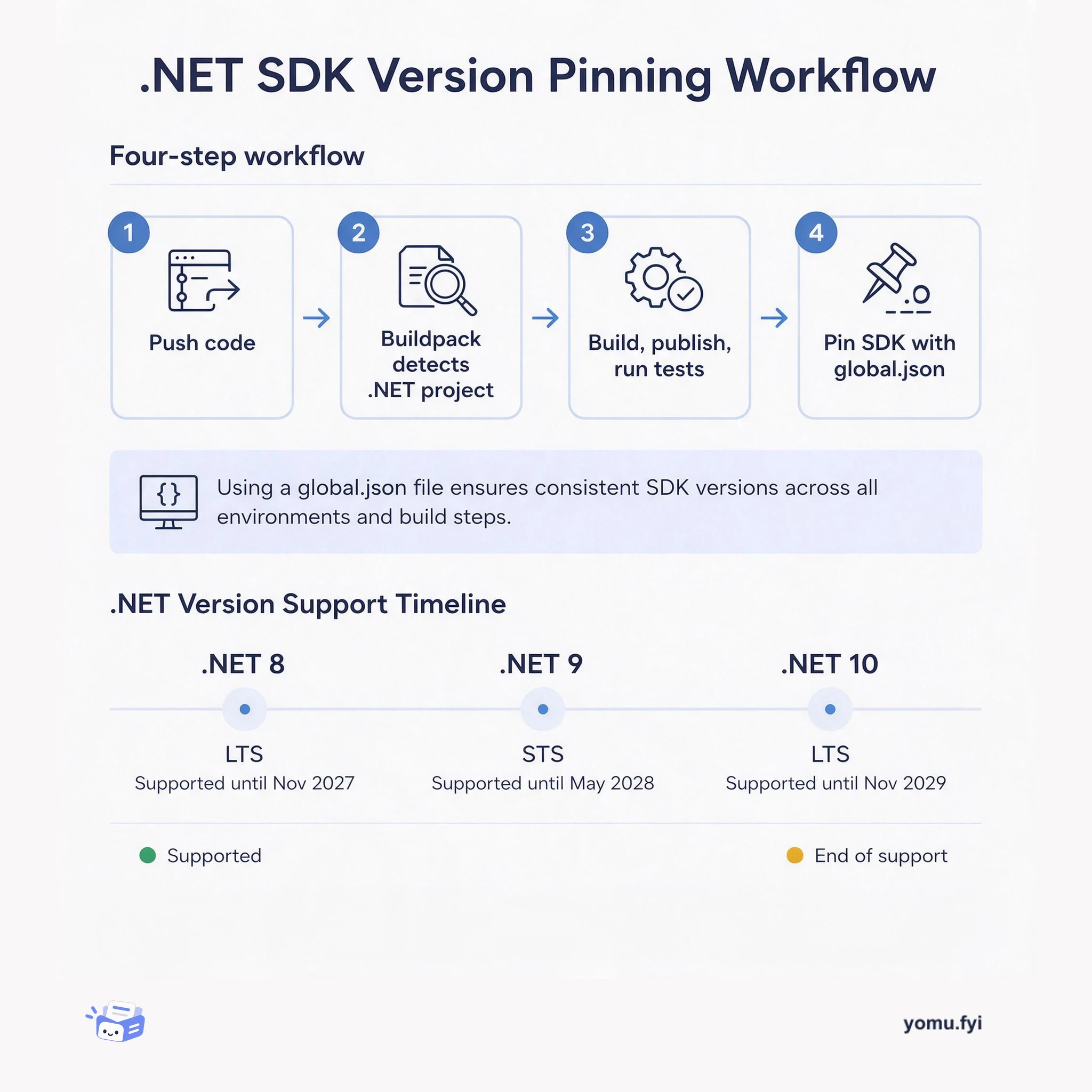
Deploying .NET 10 on Heroku: A Practical How-To
Learn the step-by-step process for deploying .NET 10 applications to Heroku, from buildpack detection to SDK pinning, and understand the lifecycle of .NET LTS releases.
Loading…
Topic
62 posts about Heroku. Every summary links to the original.
See the idea
Learn the step-by-step process for deploying .NET 10 applications to Heroku, from buildpack detection to SDK pinning, and understand the lifecycle of .NET LTS releases.
The Good Stuff
Paid picks we use ourselves. Links carry a referral code — a subscription through one earns us a commission at no extra cost to you.
Newest first
Django-based Heroku Connect needed realtime dashboard support through socket.io and Node.js, but Heroku apps could route traffic through only one dyno type. The team chose to run both stacks in one dyno using a runit buildpack and its sub-Procfile format: Node binds to PORT, while node-http-proxy forwards normal web requests to Gunicorn-hosted Django on 127.0.0.1:$DJANGO_PORT. This arrangement increases contention because processes share memory, CPU, and a filesystem, and it makes dyno logs less directly attributable; the team also flattened Procfiles into Procfile.local for Foreman-based local development. After running the architecture in production for a few months without issue, the team reported minimal proxy overhead and retained single-git-push deployment while establishing a path for websocket communication.
The Heroku Mobile Template is an open-sourced full-stack starting point for hybrid mobile apps that can be deployed to Heroku. It addresses the early choice among native iOS or Android, mobile web, hybrid clients, and backend technologies. The sample, “Quiz Live,” combines an AngularJS client with a Node.js and Express server, SocketIO real-time communication, BookshelfJS, and Postgres persistence for authentication, data storage, and notifications. Apache Cordova can package the HTML and JavaScript assets as a native app, while Ionic supplies cross-platform mobile UI components. Developers can fork the GitHub repository, deploy with the Heroku Button, and run it locally with Node.js and Postgres; the template also includes a Force.com example that creates Lead records for registering Quiz users.
The best engineering reads, once a week.

