chDB embeds a ClickHouse OLAP engine inside your process, so analytical queries skip the network round trip. This architecture view maps the binding layer, the local MergeTree working copy, and the flush path to object storage.
chDB is an embedded SQL OLAP engine: a ClickHouse engine that runs inside the application process instead of behind a database server. Bindings for Python, Node, Go, and Rust sit at the top and hand queries to the engine, which keeps a local MergeTree working copy on disk. A durable layer below publishes authoritative state to object storage through flush() and checkpoint(), so the same memory can move to CI, a sandbox, or another laptop without losing the local analytical hot path. The Postgres extension variant shows the same idea at the process boundary: a helper application runs on demand and returns ClickHouse Native results over file descriptors, isolating the database cluster.
FAQ
What breaks when the local MergeTree directory is the only copy?
The MergeTree directory exists on one disk, so moving memory to CI, a sandbox, or another laptop breaks the local-disk assumption. Publishing authoritative state to object storage removes that single-machine dependency without reintroducing a server round trip on every read.
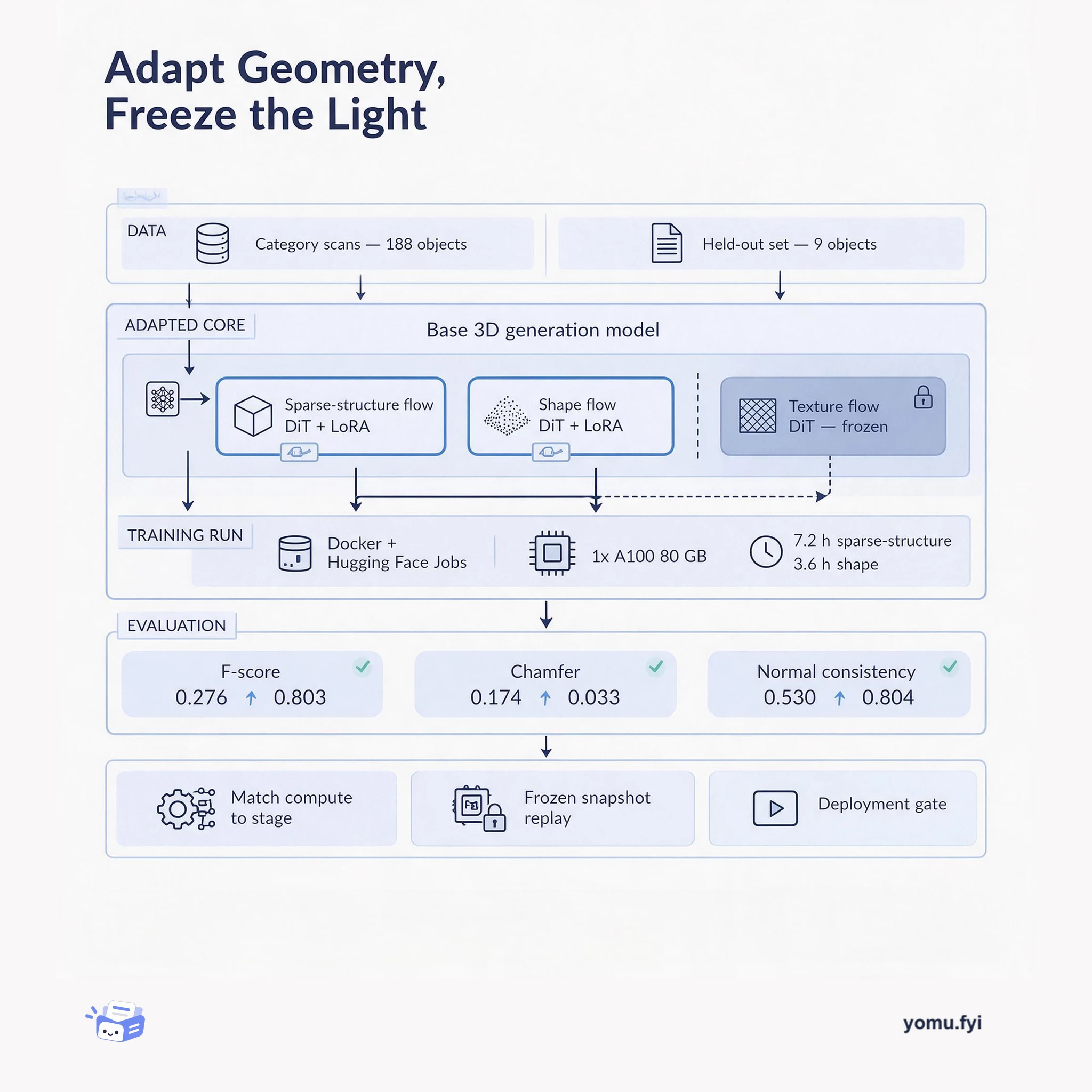
A layered architecture view of fine-tuning a 3D generation model: which flow DiT branches get LoRA adapters, which stay frozen, and how data, compute, and evaluation wrap the adapted core.
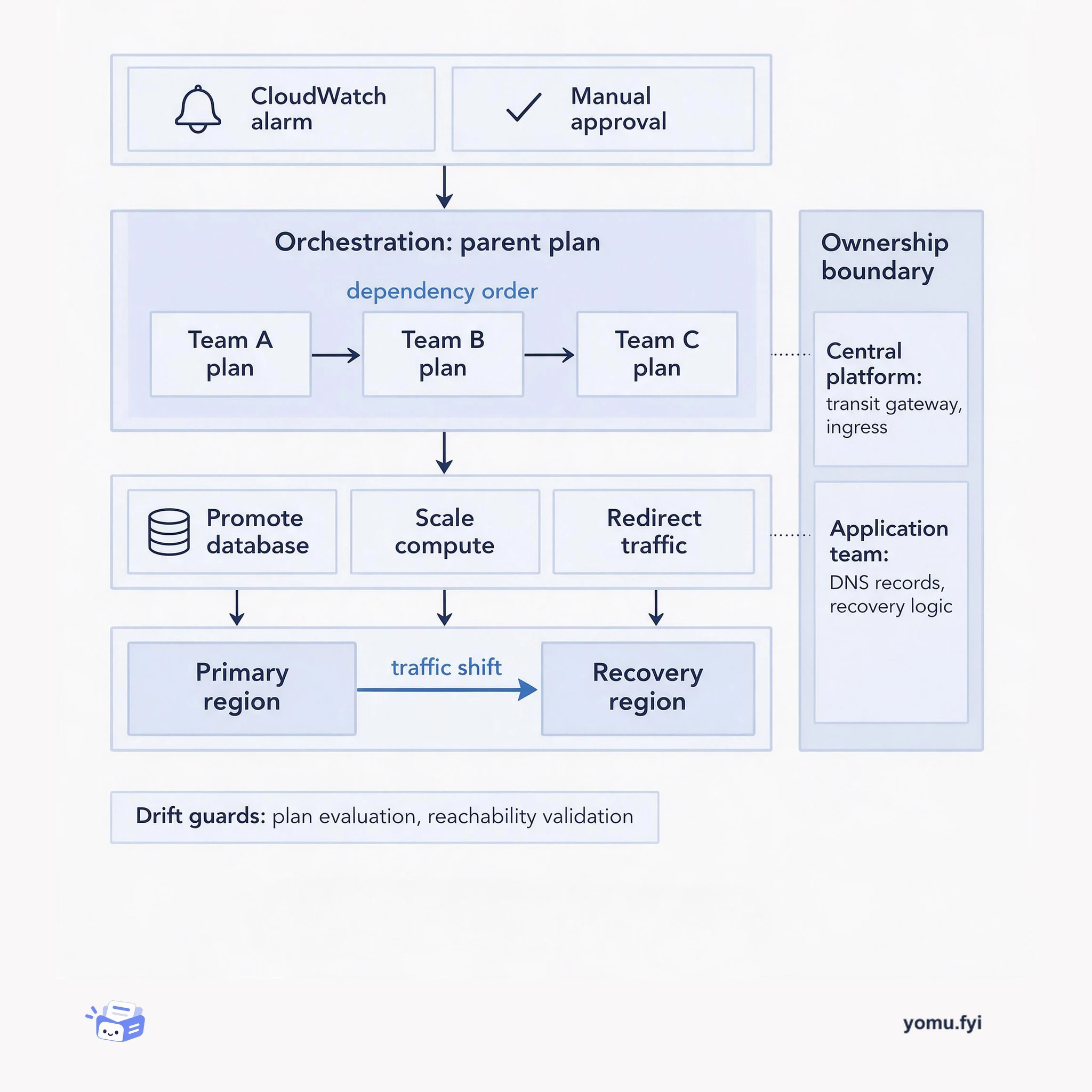
ARC Region Switch is a managed failover orchestrator that runs team-owned plans in dependency order. This diagram maps its trigger, orchestration, execution, and region layers and the ownership boundary.
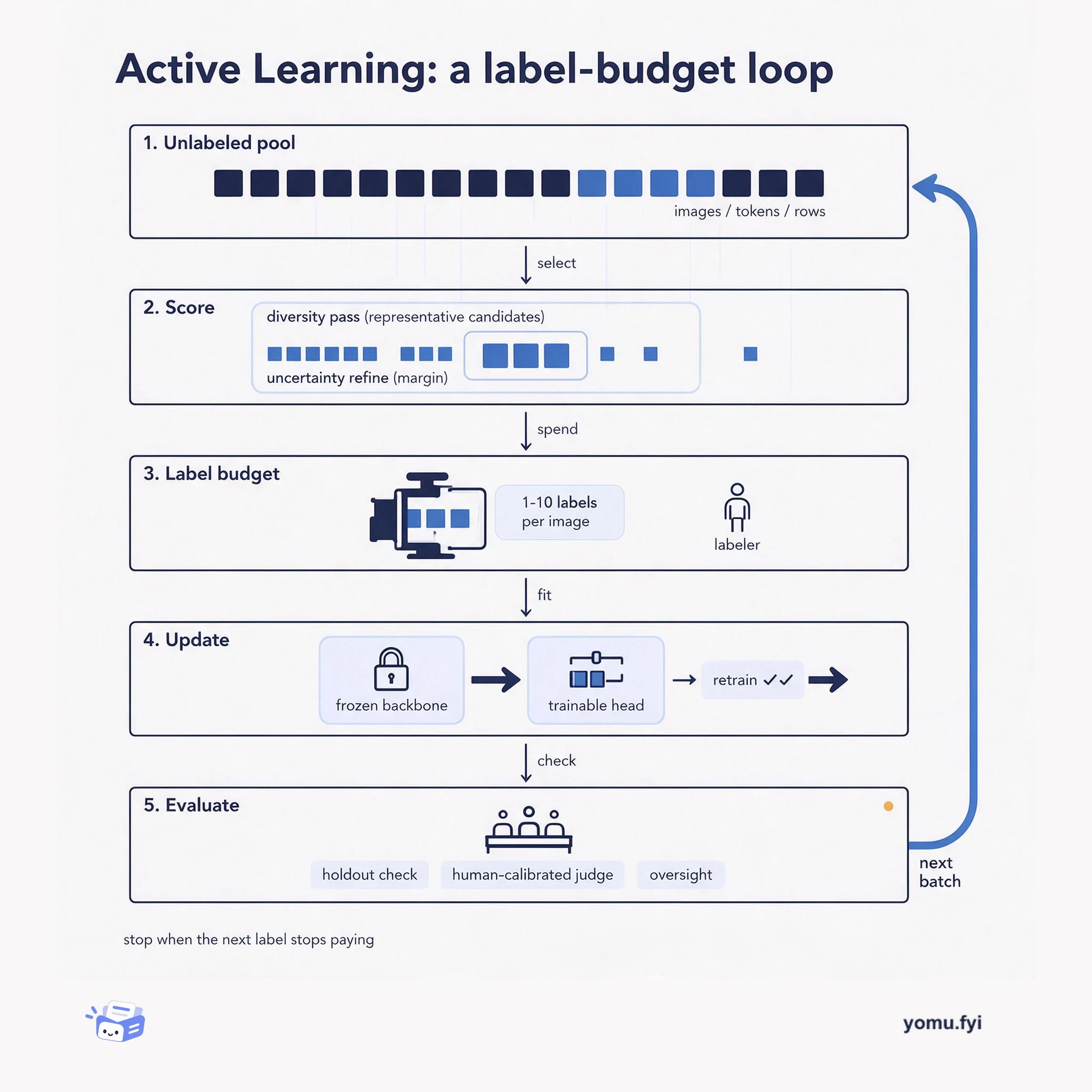
Active learning is a loop that spends a fixed labeling budget on the samples most worth annotating. This diagram maps its stages — pool, score, label, train, evaluate — and the return path that closes the cycle.
The Good Stuff
Paid picks we use ourselves. Links carry a referral code — a subscription through one earns us a commission at no extra cost to you.