Active Learning: The Architecture of a Label-Budget Loop
Active learning is a loop that spends a fixed labeling budget on the samples most worth annotating. This diagram maps its stages — pool, score, label, train, evaluate — and the return path that closes the cycle.
Active learning treats labels as a scarce budget rather than something to spend evenly. The architecture is a loop: an unlabeled pool feeds a scorer that picks a diverse batch and then refines it with uncertainty, a gate caps how many labels the round may consume, the head trains over a frozen backbone, and an evaluation layer decides whether the round earned its keep. The loop then returns to the pool for the next batch. This shape matters because label cost, not model capacity, is usually the binding constraint; keeping human effort proportional to what the model cannot infer is the whole point.
FAQ
Why does the loop score for diversity before uncertainty?
Selecting only the most uncertain samples tends to pull in near-duplicates and outliers, so the batch stops teaching the model anything new. TEAL's two-level MaxHerding first picks representative candidates from multi-layer token descriptors, then refines them with margin-based uncertainty on the decoder grid, keeping the batch both diverse and targeted at real confusion.
How small can the label budget get before active learning stops paying?
TEAL reaches 97% of fully supervised segmentation quality with just 10 labeled pixels per image, and beats the strongest baseline by up to 24.36 mIoU with a single labeled pixel. Below that, results depend on how well the scorer's frozen representation already matches the task, so the ceiling is set by the backbone, not the loop.
How do you keep the loop from trusting its own bad labels?
Separate the evaluation from the training signal. Salesforce's Agentforce team uses layered evaluation with an agent-as-a-judge plus human oversight, deliberately using different models to review work and avoid self-preference bias, while AlpaJudge supplies human-calibrated reward signals for selecting training data.
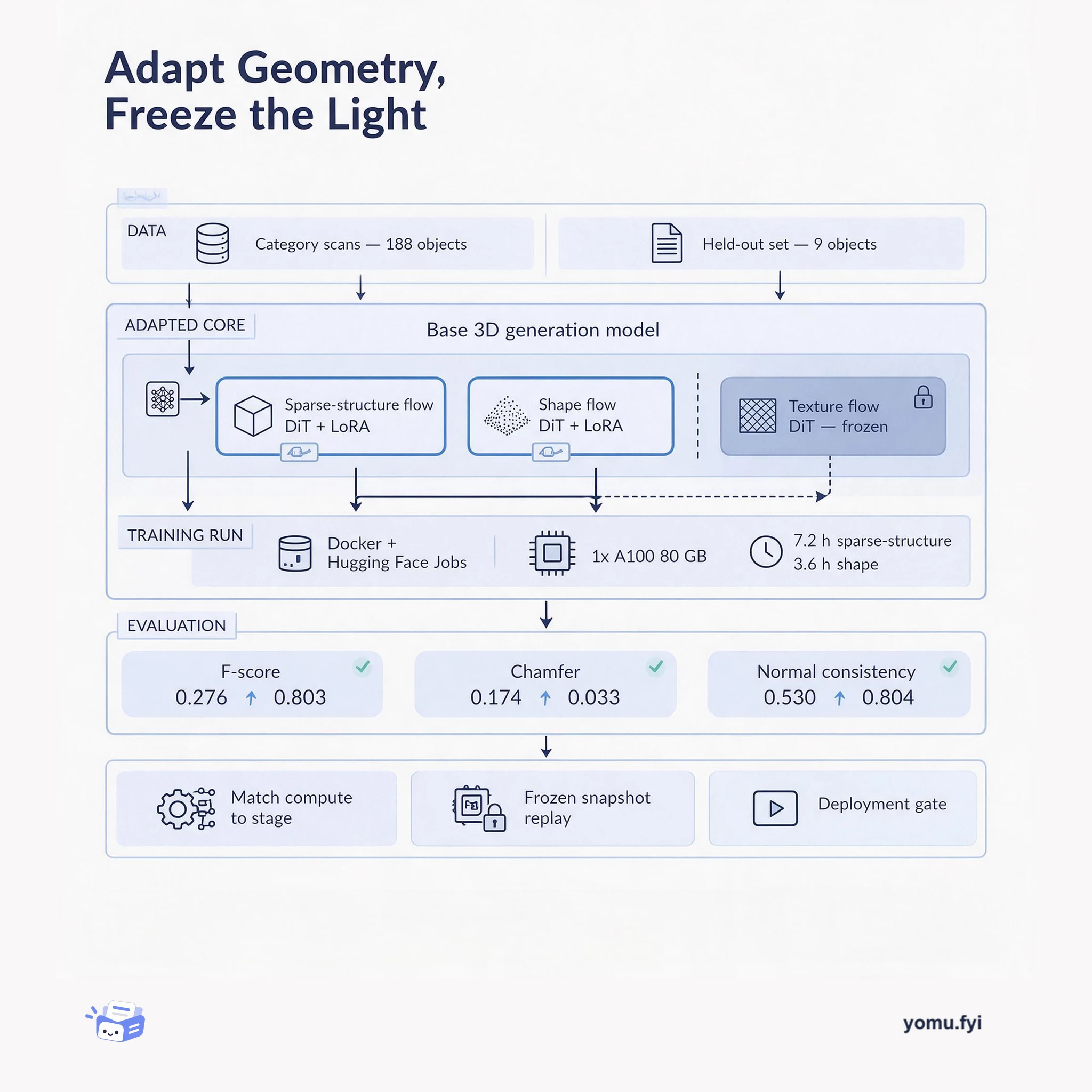
A layered architecture view of fine-tuning a 3D generation model: which flow DiT branches get LoRA adapters, which stay frozen, and how data, compute, and evaluation wrap the adapted core.
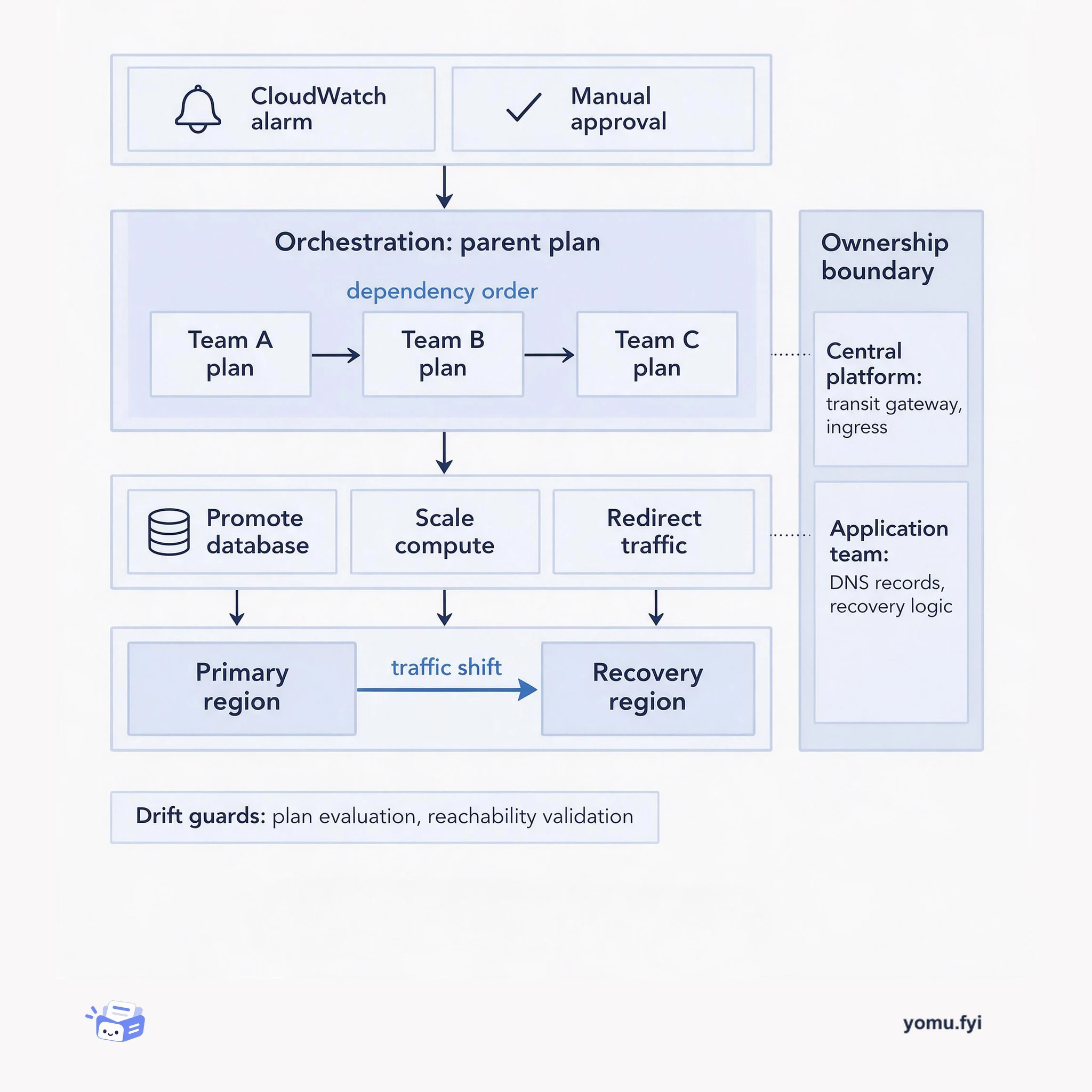
ARC Region Switch is a managed failover orchestrator that runs team-owned plans in dependency order. This diagram maps its trigger, orchestration, execution, and region layers and the ownership boundary.
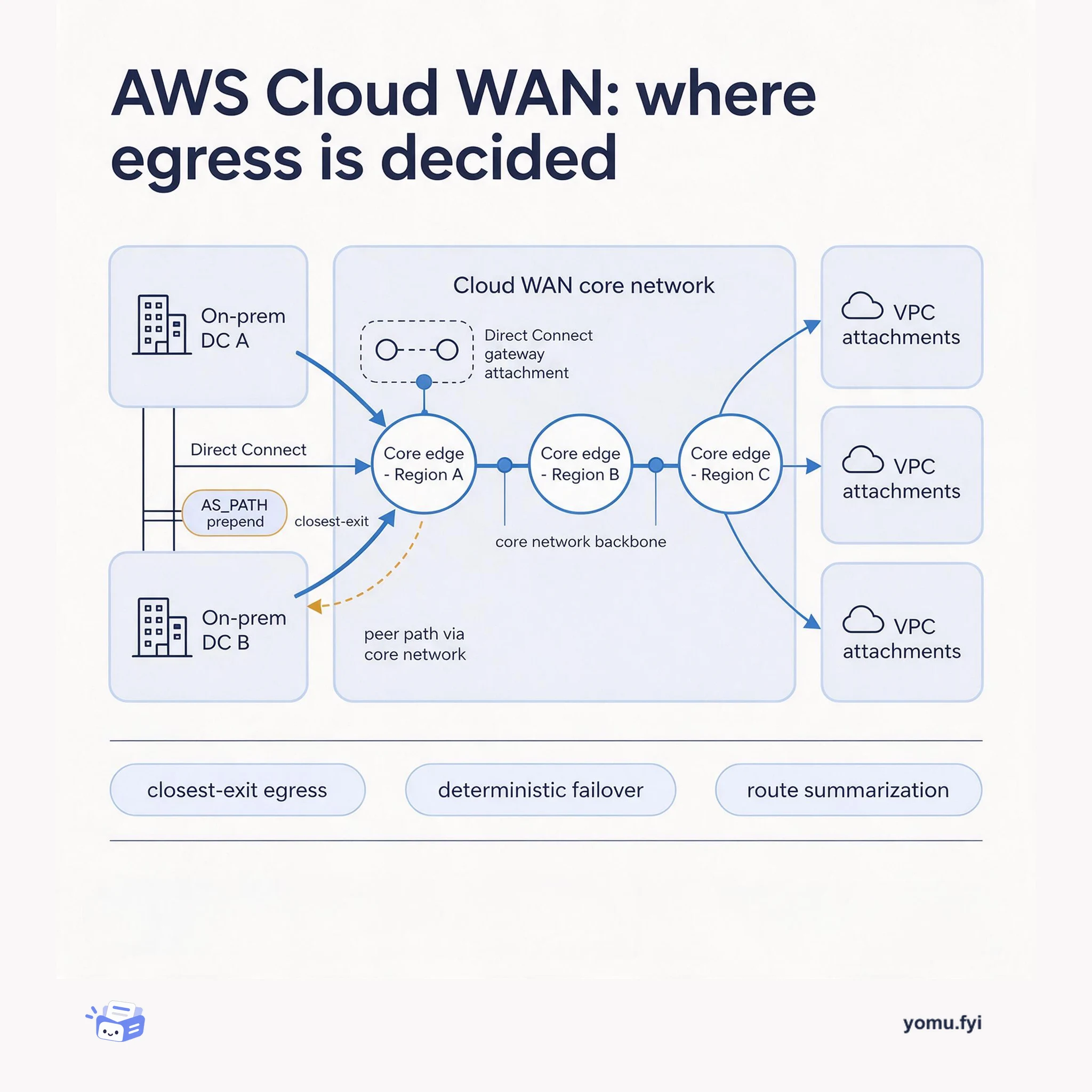
AWS Cloud WAN is a managed core network that joins Regions, VPCs, and on-premises sites through attachments. This architecture view shows where the per-Region egress decision is made and how one link can be drained safely.
The Good Stuff
Paid picks we use ourselves. Links carry a referral code — a subscription through one earns us a commission at no extra cost to you.