Classification as a Gate: Routing Work Before It Gets Expensive
Classification is a gate, not a label: a fast model scores each incoming signal, and only the ambiguous cases escalate to expensive reasoning. This map shows the layers, the decision boundary, and the feedback loop.
Classification sits between raw input and an expensive action. Signals arrive, features are assembled from stored baselines and recent activity, and a cheap classifier scores the case before any heavy model runs. That score crosses a decision boundary: routine cases take the low-cost path, while uncertain or high-stakes cases escalate to a stronger model or a human. Because the same feature definitions serve both training and inference, the gate stays consistent as traffic grows, and every routed decision can be logged for audit and retraining.
FAQ
How do you keep the classifier consistent between training and serving?
Define each feature once and let the same definition produce both point-in-time correct training data and the online inference pipeline. That avoids training-serving skew and data leakage, and on-demand features can compare the current case against stored baselines at request time. Without this, the gate silently drifts as production traffic diverges from the training sample.
What should the gate do with cases it cannot classify confidently?
Escalate rather than guess, and consider narrowing the candidate set before escalating. One security team replaced loading all 192 standards into the prompt with metadata-driven selection, cutting context from 338 KB to 21 KB and improving consistency. Governance layers can also cap spend per team and route routine work to lower-cost models, so escalation stays bounded.
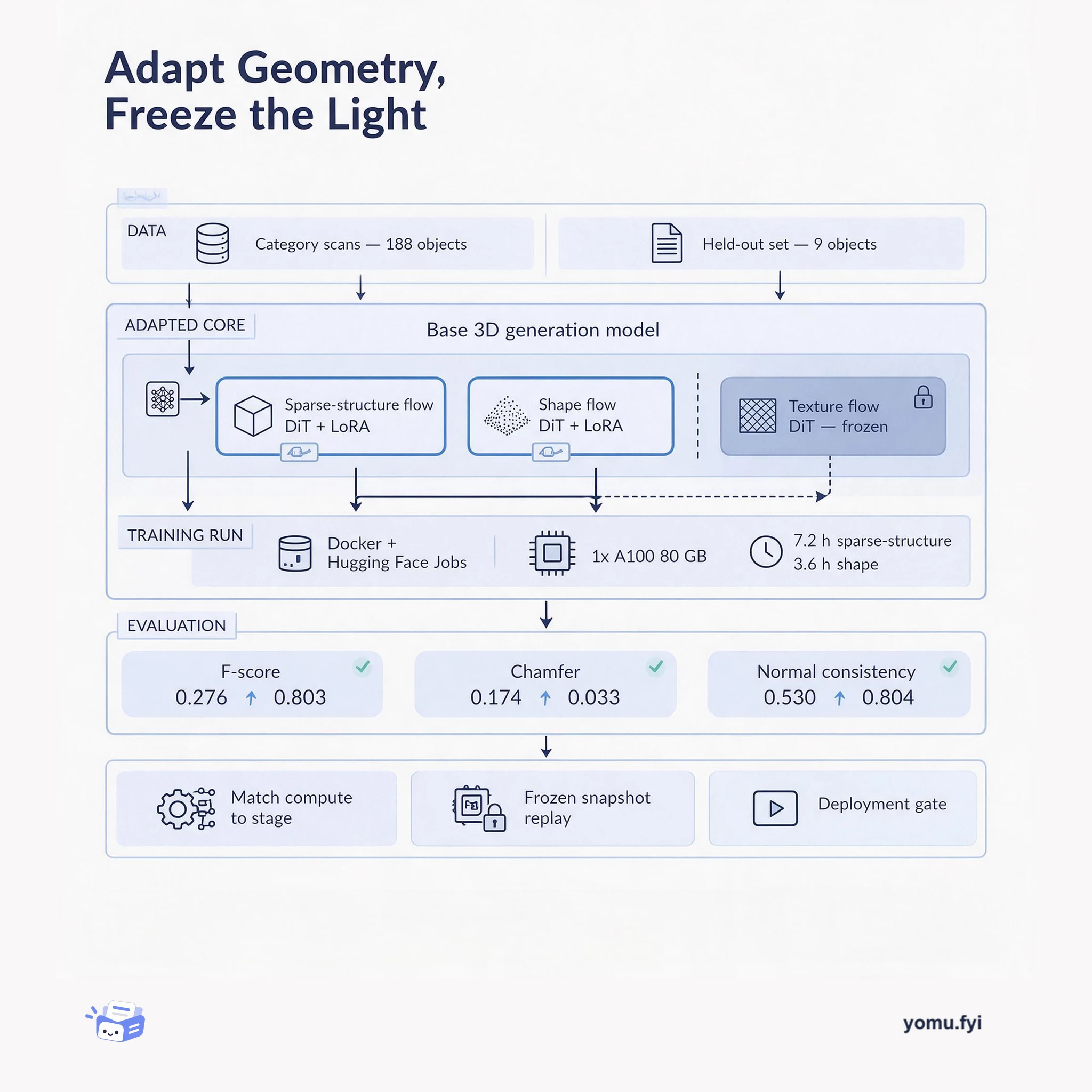
A layered architecture view of fine-tuning a 3D generation model: which flow DiT branches get LoRA adapters, which stay frozen, and how data, compute, and evaluation wrap the adapted core.
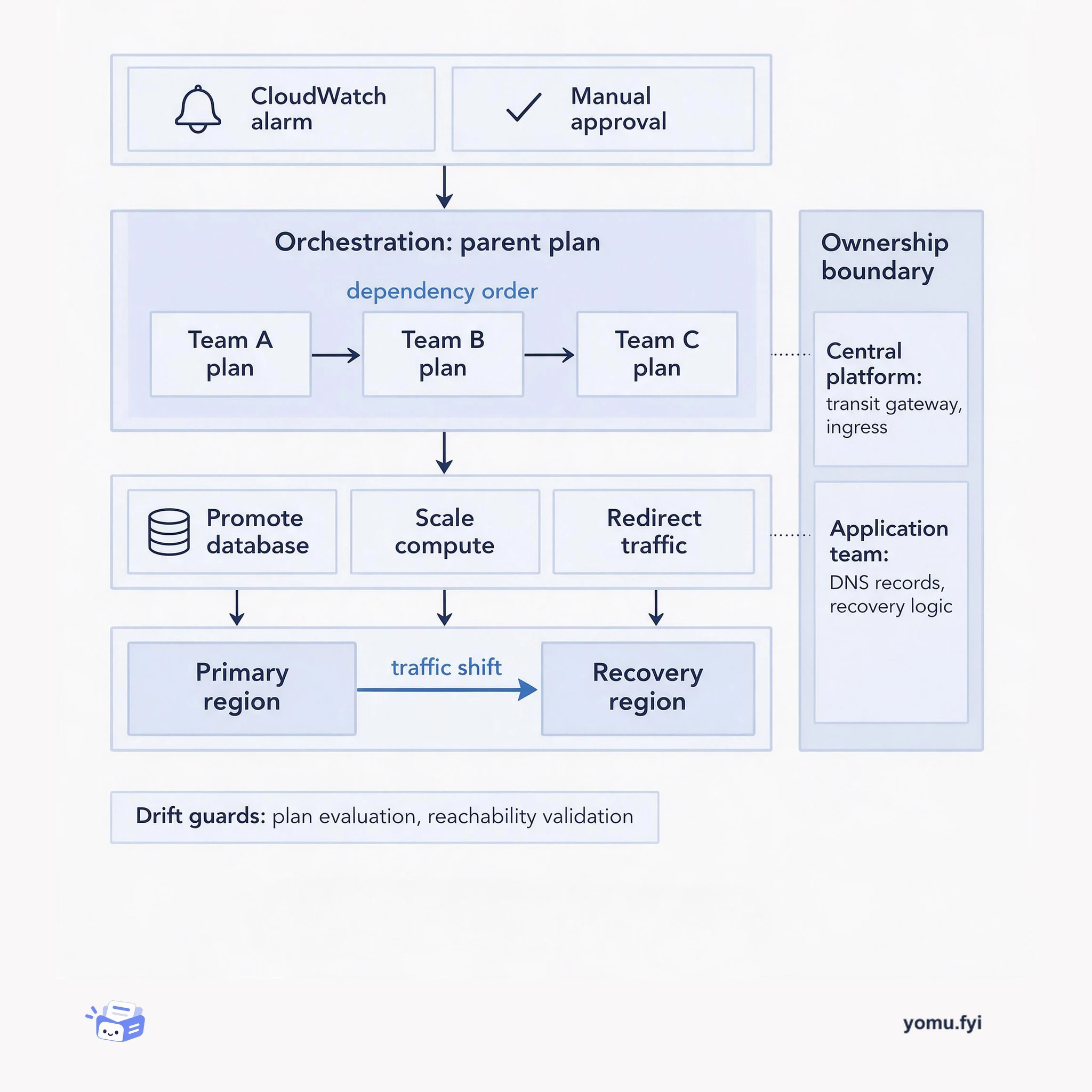
ARC Region Switch is a managed failover orchestrator that runs team-owned plans in dependency order. This diagram maps its trigger, orchestration, execution, and region layers and the ownership boundary.
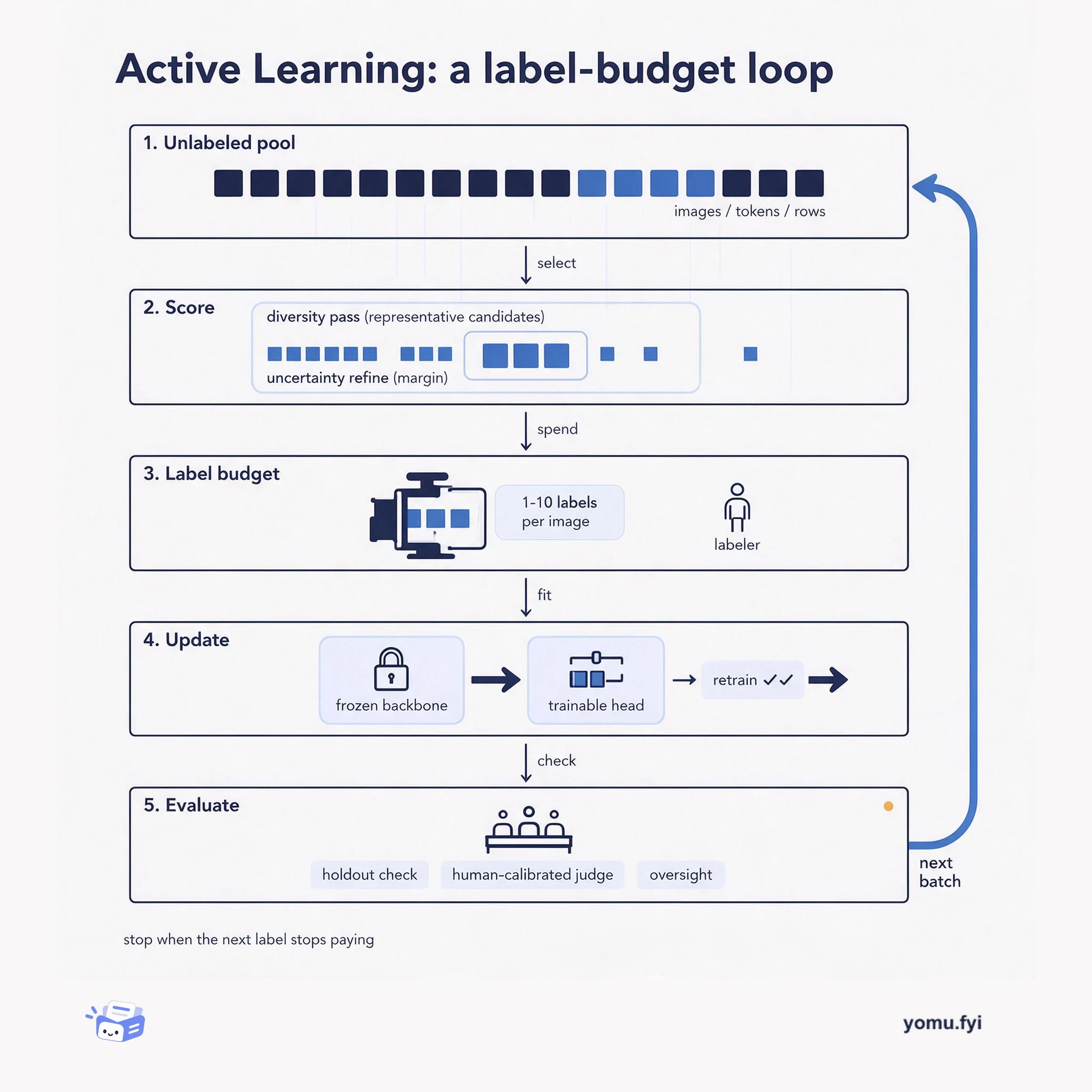
Active learning is a loop that spends a fixed labeling budget on the samples most worth annotating. This diagram maps its stages — pool, score, label, train, evaluate — and the return path that closes the cycle.
The Good Stuff
Paid picks we use ourselves. Links carry a referral code — a subscription through one earns us a commission at no extra cost to you.