Automated Testing Is a Verification Layer, Not a Test Count
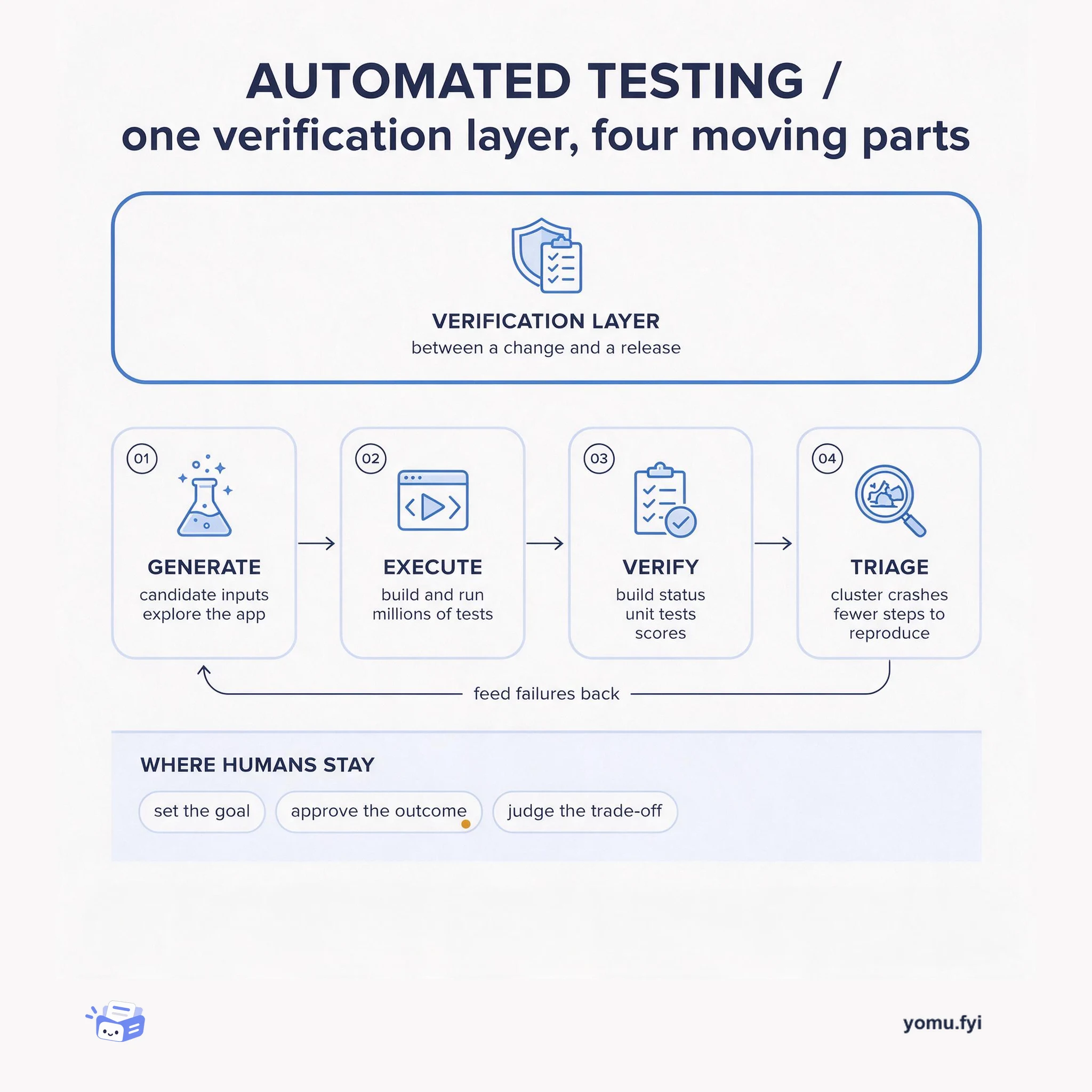
Automated testing is a verification layer with four moving parts: generate, execute, verify, and triage. This explainer maps each part and shows where human judgment still belongs.
 MongoDBExplainer
Large language models can be unreliable, with serious consequences in regulated industries. Patronus AI, an industry-first automated evaluation platform, enables engineers to score and benchmark LLM performance on real-world scenarios, generate adversarial test cases, and monitor hallucinations and PII. Research using FinanceBench found that state-of-the-art LLMs hallucinated or incorrectly answered up to 81% of financial analysts’ questions, even with RAG and external context. Patronus partnered with MongoDB Atlas to offer a RAG evaluation API and published a 10-minute guide demonstrating evaluation of a RAG system built with LlamaIndex and Atlas Vector Search on an SEC 10-K filing. Developers can improve RAG performance by adjusting indexes, chunking sizes, prompts, or fine-tuning embedding models, and should continuously test to maintain improvements.
The post discusses the unreliability of large language models, particularly in regulated industries, and introduces Patronus AI’s automated evaluation platform. It highlights research showing high hallucination rates in financial QA even with RAG, and describes a partnership with MongoDB Atlas to provide RAG evaluation services. A 10-minute guide demonstrates evaluating a RAG system using LlamaIndex, Atlas Vector Search, and Patronus on an SEC 10-K filing.
Patronus AI provides an automated evaluation platform that scores LLM performance, generates adversarial test cases, and monitors hallucinations and PII. The company partnered with MongoDB Atlas to offer a RAG evaluation API. A 10-minute guide demonstrates a workflow using LlamaIndex to ingest and chunk a PDF, Atlas Vector Search to store and query embeddings, and Patronus to score responses, focusing on hallucination and answer relevance for an SEC 10-K filing.
Patronus AI’s research using FinanceBench found that state-of-the-art LLMs hallucinated or incorrectly answered up to 81% of financial analysts’ questions, even with RAG and external context.
Patronus AI offers an automated evaluation platform that scores LLM performance, generates adversarial test cases, and detects hallucinations and PII.
Developers can improve RAG system performance by adjusting indexes, modifying document chunking sizes, re-engineering prompts, or fine-tuning the embedding model, and should continuously test to maintain improvements.
Research using FinanceBench found that state-of-the-art LLMs hallucinated or incorrectly answered up to 81% of financial analysts' questions, even with retrieval augmented generation and context from an external vector store.
Patronus AI offers a RAG evaluation API that scores model responses for hallucination and answer relevance. A 10-minute guide demonstrates a workflow using LlamaIndex for data ingestion, Atlas Vector Search for storage and querying, and Patronus for scoring.
Developers can explore different indexes, modify document chunking sizes, re-engineer prompts, or fine-tune the embedding model. Continuous testing with the Patronus API is recommended to maintain improvements.
Summaries are generated from the original by a language model. Check the original before relying on it.
See the idea
Automated testing is a verification layer with four moving parts: generate, execute, verify, and triage. This explainer maps each part and shows where human judgment still belongs.
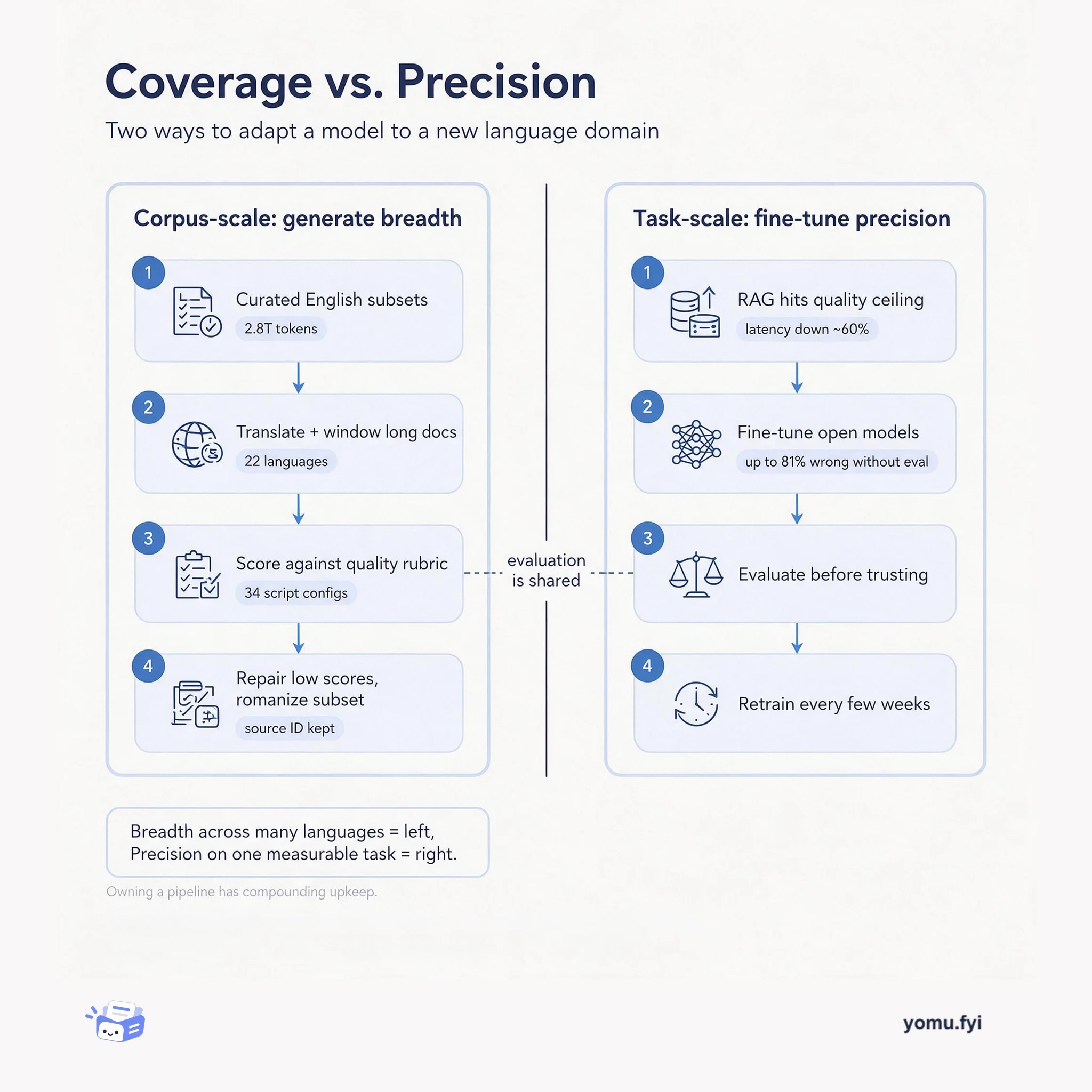
Compare two ways to adapt a model to a new language or domain: generate a broad synthetic corpus like AI4Bharat's, or fine-tune on one narrow task and evaluate it.
Keep reading
The Good Stuff
Paid picks we use ourselves. Links carry a referral code — a subscription through one earns us a commission at no extra cost to you.
One useful email. Unsubscribe anytime.