Coverage vs. Precision: AI4Bharat's Corpus Pipeline and When to Fine-Tune Instead
Compare two ways to adapt a model to a new language or domain: generate a broad synthetic corpus like AI4Bharat's, or fine-tune on one narrow task and evaluate it.
AI4Bharat's joint release with NVIDIA built a 2.8 trillion token Indic corpus by translating curated English subsets, scoring output against a quality rubric, repairing weak records, and keeping a source identifier on every record. That is corpus-scale adaptation: broad language coverage bought with an explicit generation and verification pipeline that others can reuse. Task-scale adaptation looks different. In FactSet's formula work, retrieval hit a quality ceiling and fine-tuned open models, retrained every few weeks, cut end-to-end latency about 60 percent. The comparison shows where each route earns its cost and why evaluation belongs in both.
FAQ
When is a generated corpus a better choice than fine-tuning?
When you need coverage in languages that lack native data, generation scales: AI4Bharat's pipeline translated curated English subsets into 22 Indian languages and kept a source identifier on every record. Fine-tuning fits when the target is one measurable task, as with FactSet's formula generation, where retrieval plateaued and fine-tuned open models cut end-to-end latency by roughly 60 percent.
Why do a quality rubric and a repair step matter in synthetic data?
Translation alone does not guarantee usable training text, so the Indic pipeline scores documents against a Multidimensional Quality Metrics rubric and repairs low-scoring outputs before release. Independent evaluation matters for the same reason: finance-domain testing found models answering up to 81 percent of analyst questions incorrectly even with retrieval.
Do I have to build my own generation pipeline to get this coverage?
No. The full generation recipe, including prompts and quality checks, was released openly so teams can adapt it to their own source material. Still, a pipeline like this needs continuous upkeep as vendor APIs and content change, so owning one only pays off when it sits close to your product.
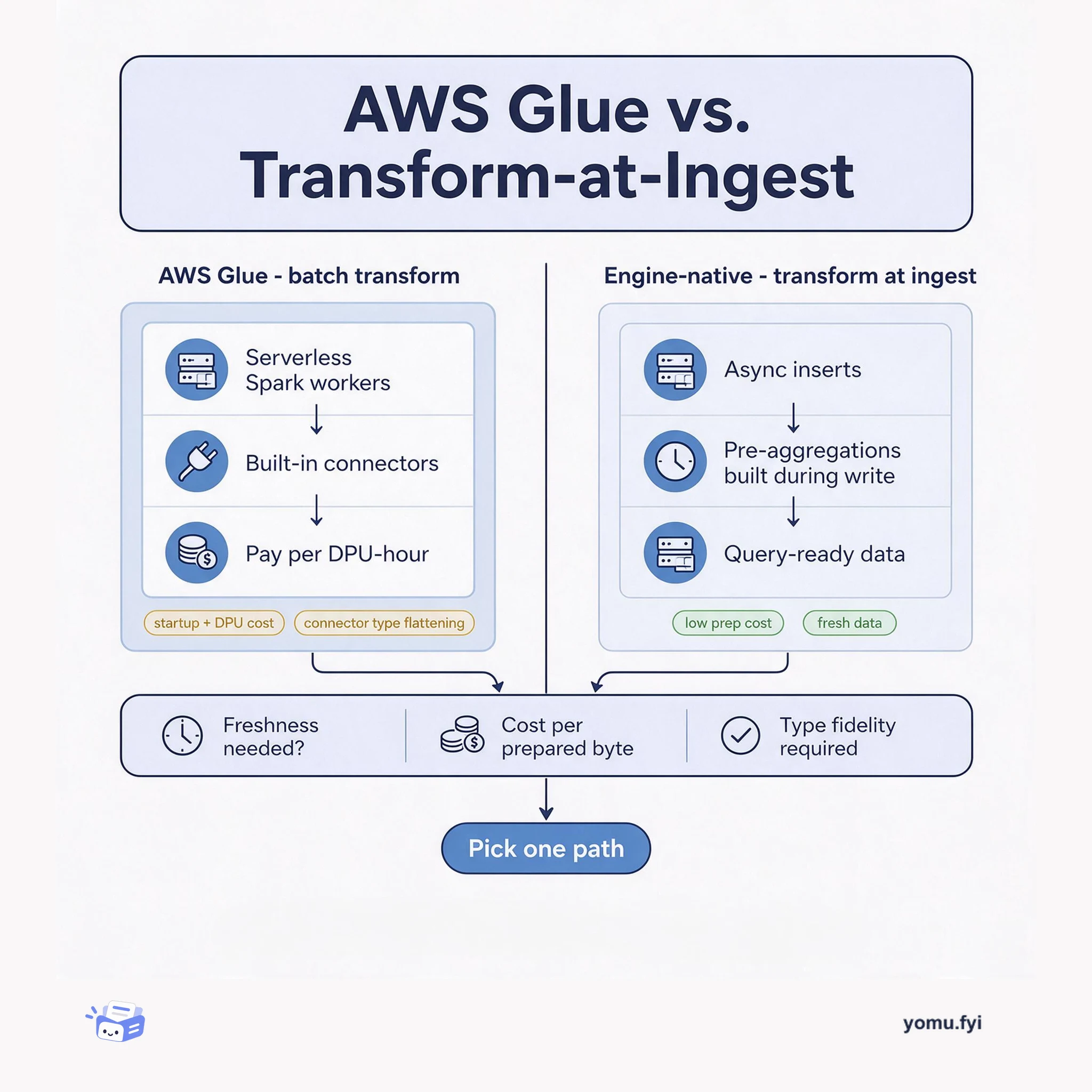
AWS Glue runs serverless Spark jobs that transform data in batches; engine-native pipelines transform during ingestion. This comparison shows how to pick between them by freshness, cost, and data fidelity.
Compare two mental models for brand: a static artifact (logos, guidelines, centralized control) and a living operating system (values, APIs, support, trust). See which choices fit your engineering team.
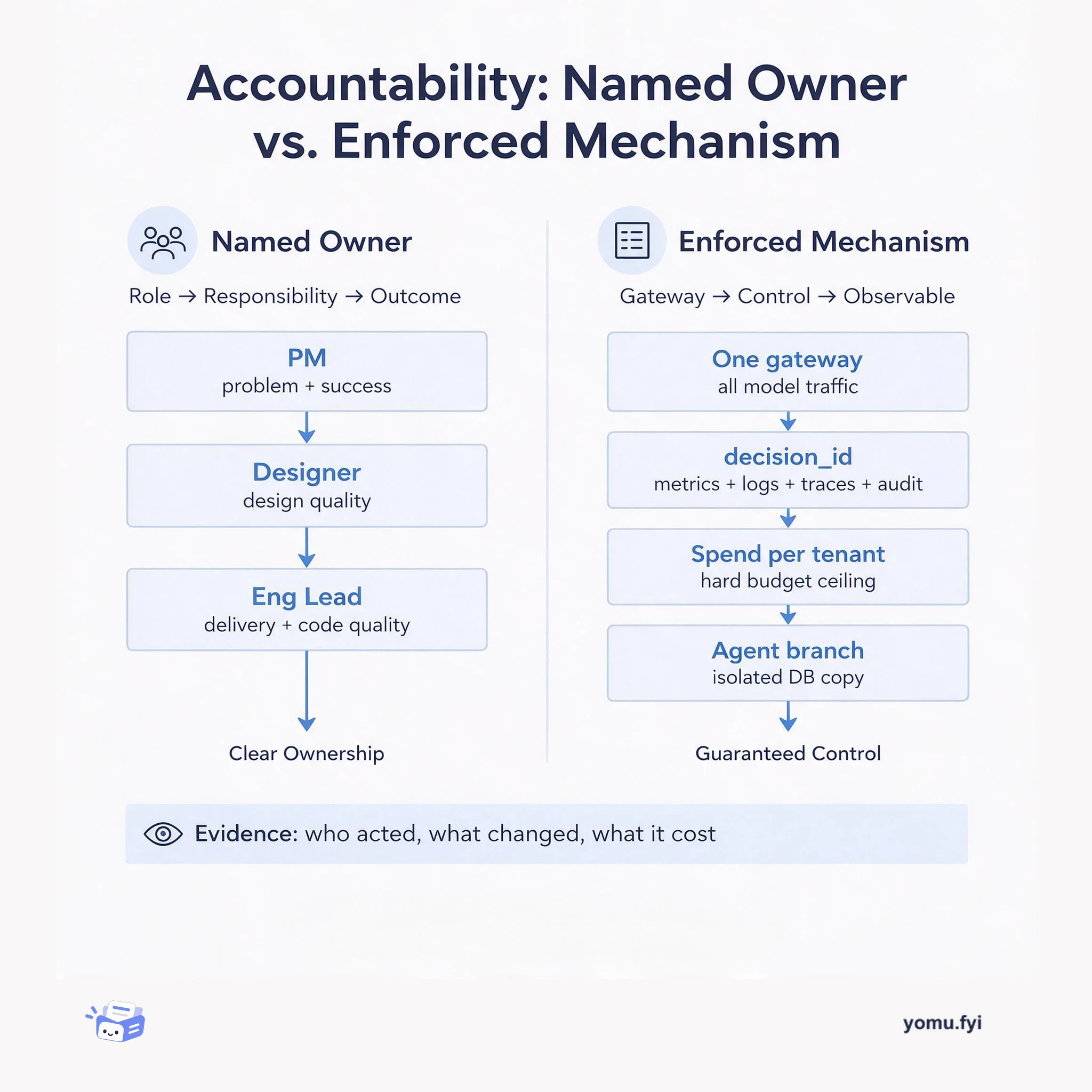
A side-by-side comparison of the two accountability models engineers actually rely on: a named human owner per outcome, and system-enforced traces, budgets, and isolation.
The Good Stuff
Paid picks we use ourselves. Links carry a referral code — a subscription through one earns us a commission at no extra cost to you.