The 2026 Customer Identity Trends Report, commissioned by Okta, surveys developers, senior leaders, and consumers on customer identity and AI. Among North American senior leaders, 23.2% named competitive disruption from AI-native competitors as the single biggest threat, second to cybersecurity and data risk at 31.4%, and 50.2% called AI a must-win capability. Consumer readiness remains limited: 37% are ready for AI to make final decisions and act (7%) or handle routine tasks (30%), though willingness exceeds 50% for most use cases when actions can be approved or reversed. More than three-quarters of organizations have AI agents or autonomous systems in production or under active development, but only 22.1% are moving as quickly as they would like. Delays include engineering capacity, cited by nearly 20%, and identity infrastructure that cannot support agent access patterns, cited by slightly more than 10%.
Context
The findings come from the 2026 Customer Identity Trends Report, based on global surveys of developers, senior leaders, and consumers commissioned by Okta. The article focuses on North American respondents and frames customer identity as either an enabler or a hindrance to AI-assisted and agentic customer experiences.
Approach / What changed
The article argues that agentic commerce requires an identity platform built for agent authentication, authorization, auditability, and scale. It recommends modernizing customer identity so it supports AI-assisted experiences without compromising security, and says the right platform handles specialized identity details so developers can focus on building customer experiences rather than maintaining identity.
Takeaways
1
More than three-quarters of North American senior leaders said their business would be moderately (46.3%) or highly (20.4%) exposed if a competitor launched a significantly better AI-driven customer experience tomorrow.
2
About 14% of engineering time is spent building, maintaining, or operating customer identity and access management, but fewer than 15% of respondents consider identity solved to the point of competitive advantage; 27.2% say they are only managing it as a recurring cost and time drain.
3
The article reports that organizations relying on only an external customer identity platform were more likely to report frictionless authentication, transformative AI capabilities, agents fully embedded in production, and on-schedule AI rollouts.
FAQ
What share of consumers will let AI act on their behalf?
37% are ready for AI to make final decisions and act (7%) or handle routine tasks (30%). Willingness exceeds 50% for most use cases when the consumer must approve or can reverse the action.
What is the main reason AI agent rollouts are delayed?
Only 22.1% of organizations building or running agents are moving as quickly as they would like. Nearly 20% cite engineering capacity, and slightly more than 10% point to identity infrastructure that cannot support agent access patterns.
How is identity viewed inside these organizations?
About 14% of engineering time goes to building, maintaining, or operating CIAM. Fewer than 15% consider identity solved as a competitive advantage, while 27.2% say they are only managing it as a recurring cost and time drain.
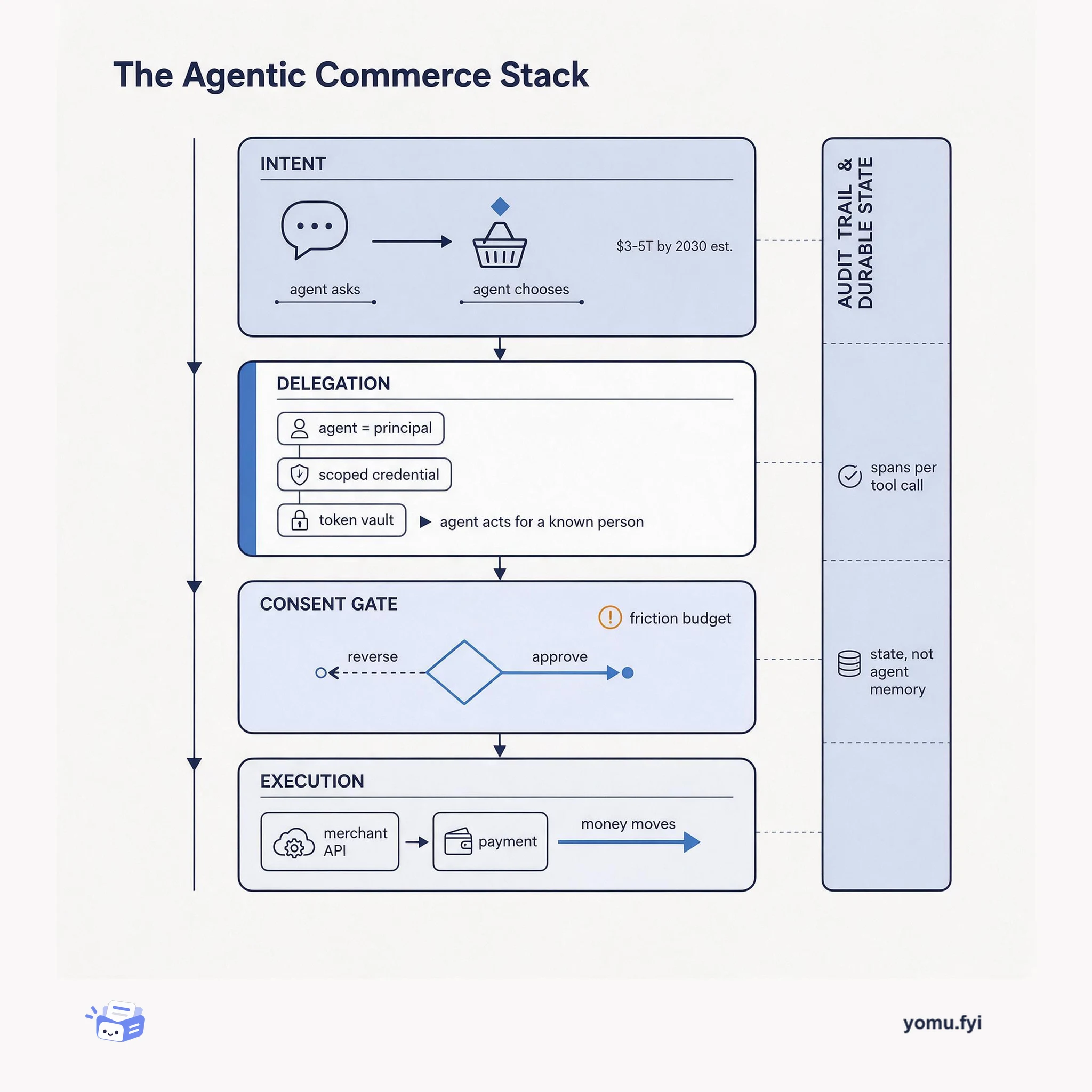
Agentic commerce works only when a shopper's agent can be identified, scoped, and audited at each step. This architecture map shows the delegation, consent, and audit layers that make an agent's purchase safe.
Keep reading
Related reading
The Good Stuff
Paid picks we use ourselves. Links carry a referral code — a subscription through one earns us a commission at no extra cost to you.