Who Is the Agent Buying For? The Agentic Commerce Stack
Agentic commerce works only when a shopper's agent can be identified, scoped, and audited at each step. This architecture map shows the delegation, consent, and audit layers that make an agent's purchase safe.
Agentic commerce means an agent acts on a shopper's behalf to compare, choose, and pay, which makes identity the load-bearing layer of the stack. The diagram reads top to bottom: intent starts at the shopper's agent, delegation turns that intent into a scoped credential tied to a known person, a consent gate decides whether an action is approved or reversible, and execution reaches merchant and payment systems. A side rail carries durable state and audit traces so every step can be replayed. Get the layers wrong and you get abandoned carts from excess friction, or credentials that outlive the relationship that justified them.
FAQ
Why give an agent its own identity instead of reusing the user's credentials?
A scoped, revocable credential limits what the agent can do and keeps every action attributable. MongoDB Atlas App Connections uses OAuth 2.1 delegation so an AI client acts on the user's behalf, with read-only or full access and revocation at any time, and each action attributed to both the application and the user.
How much friction can an agentic checkout afford before shoppers abandon it?
In the cited survey of 5,250 consumers, 74% would abandon a task if forced to create an account before seeing key information, and 72% cited slow login or verification. Only 6% were ready for AI to handle as much as possible, yet most accepted agent actions that are approved first or reversible, which is why the consent gate sits before execution.
What breaks when an MCP client issues its own identity assertion?
Claude can sign the assertion when an identity provider lacks the MCP extension, but it does not confirm an identity-provider sign-in, check multi-factor authentication, or apply the app's sign-in rules. Disabling the member in the identity provider no longer cuts off access, so they must be removed from both organizations, and issued tokens stay valid until expiry.
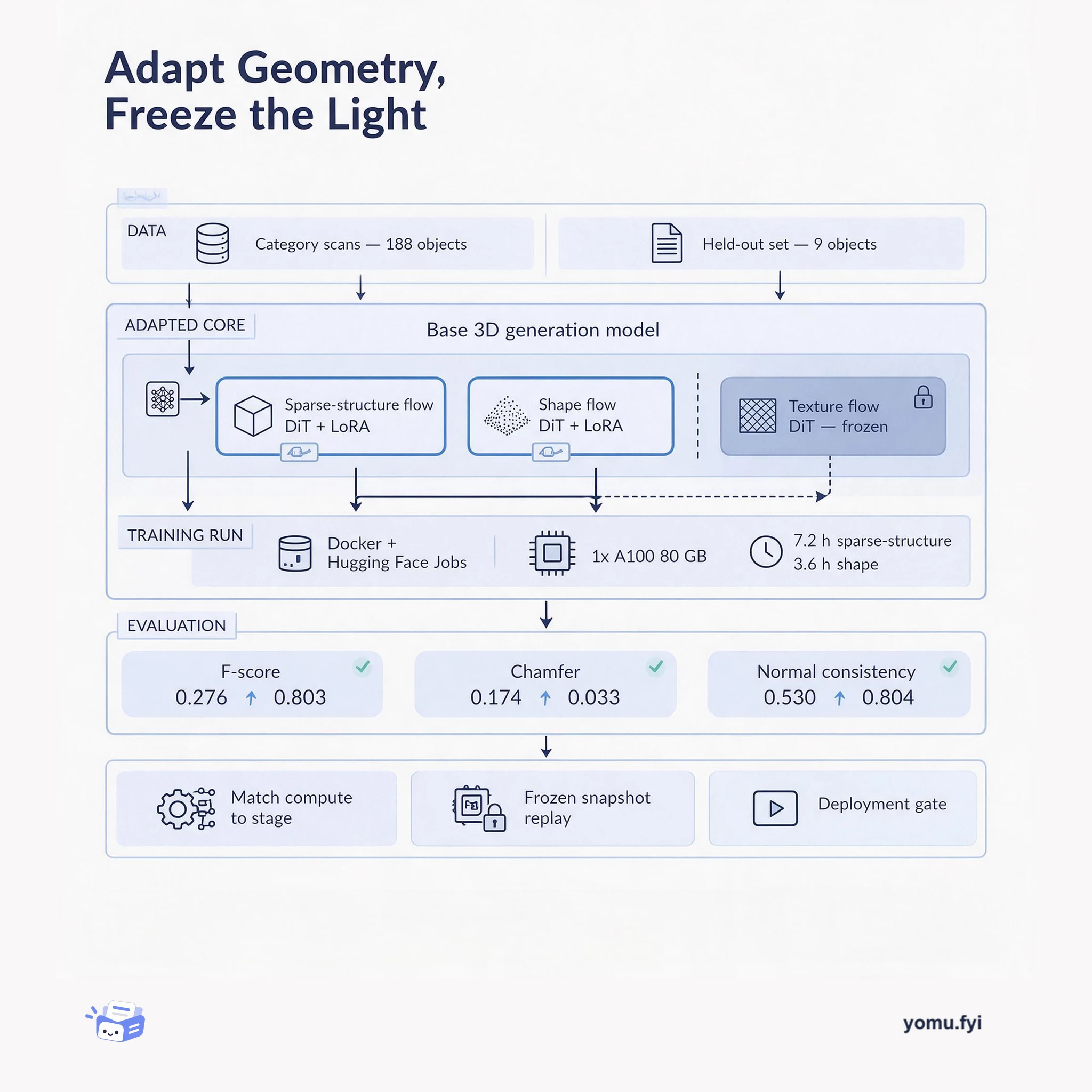
A layered architecture view of fine-tuning a 3D generation model: which flow DiT branches get LoRA adapters, which stay frozen, and how data, compute, and evaluation wrap the adapted core.
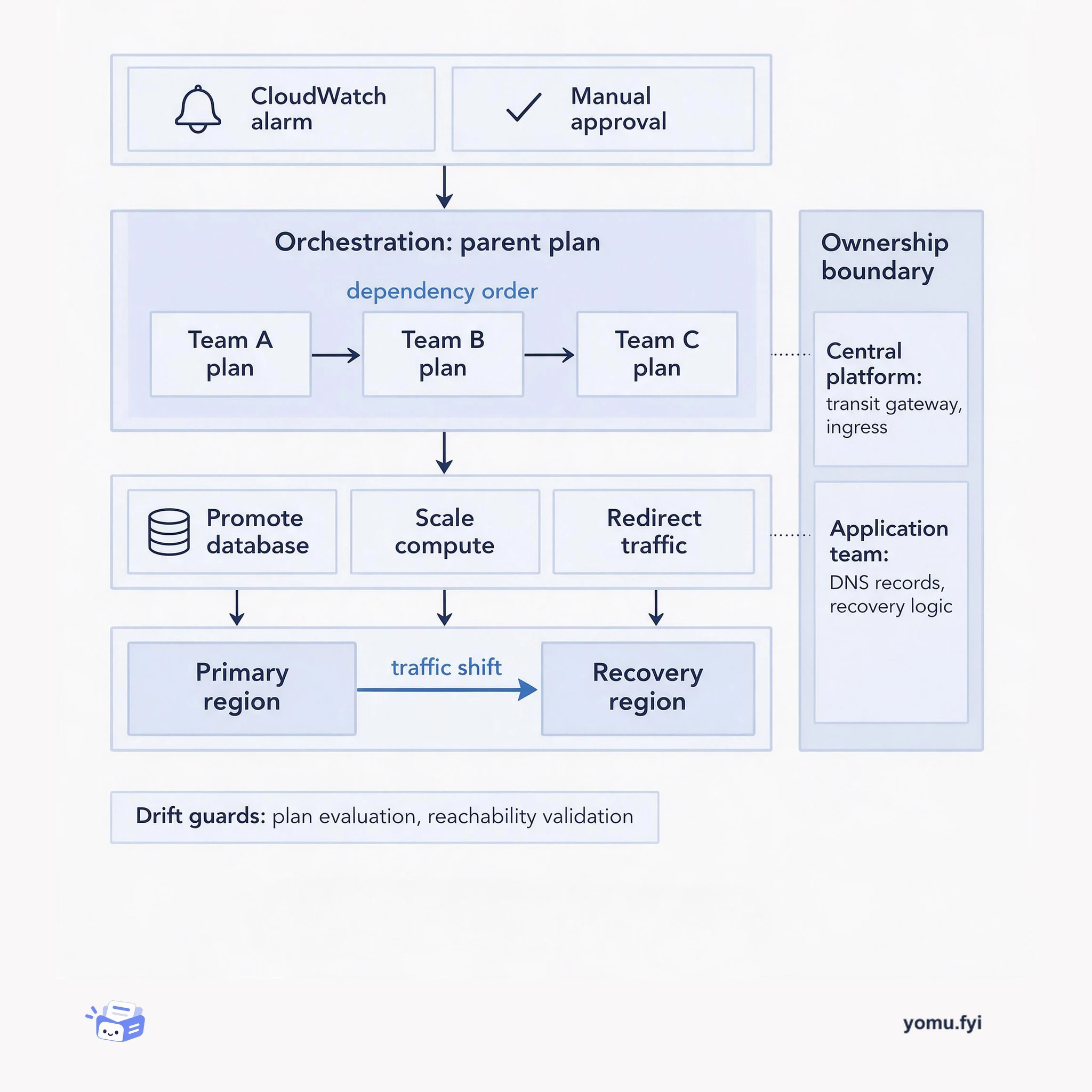
ARC Region Switch is a managed failover orchestrator that runs team-owned plans in dependency order. This diagram maps its trigger, orchestration, execution, and region layers and the ownership boundary.
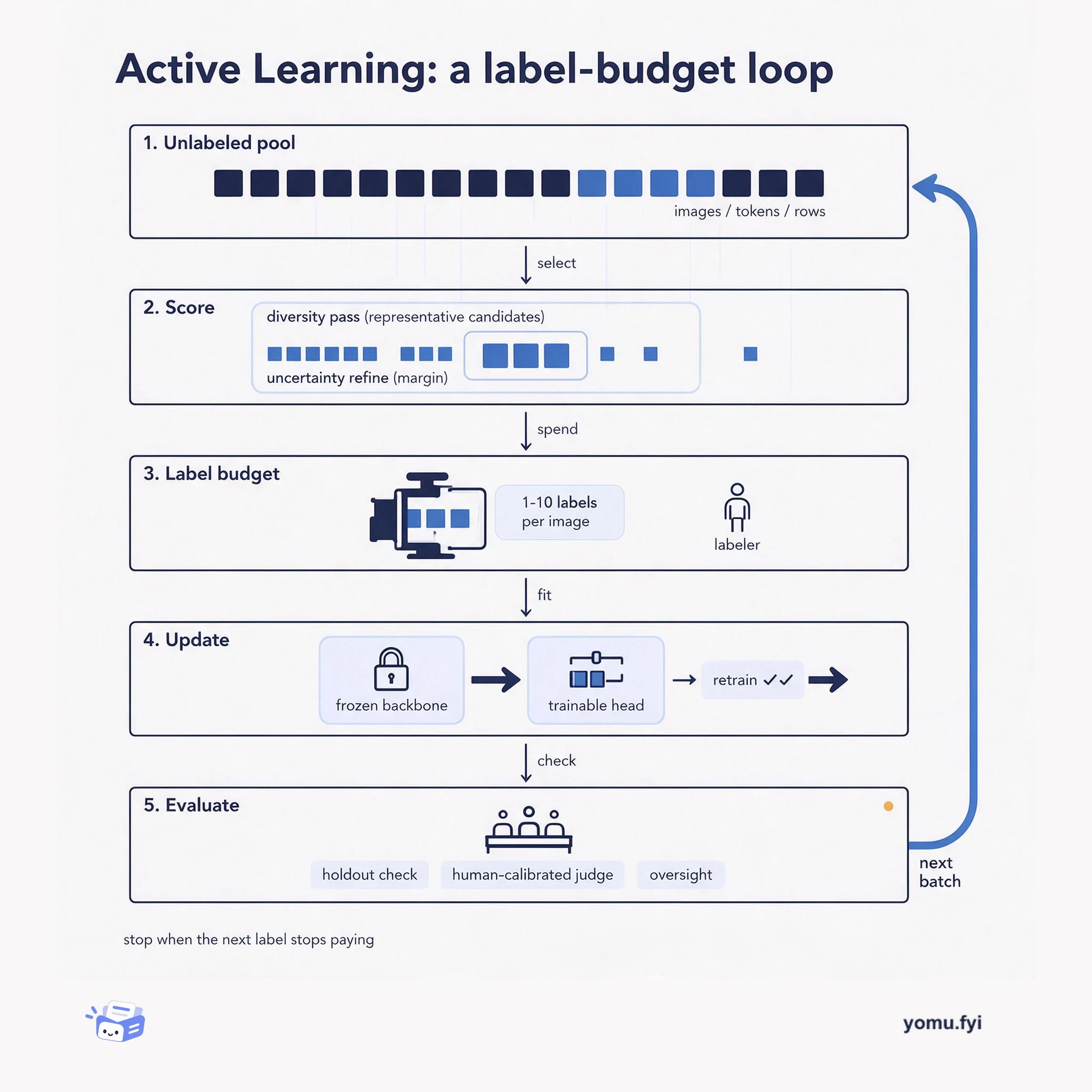
Active learning is a loop that spends a fixed labeling budget on the samples most worth annotating. This diagram maps its stages — pool, score, label, train, evaluate — and the return path that closes the cycle.
The Good Stuff
Paid picks we use ourselves. Links carry a referral code — a subscription through one earns us a commission at no extra cost to you.