Shipsidekick, a logistics platform, replaced Neon with ClickHouse Managed Postgres after struggling with frequent outages, pool exhaustion, and slow support. The migration took a single weekend, with ClickPipes replicating 500 GB of data in 4-5 hours. Since the move, CPU usage dropped from 100% to 5-10%, cache hit rate rose from 30-35% to 99%, and queries run about 10x faster. The team resolved a partial unique index conflict during replication by dropping and re-creating the index. They also implemented timeouts on a read-only role to prevent AI agent queries from impacting primary performance.
Context
Shipsidekick is a logistics platform combining warehouse, order, and transportation management. It was built as a Next.js app on Vercel with Neon as its Postgres provider. The team faced frequent outages, pool exhaustion issues, high CPU and RAM saturation, slow support responses, and a cache hit rate of only 30-35%. They evaluated PlanetScale but found it too expensive due to its requirement for two replicas.
Approach / What changed
Shipsidekick migrated from Neon to ClickHouse Managed Postgres by enabling logical replication on Neon, creating a ClickPipe in the ClickHouse console, and letting it replicate approximately 500 GB of data in 4-5 hours. They resolved a partial unique index conflict by dropping the index, letting replication finish, and re-creating it. They also implemented statement and transaction timeouts on a read-only role to prevent AI agent queries from impacting primary performance.
Takeaways
1
Shipsidekick’s cache hit rate improved from 30-35% on Neon to 99% on ClickHouse Managed Postgres, and CPU usage dropped from 100% to 5-10%.
2
ClickHouse Managed Postgres requires only one standby replica for high availability, reducing costs compared to providers that require two replicas.
3
During replication, a partial unique index conflict was resolved by dropping the index, letting replication finish, and re-creating it; ClickPipes handled the interruption gracefully without data loss.
FAQ
How long did the migration from Neon to ClickHouse Managed Postgres take?
The migration took a single weekend. ClickPipes replicated about 500 GB of data in 4-5 hours, which was faster than the estimated day and a half.
What issue did Shipsidekick face during replication and how was it resolved?
They encountered a cron job that ran multiple transactions which, when replicated mid-flight, tripped a partial unique index on the invoices table. The fix was to drop the index, let replication finish, and then re-create it.
How did Shipsidekick prevent AI agent queries from affecting primary database performance?
They implemented statement and transaction timeouts on the read-only role used by AI agents. This prevented long-running AI queries from consuming resources and impacting primary database performance.
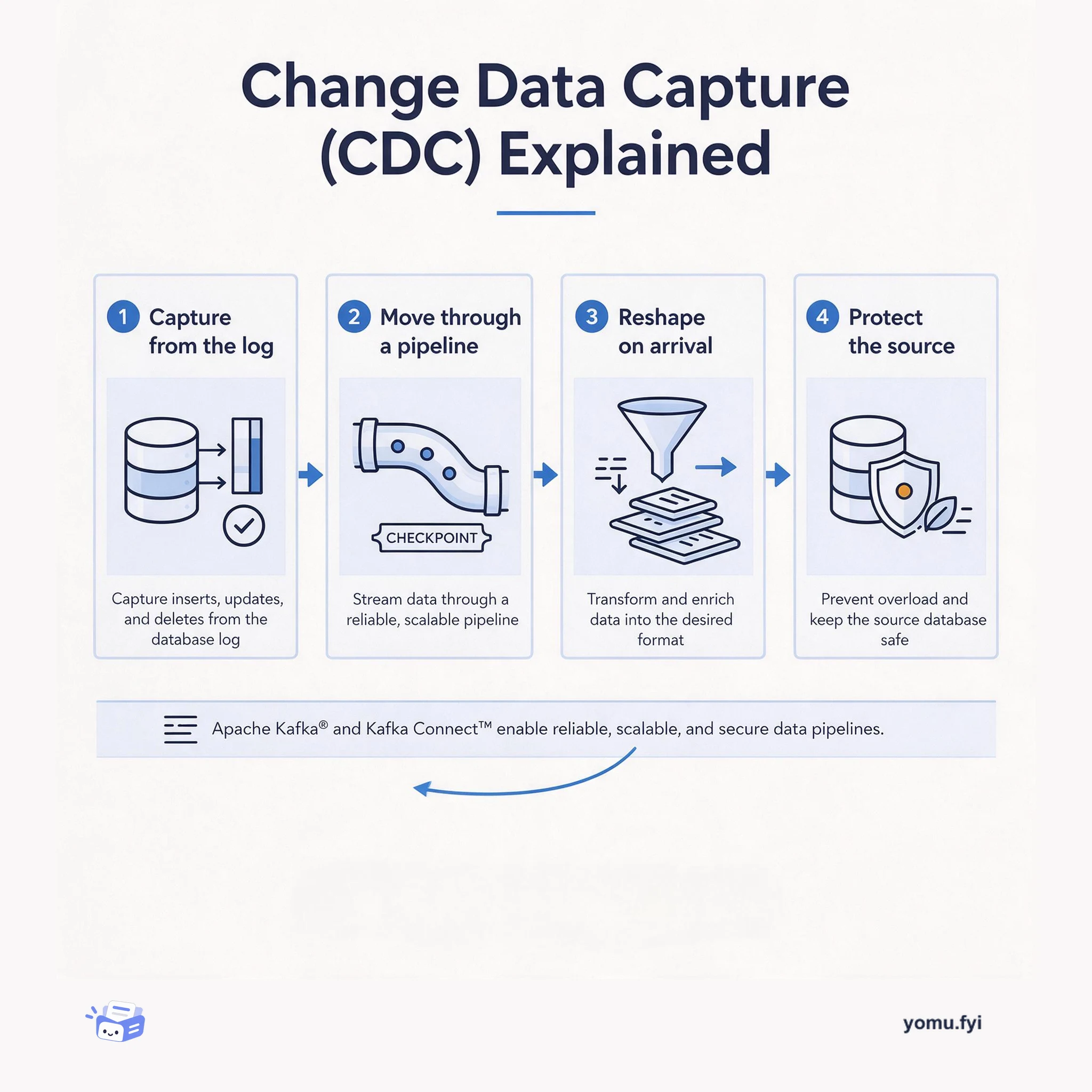
Change data capture turns a database's write-ahead log into a continuously updated copy for analytics. This four-checkpoint walk-through shows how to wire it without stalling the primary.
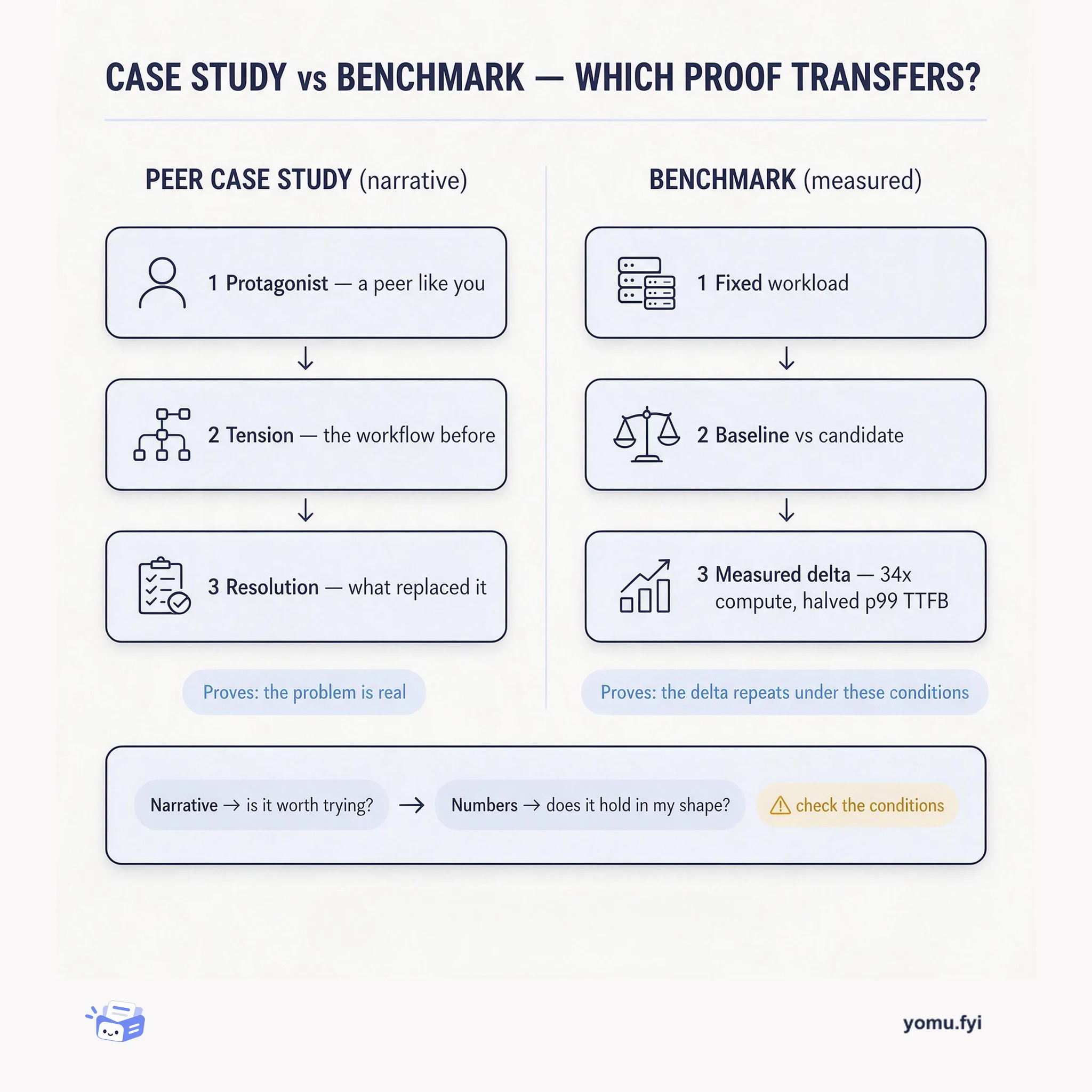
A case study sells a peer's outcome; a benchmark proves a repeatable delta. This side-by-side shows what each kind of evidence establishes, what it hides, and how to pick the right proof before you commit.
Keep reading
Related reading
The Good Stuff
Paid picks we use ourselves. Links carry a referral code — a subscription through one earns us a commission at no extra cost to you.