European organizations are rolling out AI agents and autonomous systems while customer identity infrastructure creates delays, according to survey data in the 2026 Customer Identity Trends Report. Among European developers and senior leaders, 75.8% said their organizations either run such systems in production (28.7%) or are actively building them (47.0%), yet only 17.5% are delivering AI at the speed they want. The report says the top three causes of delay relate directly or indirectly to customer identity, including infrastructure that cannot support agent access patterns. Consumer readiness remains limited: 40% are prepared for AI to handle routine tasks or final decisions, though 40% feel more comfortable with AI acting on their behalf than a year earlier. The proposed response is a modern CIAM platform with agentic authentication and authorization, audit trails, fine-grained authorization, and identity verification for agent actions.
Context
The findings come from the 2026 Customer Identity Trends Report, commissioned by Okta, with European data from respondents in Germany and the UK. The report cites McKinsey estimates that by 2030 $3-5 trillion will flow through agentic commerce globally and that 25-40% of e-commerce will be agentic. It frames customer identity as the trust and transparency layer for AI agents that move from answering questions to taking action.
Takeaways
1
75.8% of surveyed European developers and senior leaders said their organizations either have AI agents or autonomous systems fully embedded in production (28.7%) or are actively building them (47.0%), but only 17.5% are delivering AI at the speed they want.
2
Only 40% of European consumers are ready for AI to take final decisions and act on their behalf (7%) or handle routine tasks and less important decisions (33%); 40% feel more comfortable with AI acting for them than a year ago.
3
European organizations report nearly 14% of engineering time spent building, maintaining, or operating CIAM, and the Post argues modern CIAM features such as delegated access, context security, and Agent as Principal can reduce bottlenecks.
FAQ
What share of European organizations are already running or building AI agents?
Among surveyed European developers and senior leaders, 75.8% said their organizations either have AI agents or autonomous systems fully embedded in production (28.7%) or are actively building them (47.0%). Only 17.5% are delivering AI at the speed they want.
Why are European AI rollouts falling behind schedule?
The Post says the top three reasons cited by developers and senior leaders relate directly or indirectly to customer identity. The third most-cited reason is identity infrastructure that cannot support agent access patterns.
Which CIAM capabilities does the Post recommend for AI agents?
It points to delegated access such as Auth for MCP, context security such as FGA for RAG, and interoperability such as Agent as Principal. It also cites fine-grained authorization, audit trails, and identity verification for agent actions as ways to meet GDPR and EU AI Act requirements.
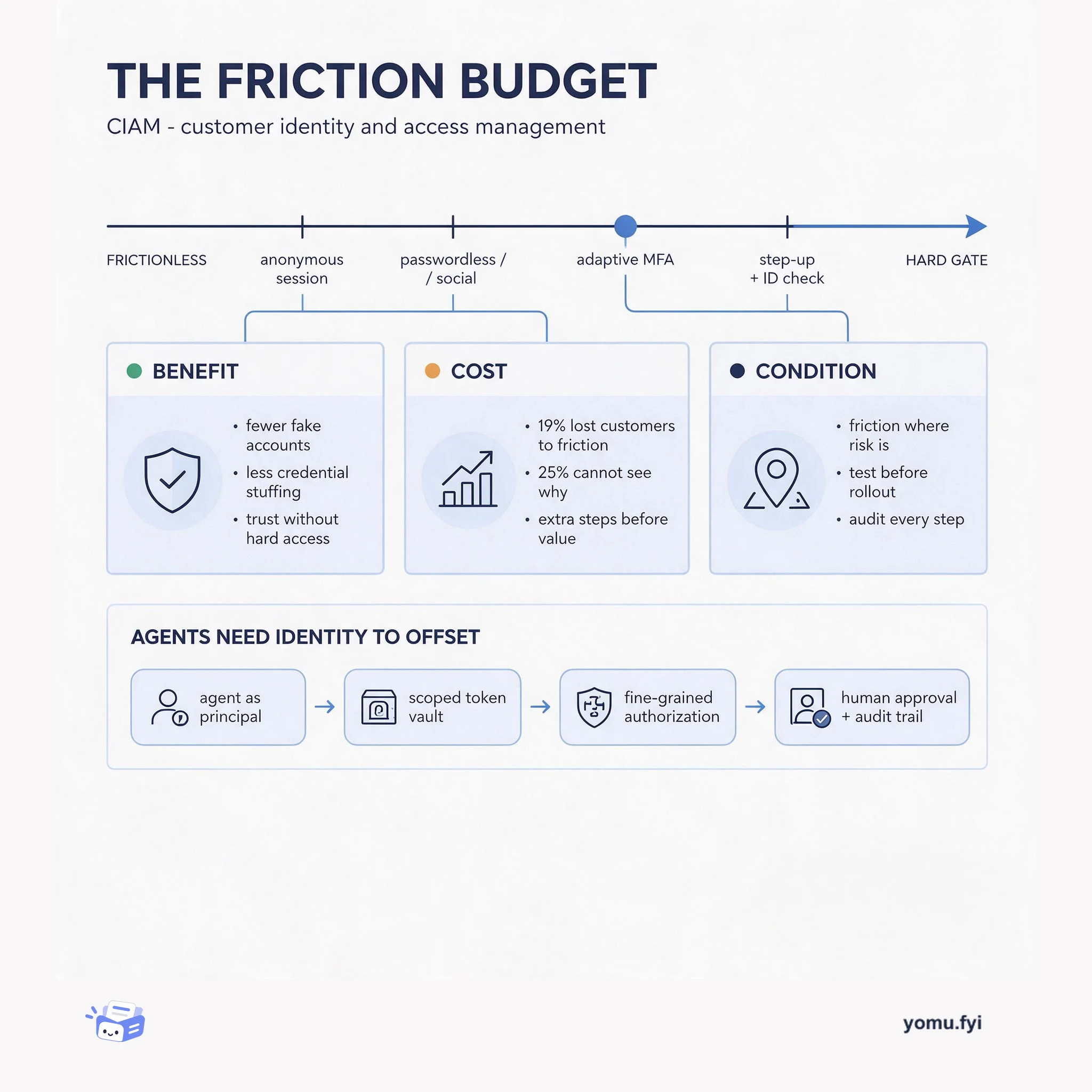
The friction budget is how much identity resistance a customer journey can absorb before it starts costing conversions. This explainer maps CIAM's benefit, its cost, and the condition that decides which side wins.
Keep reading
Related reading
The Good Stuff
Paid picks we use ourselves. Links carry a referral code — a subscription through one earns us a commission at no extra cost to you.