The post distinguishes logs and metrics by the kind of question each answers. Logs capture state at decision points for later reconstruction during debugging, while metrics represent questions chosen in advance and tracked over time via dashboards and alerts. The same event can be recorded as both a log and a metric, but metrics are a commitment to a number your team watches, making them harder to rename or drop. Shared scope attributes like user ID and signup method apply automatically to logs and metrics within a request, keeping correlated data consistent. The author advises reaching for a log when debugging something and for a metric when you want a number you will track over time, even when nothing is wrong.
Takeaways
1
Logs are for debugging and reconstructing what happened at decision points; metrics are for analyzing trends over time via dashboards and alerts.
2
A metric is a commitment: naming one implies building dashboards and alerts on it, whereas logs are easier to add, remove, or reword.
3
Use the same name and attribute keys for logs and metrics of the same event to simplify filtering and correlation between the two.
FAQ
When should I use a log instead of a metric?
Use a log when you need to reconstruct what was true at a decision point for debugging. Logs are insurance against future questions about specific events, and they can be added temporarily without affecting dashboards.
Can the same event be both a log and a metric?
Yes, the post shows user.signup as both a log and a counter. However, the metric is a commitment to track over time, while the log can be temporary or reworded without breaking dashboards.
How do I avoid paying for the same data twice when using Sentry with existing logging?
Send Sentry only the application logs you would reach for while debugging and the metrics that answer chosen questions. Keep high-volume logs like infrastructure or debug-level chatter where they already live.
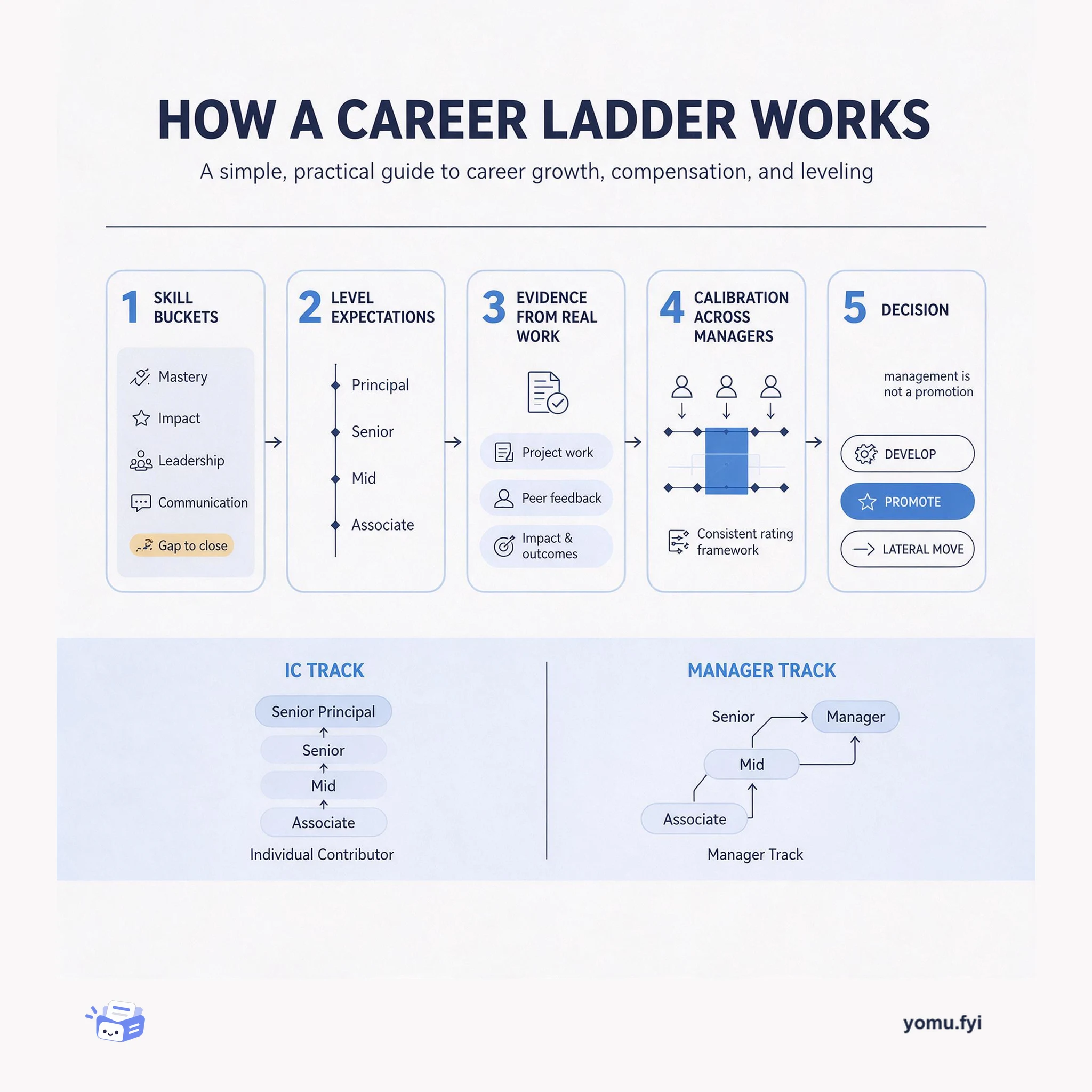
A career ladder turns vague seniority into a repeatable flow: define skill buckets, set level expectations, collect real evidence, calibrate across managers, then decide. Here is how each stage works.
Keep reading
Related reading
The Good Stuff
Paid picks we use ourselves. Links carry a referral code — a subscription through one earns us a commission at no extra cost to you.