From Ringing Line to Resolved Contact: How a Call Center Works
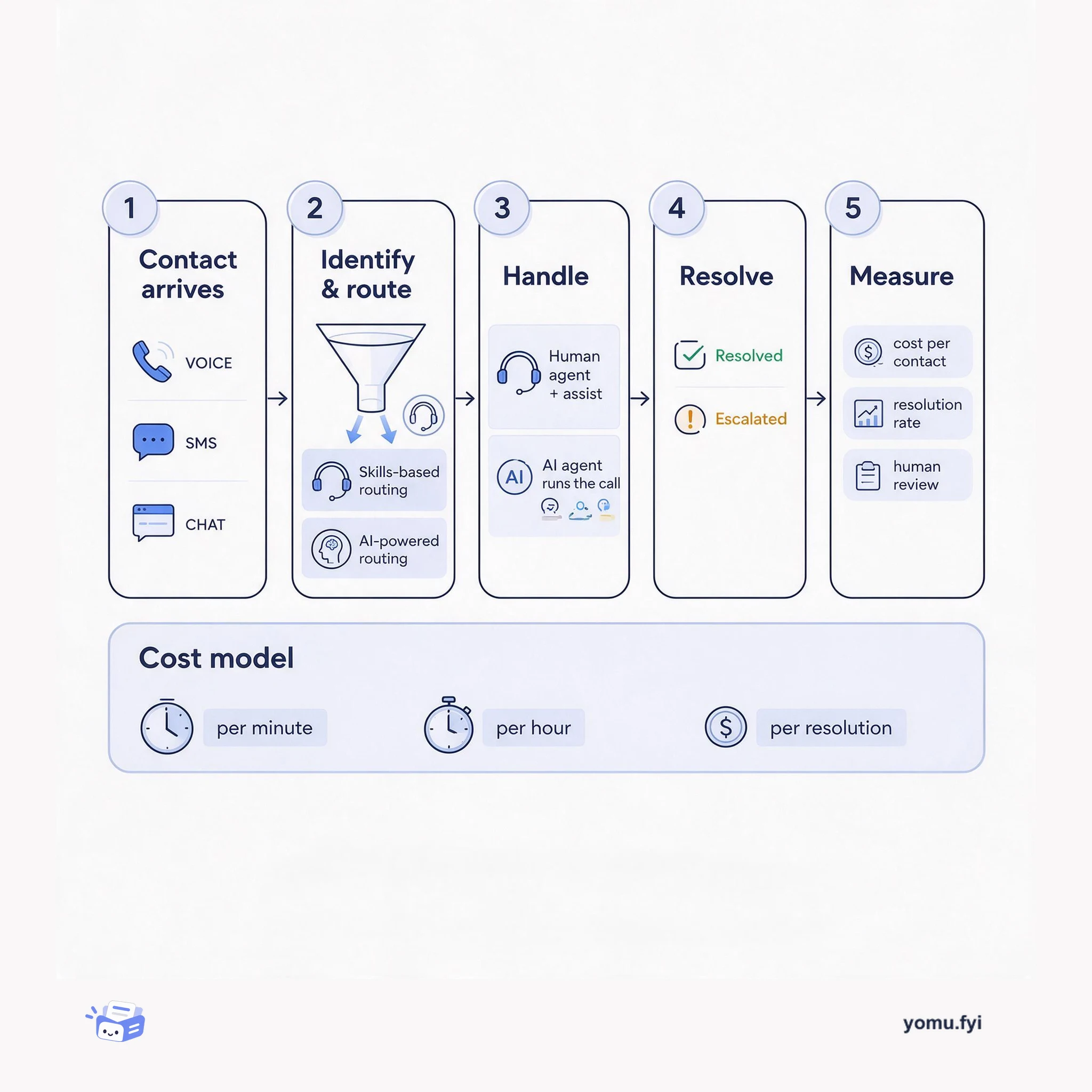
Follow one contact through a call center: arrival, routing, handling by a human or AI agent, resolution, and the cost-per-contact math that decides which path to use.
A career ladder turns vague seniority into a repeatable flow: define skill buckets, set level expectations, collect real evidence, calibrate across managers, then decide. Here is how each stage works.
A career ladder is an operating system for growth decisions, not a list of titles. It starts by grouping the work into a small set of skill buckets, then writing what each level looks like from Associate to Principal, so expectations are visible before review season. From there the ladder only works if evidence is collected from real work rather than intent, and if managers calibrate their readings against each other so one reviewer's standards do not decide a career. The payoff is fairer, more consistent promotion calls, and a clear answer to what to develop next, including whether management is a promotion or a lateral move.
Intercom's RAD ladder defines two paths, and management is a lateral move rather than a promotion. The IC track runs from Associate to Senior Principal across six skill sets, while the management track focuses on five, including leadership, people management, business strategy, and execution.
Calibrate across managers. Intercom's PM ladder names 17 discrete skill areas drawn from real feedback, so reviewers compare the same behaviors instead of general impressions. Aggregating several readings of the same evidence reduces the variance one reviewer would otherwise introduce.
Evidence of behavior already happening, not intent. The PM ladder deliberately separates driving outcomes from shipping so impact and delivery stay distinct, and the RAD ladder assesses six skill sets including mastery, impact, and partnerships and influence. Capture what the person actually did rather than what the ladder assumes they would do.
The posts behind it
 Stack Overflow · · Explainer
Many regression tests verify what developers intended a system to do, not what it actually does, leaving a critical gap. Hyrum’s Law states that once a system has enough users, every observable behavior becomes depended on, so unplanned quirks and accidental defaults are a common source of regressions. Characterization tests, coined by Michael Feathers, address this by capturing the current actual behavior of code as a test, regardless of whether that behavior is correct. They are rarely written because writing them is a slog—requiring testing many inputs manually—and because it feels wrong to assert behavior that appears buggy. A powerful method is to record production traffic at the network level, capturing requests, responses, and side effects like database calls, then replaying those recordings as a repeatable test suite that flags any behavior change, and helps during refactoring, framework upgrades, rewrites, and AI-assisted changes.
 Sentry · · Explainer
The post distinguishes logs and metrics by the kind of question each answers. Logs capture state at decision points for later reconstruction during debugging, while metrics represent questions chosen in advance and tracked over time via dashboards and alerts. The same event can be recorded as both a log and a metric, but metrics are a commitment to a number your team watches, making them harder to rename or drop. Shared scope attributes like user ID and signup method apply automatically to logs and metrics within a request, keeping correlated data consistent. The author advises reaching for a log when debugging something and for a metric when you want a number you will track over time, even when nothing is wrong.
 Hugging Face · · Explainer
Choosing a time-series forecasting model is difficult because different architectures handle smooth industrial signals, noisy retail demand, and seasonal horizons differently. Granite Timeseries Ensemble addresses this by combining four pre-trained Granite models—PatchTST-FM-r1, PatchTST-FM-r2, FlowState-r1.1, and TTM-r3—into a single forecast without retraining or fitted weights. Two aggregation methods are provided: the Probabilistic Ensemble uses uniform probability pooling, while the IQR Ensemble adaptively weights members based on their forecast spread. On the GIFT-Eval benchmark, both ensembles outperform all individual members on aggregate MASE and MASE rank, with the Probabilistic Ensemble achieving the lowest MASE of 0.683. The ensemble offers a robust default, but users should backtest on their data and consider limitations like independent multivariate forecasting and increased inference time from loading four checkpoints.
 Intercom · · Explainer
Intercom created a unified RAD function 18 months ago, merging Product Research and Product Analytics to drive evidence-based decisions. To build a high-performing team, they developed career ladders with two paths: individual contributor and manager, where management is a lateral move, not a promotion. The IC track spans Associate to Senior Principal and assesses six skill sets: mastery, partnerships and influence, impact, leadership, communication, and feedback and collaboration, with specific competencies like tools and methods, product knowledge, and mentorship. The management track focuses on five skill sets: leadership, people management, business strategy, product strategy, and execution and impact, where managers are expected to be role models, uplevel the RAD function, and coach their teams. These ladders, created with managers Nick, Louis, and Hayley, clarify roles, align expectations, promote development, and enable fair performance calibration, prioritizing mastery and communication across both paths.
Intercom · · Problem & solutionProduct management lacks clear deliverables such as code or designs, making performance reviews inconsistent and overly reliant on peer feedback across multiple managers. Career ladders address this by clarifying role expectations and promotion criteria, enabling fairer and more consistent reviews, though promotion remains nuanced beyond discrete tasks. Intercom’s ladder organizes PM skills into five buckets: insights driven, strategy, execution, driving outcomes, and leadership behaviors, each with two to four discrete areas totaling 17, chosen from real feedback given to team members. Expectations are defined from Associate to Principal level, with execution explicitly tied to R&D principles like starting with the problem, thinking big but starting small, and shipping to learn. The ladder deliberately separates driving outcomes from shipping to ensure PMs focus on impact without sacrificing delivery, and includes leadership behaviors such as communication, collaboration, ownership, and decisiveness.
More like this
Follow one contact through a call center: arrival, routing, handling by a human or AI agent, resolution, and the cost-per-contact math that decides which path to use.
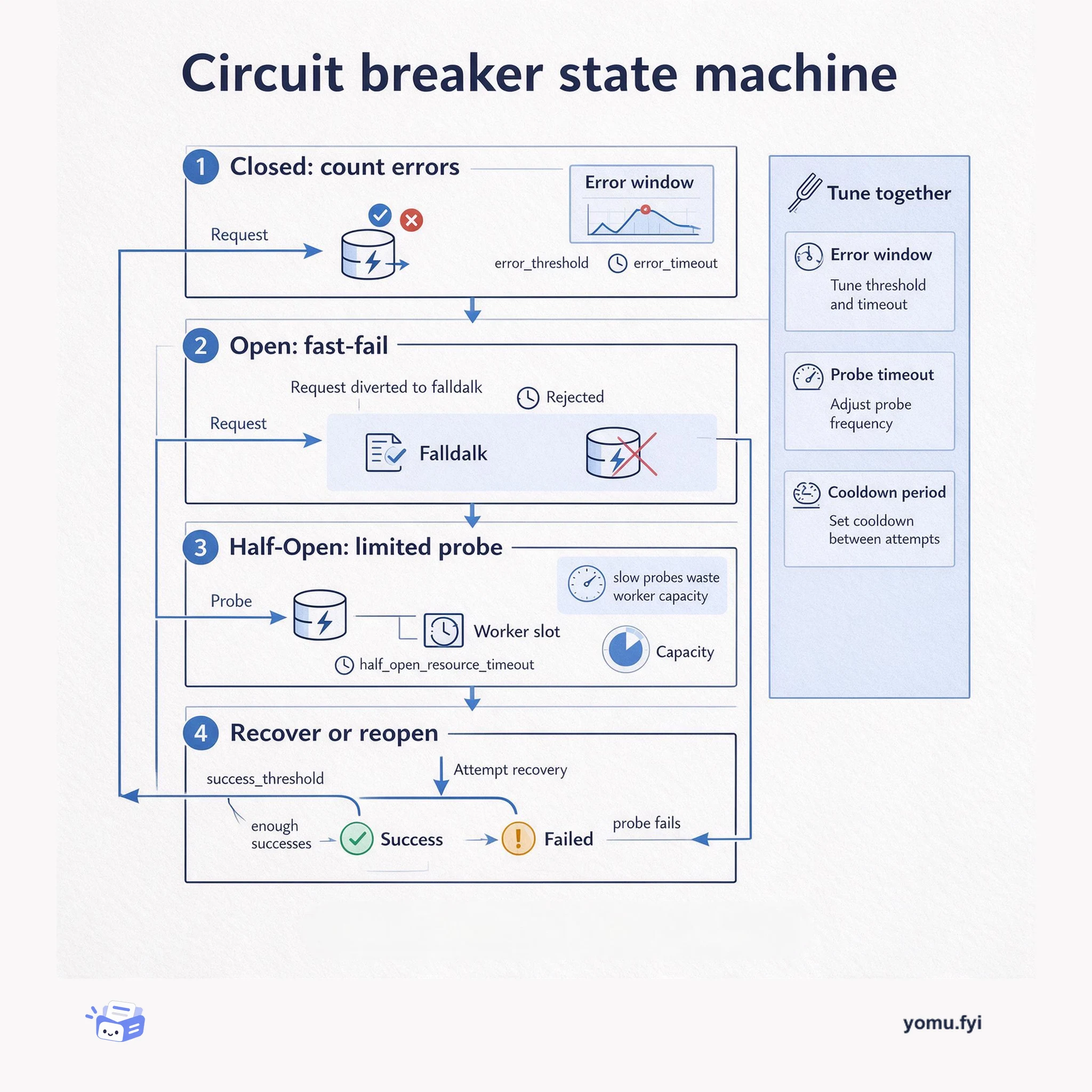
A circuit breaker turns dependency failures into fast failures, then probes for recovery. See the state loop and how half-open probes can quietly consume worker capacity.
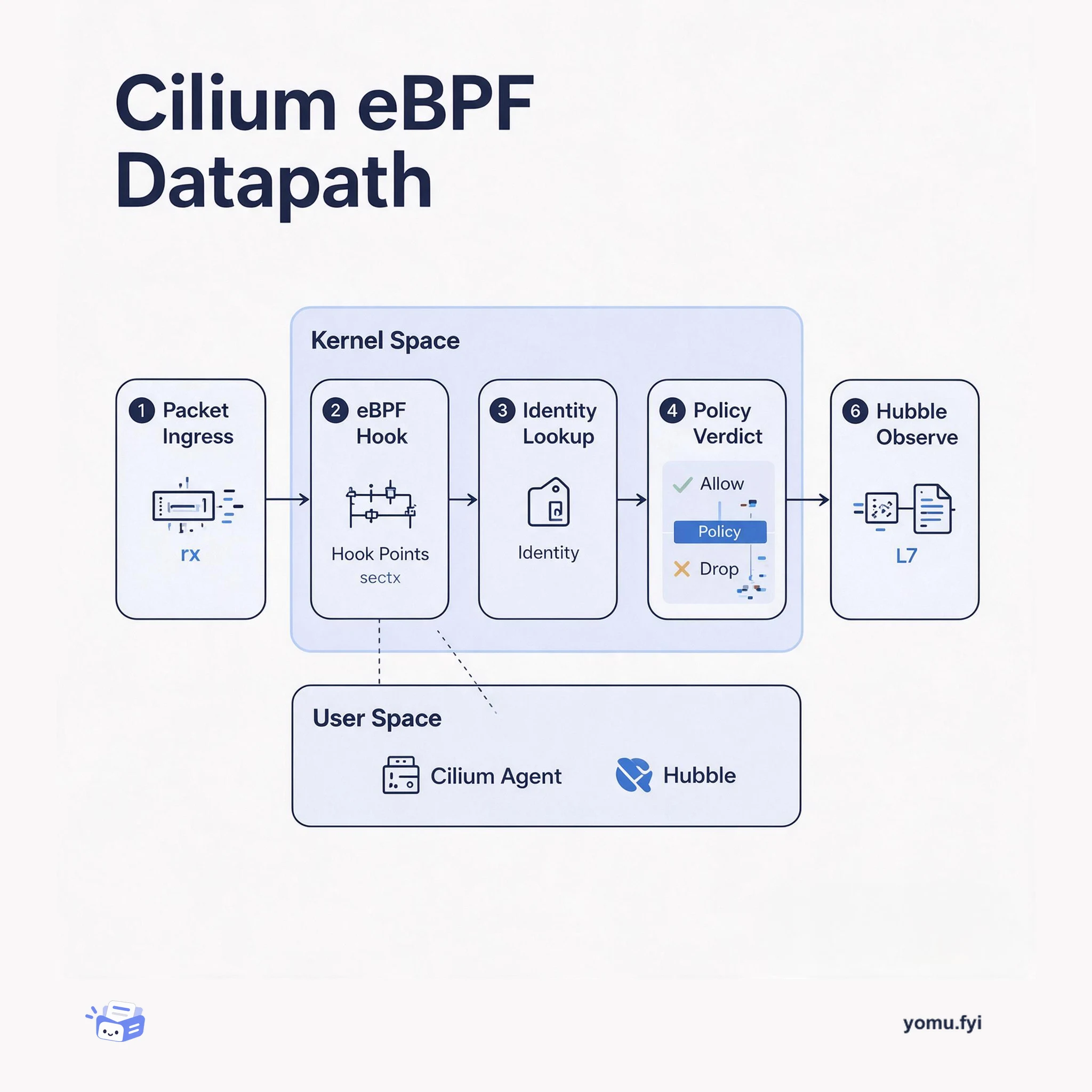
Cilium uses eBPF programs in the Linux kernel to enforce identity-based network policies and capture L7 observability for Kubernetes workloads. This diagram traces the path from packet arrival to policy verdict and Hubble flow.
The Good Stuff
Paid picks we use ourselves. Links carry a referral code — a subscription through one earns us a commission at no extra cost to you.
One useful email. Unsubscribe anytime.