BigQuery in the Right Lane: Five Checkpoints for AI Data Pipelines
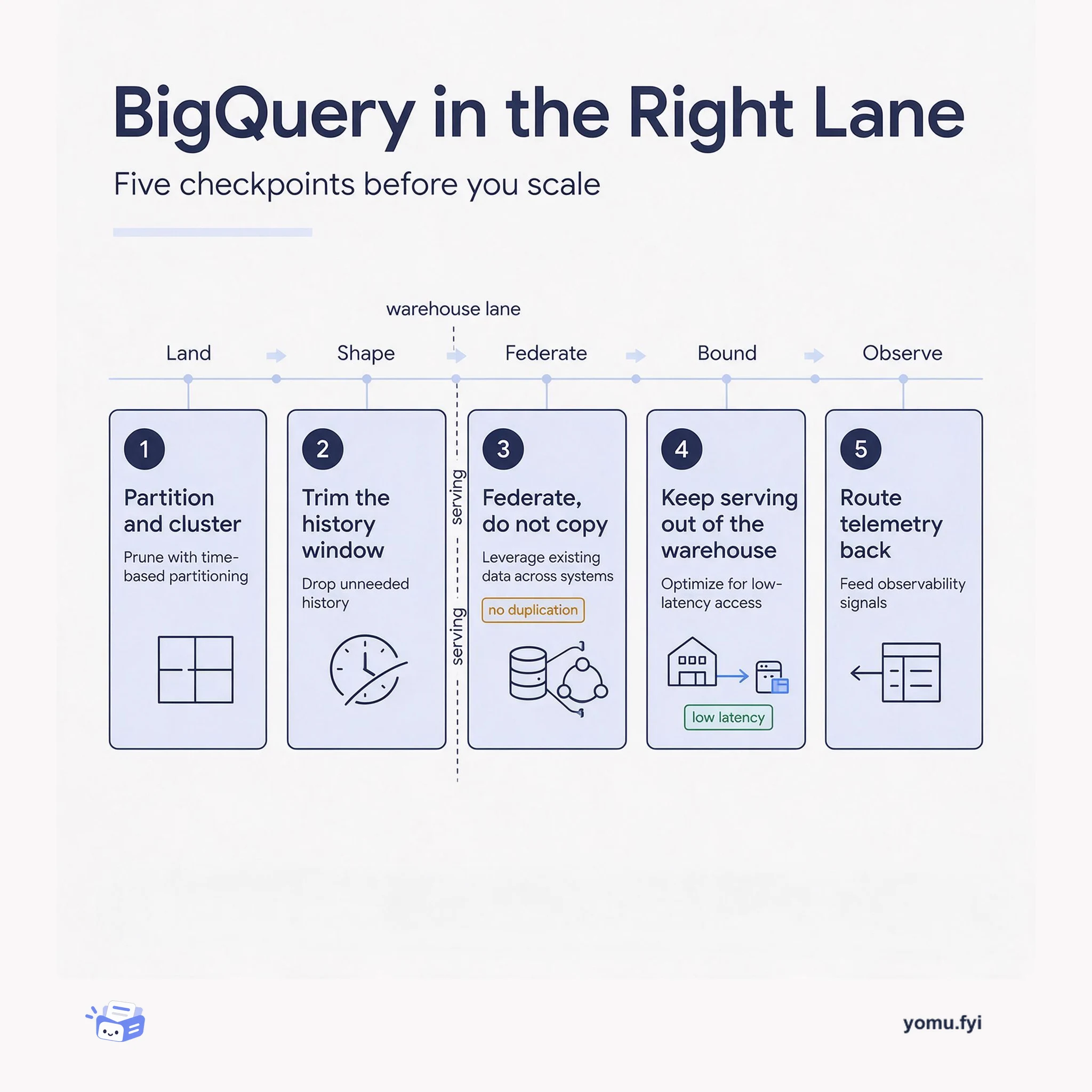
A five-checkpoint workflow for keeping BigQuery in the right lane: land and shape data once, tune partitions and history windows, and federate instead of copying.
 ThumbtackJohn ZhuExplainer
Thumbtack describes a vector platform that lets ML engineers stand up production vector search without separately negotiating database access, building ETL, or writing a query service. The design uses an existing Aurora Postgres cluster with pgvector, while Airflow jobs generate embeddings into BigQuery and managed reverse-ETL syncs them into vector tables; a query API validates inputs and returns ranked results. Three principles guide the layers: reuse trusted infrastructure, treat embeddings as ordinary data flowing through established pipelines, and lower adoption costs for subsequent teams. Production examples include semantic customer-support escalation using cosine similarity and an internal knowledge assistant combining vector retrieval, often with keyword search, before a language model responds; planned directions include self-serve provisioning, vector-backed feature retrieval, and framework-neutral agent memory.
Thumbtack wanted production vector search to be available without each ML team negotiating database access, building a custom ETL path, or implementing a query service. The platform also addresses the need to connect embedding generation, storage, ingestion, and consumer access using infrastructure and operational patterns the company already uses.
The platform runs pgvector on an existing Aurora Postgres cluster, generates embeddings through Airflow jobs into BigQuery, and moves them with a managed reverse-ETL service. A query API hosted on the existing inference service owns the database connection, validates inputs, performs similarity searches, and returns ranked results. The design follows reuse, data-oriented pipelines, and lower adoption cost.
pgvector lets the platform use existing Postgres operational practices, including schema migrations, access roles, backups, replicas, monitoring, and query investigation.
Embedding refreshes use Airflow, BigQuery, and managed reverse-ETL, inheriting established scheduling, retry, schema-mapping, alerting, and observability patterns.
Current uses include semantic support escalation and knowledge retrieval; planned uses include vector-backed feature retrieval and framework-neutral memory for agentic workflows.
Summaries are generated from the original by a language model. Check the original before relying on it.
See the idea
A five-checkpoint workflow for keeping BigQuery in the right lane: land and shape data once, tune partitions and history windows, and federate instead of copying.
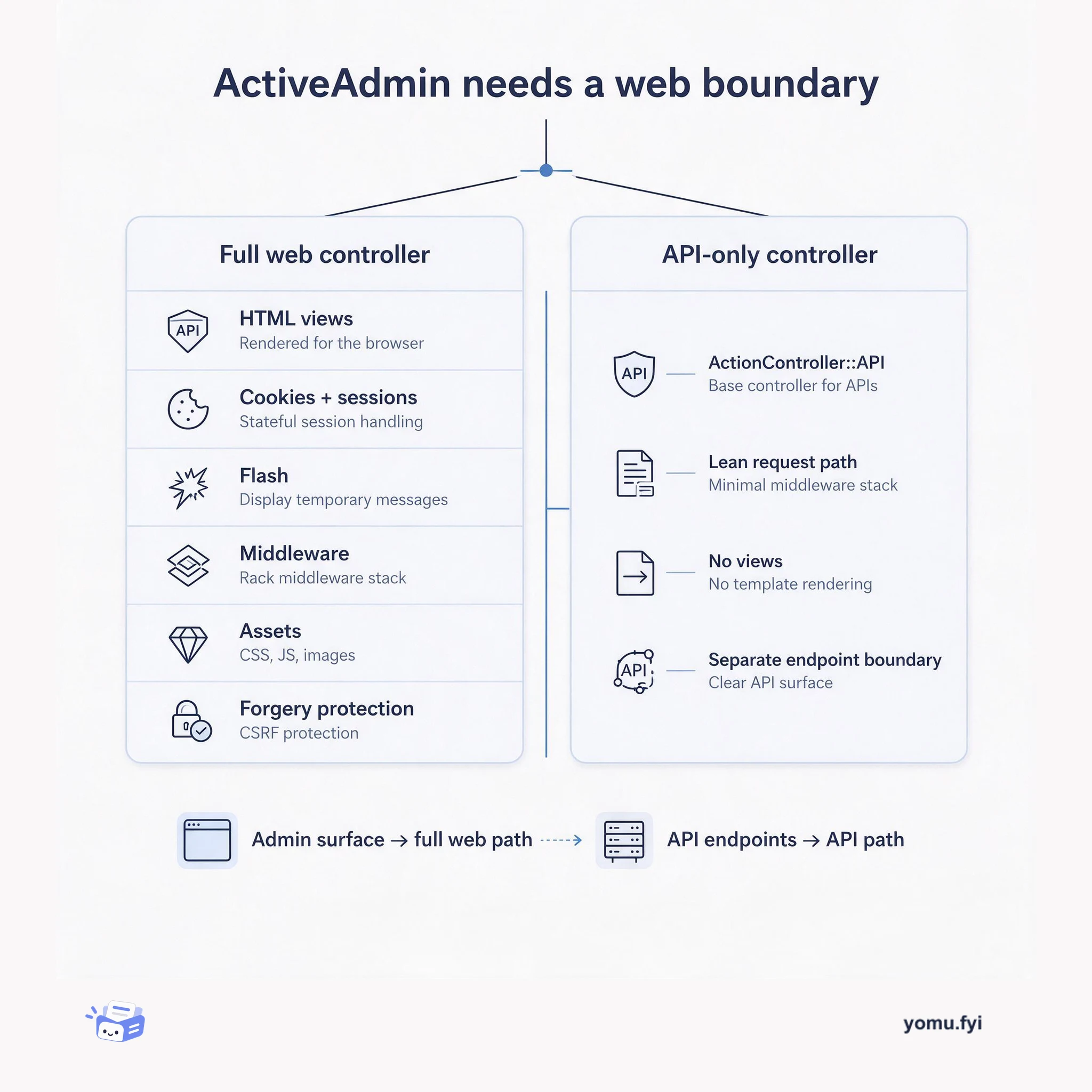
ActiveAdmin needs a full Rails web boundary, while API-only endpoints need a lean controller. Compare the two paths to see where sessions, assets, and browser protections belong.
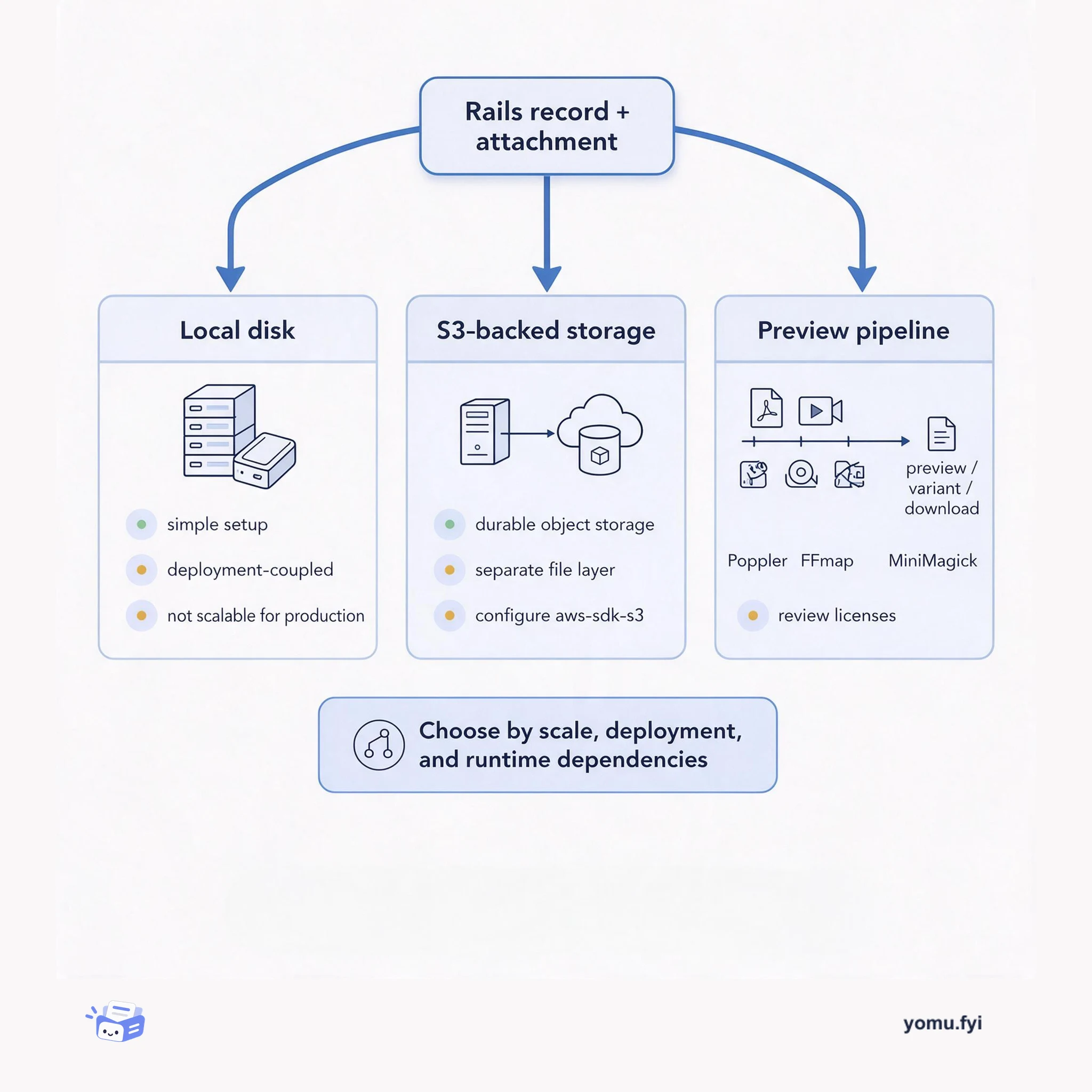
See how Active Storage balances local simplicity, durable object storage, and preview-processing dependencies so you can choose the right boundary for a Rails file workflow.
Keep reading
The Good Stuff
Paid picks we use ourselves. Links carry a referral code — a subscription through one earns us a commission at no extra cost to you.
One useful email. Unsubscribe anytime.