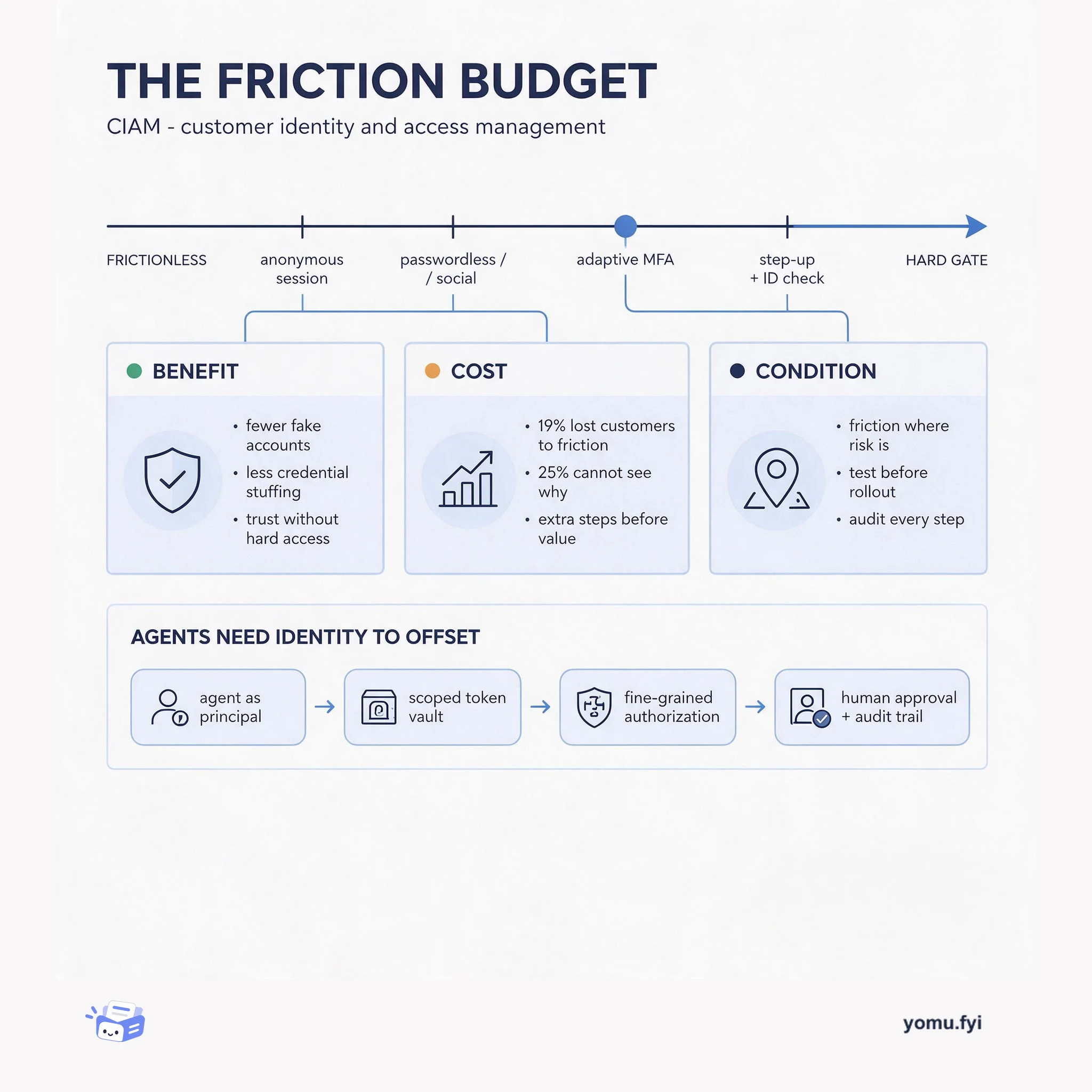
Financial services organizations face constant threats to customer identity systems, led by phishing or social engineering targeting users (43.4%), API abuse or unauthorized access (42.0%), and fake account creation (39.8%). According to the 2026 Customer Identity Trends Report commissioned by Okta, 93% of consumers polled chose strong security without difficult access as critical for trusting apps or websites. However, 17.6% of financial services developers and senior leaders report losing customers because security friction is too high, while 17.1% lack visibility into whether security contributes to abandonment. Developers exclusively using an external identity provider are the most likely to report that security measures have no meaningful negative impact on customer experience and the least likely to report losing customers due to friction. Modern external identity platforms allow financial services organizations to secure customer journeys without harming conversion, retention, or other KPIs, building trust and long-term relationships.
Context
Financial services organizations face disruption from digital-native entrants and must balance strong security with convenient customer experiences. They are prime targets for cyber attacks on identity systems, including phishing, API abuse, and fake account creation. Many struggle with security friction causing customer abandonment, while others lack visibility into the problem.
Approach / What changed
Adopting modern external identity platforms exclusively, rather than in-house or legacy systems, to secure customer journeys without harming conversion, retention, or other KPIs.
Takeaways
1
93% of consumers consider strong security without difficult access as critical for trusting apps or websites.
2
17.6% of financial services organizations report losing customers due to security friction, and 17.1% lack visibility into security-driven abandonment.
3
Developers using an external identity provider exclusively are most likely to report that security measures have no negative impact on customer experience and least likely to report losing customers due to friction.
FAQ
What are the most common security challenges for financial services?
The most common challenges include phishing or social engineering targeting users (43.4%), API abuse or unauthorized access (42.0%), fake account creation (39.8%), bot traffic (39.4%), credential stuffing (36.5%), account takeover (36.1%), and loyalty program abuse (29.2%).
How does security friction affect customer retention?
17.6% of financial services organizations report losing customers because security friction is too high, and 17.1% lack visibility into whether security contributes to abandonment.
What is the benefit of using an external identity platform?
Developers exclusively using an external identity provider are most likely to report that security measures have no meaningful negative impact on customer experience, and least likely to report losing customers due to friction or lacking visibility.
The friction budget is how much identity resistance a customer journey can absorb before it starts costing conversions. This explainer maps CIAM's benefit, its cost, and the condition that decides which side wins.
Keep reading
Related reading
The Good Stuff
Paid picks we use ourselves. Links carry a referral code — a subscription through one earns us a commission at no extra cost to you.