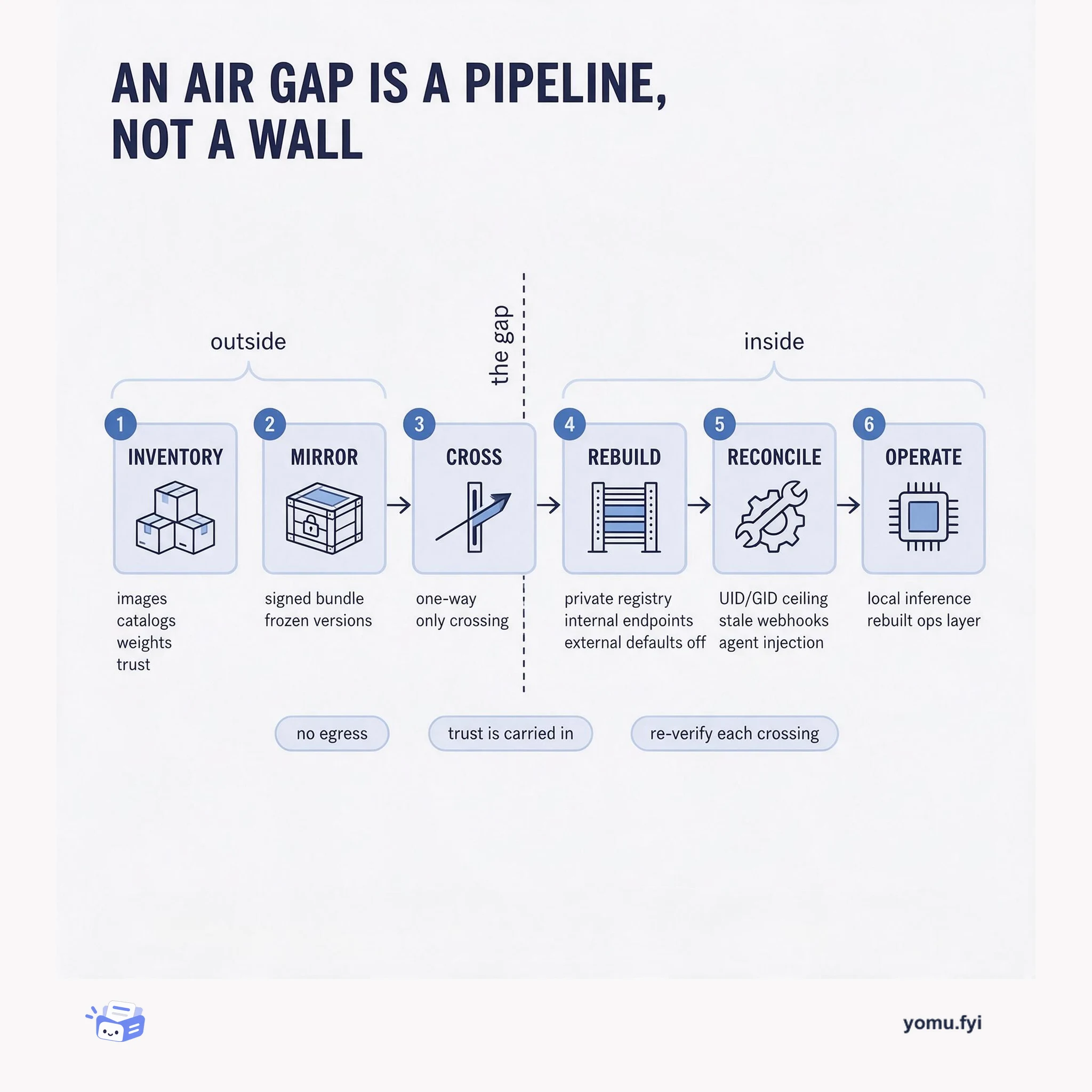
An Air Gap Is a Pipeline, Not a Wall
An air gap is a one-way artifact pipeline, not just a blocked network. This explainer follows six stages, from mirroring dependencies outside to operating inside with no egress.
Loading…
Topic
1 post about Air-Gapped. Every summary links to the original.
See the idea
An air gap is a one-way artifact pipeline, not just a blocked network. This explainer follows six stages, from mirroring dependencies outside to operating inside with no egress.
The Good Stuff
Paid picks we use ourselves. Links carry a referral code — a subscription through one earns us a commission at no extra cost to you.
Newest first
Scaling OpenShift Dev Spaces in air-gapped environments requires addressing four friction points: third-party monitoring agents, rootless container runtimes, custom install namespaces, and admission webhooks. Dynatrace OneAgent sidecar conflicts are resolved by labeling all Dev Spaces namespaces with dynatrace.com/inject: “false” to prevent init container injection. Rootless Podman inside workspace pods needs user namespace UID/GID ranges respecting a 65,536 UID ceiling; UDI 3.22 requires a manual script with a corrected range, while UDI 3.26 handles mapping automatically. Stale admission webhooks from a previous operator install namespace must be manually deleted before reinstalling into a different namespace to avoid conflicting definitions. A readiness checklist includes mirroring operator catalogs, deploying an internal Open VSX server with PostgreSQL, configuring PKI trust via ConfigMap, and disabling the default devfile registry.
The best engineering reads, once a week.

