Actionable Banking: Architecting the Advice-to-Action Boundary
Actionable banking wires real-time event triggers, unified customer context, and agent memory into one pipeline that ends at a human decision, not an automatic transaction.
Actionable banking turns a transaction event into a timely, explainable recommendation while keeping the customer as the final decision-maker. The architecture has four layers: an event layer that detects the trigger, a context layer that unifies customer data with durable agent memory, a reasoning layer that turns context into a proposal, and a governance layer that records every step and gates execution. Engineers should care because the value sits at the boundary between advice and action: agents earn trust by proposing, not by moving money on their own.
FAQ
Why do actionable banking agents propose instead of executing transactions?
In the described workflows, each agentic flow ends in push and discuss rather than execution, so the customer keeps decision authority while the agent handles detection and framing. That keeps a human accountable for the money movement and limits the blast radius of a wrong recommendation.
What does the context layer actually need to store?
It needs unified customer context plus memory that persists; fragmented context and agents that forget are the two named failure modes. A useful pattern is separating rebuildable soft state from hard state stored durably, so any instance can reconstruct a session after a restart or a scale-out event.
How do you keep agent actions in a banking stack auditable?
Keep a single control plane that records the trigger, the context used, and the proposal, and tie each request back to a specific customer identity rather than an anonymous agent. Read-only-first tooling plus an explicit approval gate keeps any execution reversible and reviewable.
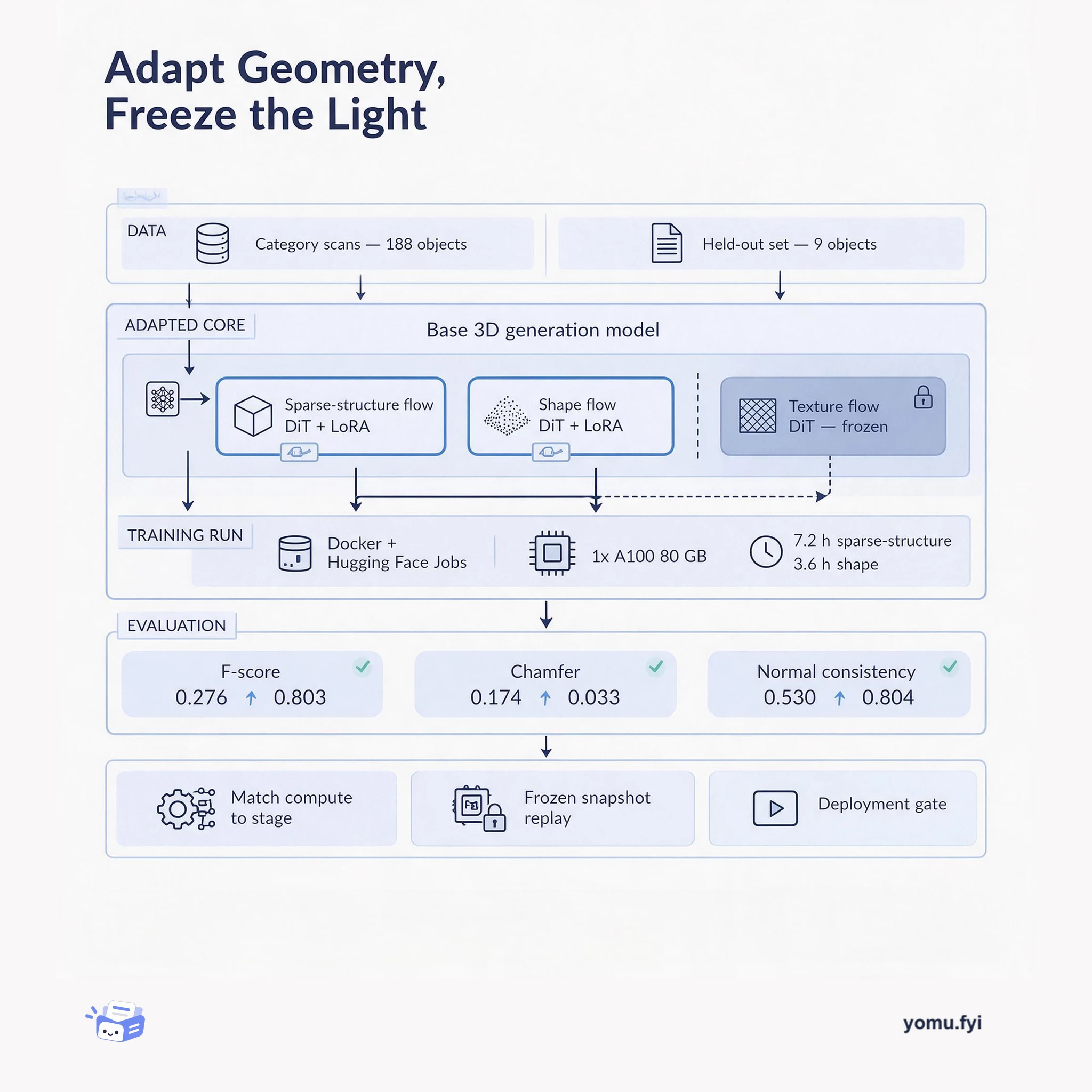
A layered architecture view of fine-tuning a 3D generation model: which flow DiT branches get LoRA adapters, which stay frozen, and how data, compute, and evaluation wrap the adapted core.
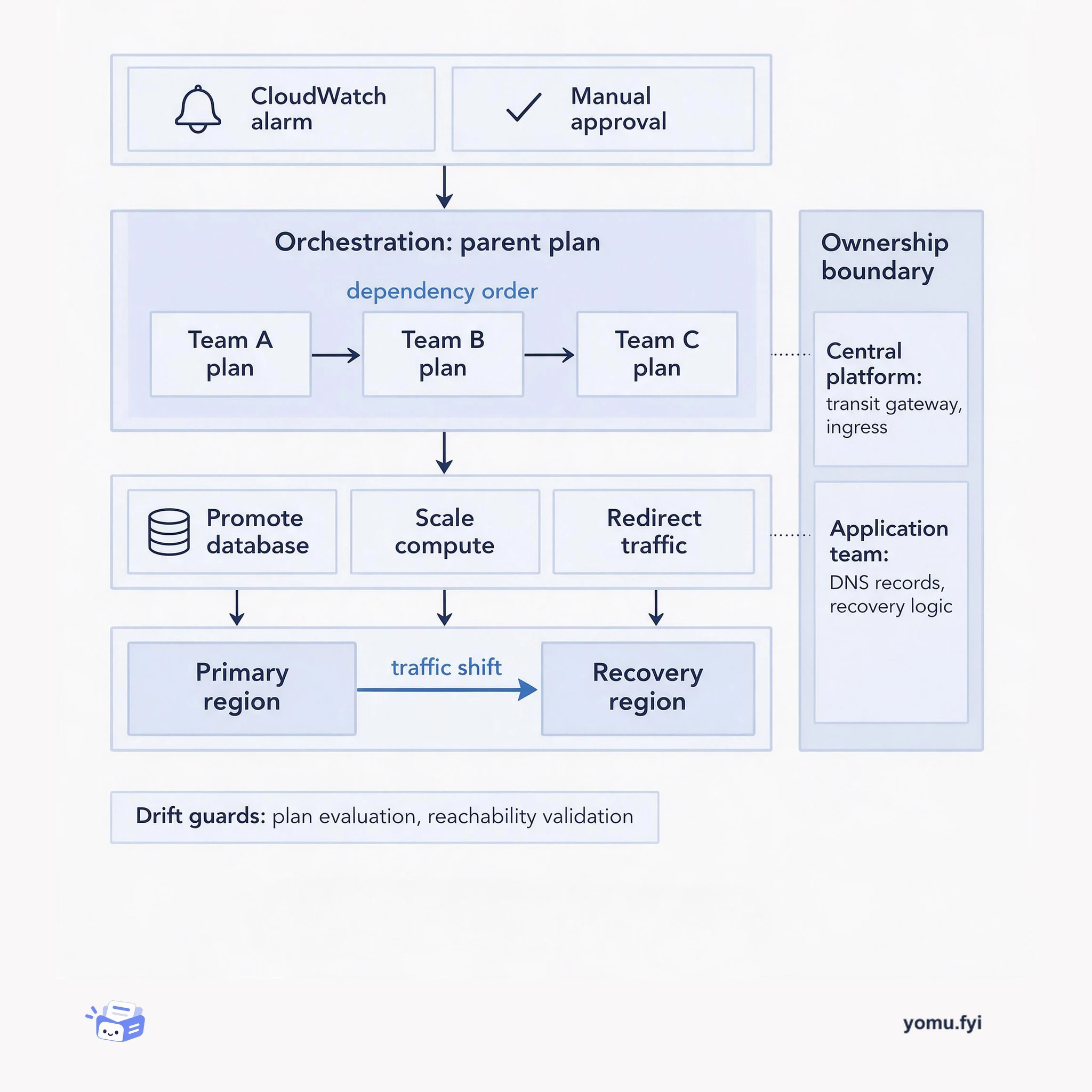
ARC Region Switch is a managed failover orchestrator that runs team-owned plans in dependency order. This diagram maps its trigger, orchestration, execution, and region layers and the ownership boundary.
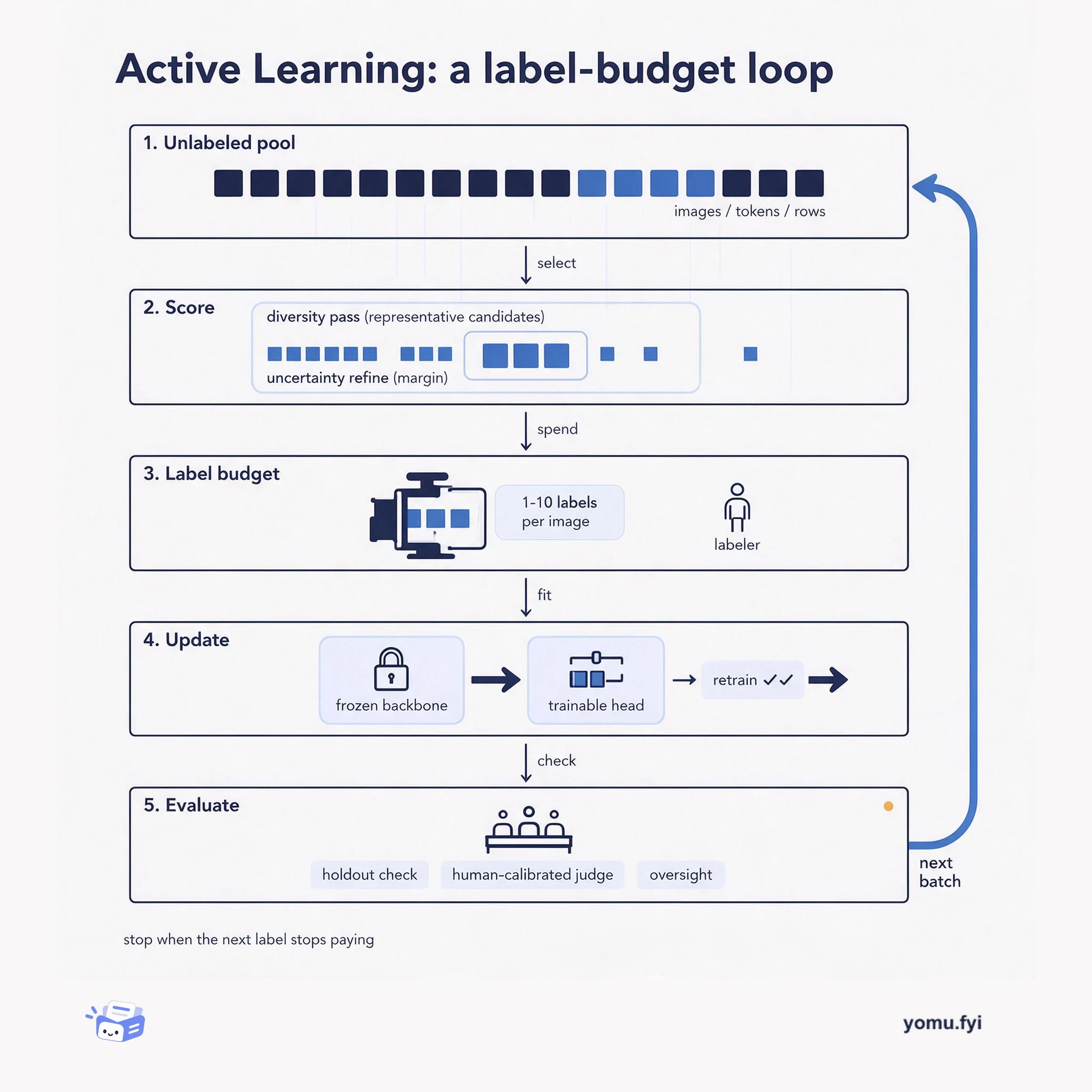
Active learning is a loop that spends a fixed labeling budget on the samples most worth annotating. This diagram maps its stages — pool, score, label, train, evaluate — and the return path that closes the cycle.
The Good Stuff
Paid picks we use ourselves. Links carry a referral code — a subscription through one earns us a commission at no extra cost to you.