Japanese organizations are investing in AI and agentic features, but outdated customer identity infrastructure is slowing delivery, according to the 2026 Customer Identity Trends Report. Nearly three-quarters of Japanese developers and senior leaders polled (73%) said their organization either had AI or agentic features fully in production (29%) or was actively building them (44%). Of the active builders, fewer than 28% are delivering at the speed they want. Nearly 60% of organizations that have not started cited outdated identity infrastructure as the primary cause, and respondents report spending more than 15% of engineering time on CIAM. The brief argues that modern CIAM platforms should provide authentication, authorization, and audit capabilities for AI agents, including a token vault, MCP authentication, asynchronous authorization, agent as principal, and fine-grained authorization for RAG.
Context
The brief draws on the 2026 Customer Identity Trends Report, which surveyed developers, senior leaders, and consumers globally and was commissioned by Okta. It focuses on Japanese organizations building AI or agentic features and on the identity infrastructure constraints they report.
Takeaways
1
The brief says AI-powered journeys must satisfy customer expectations, security needs, and regulatory requirements at the same time, which requires identity platforms built for agents and autonomous systems.
2
Among organizations experiencing delays, compliance, security review, or governance was the most cited main cause at 32%, ahead of identity infrastructure that cannot support agent access patterns at 23%.
3
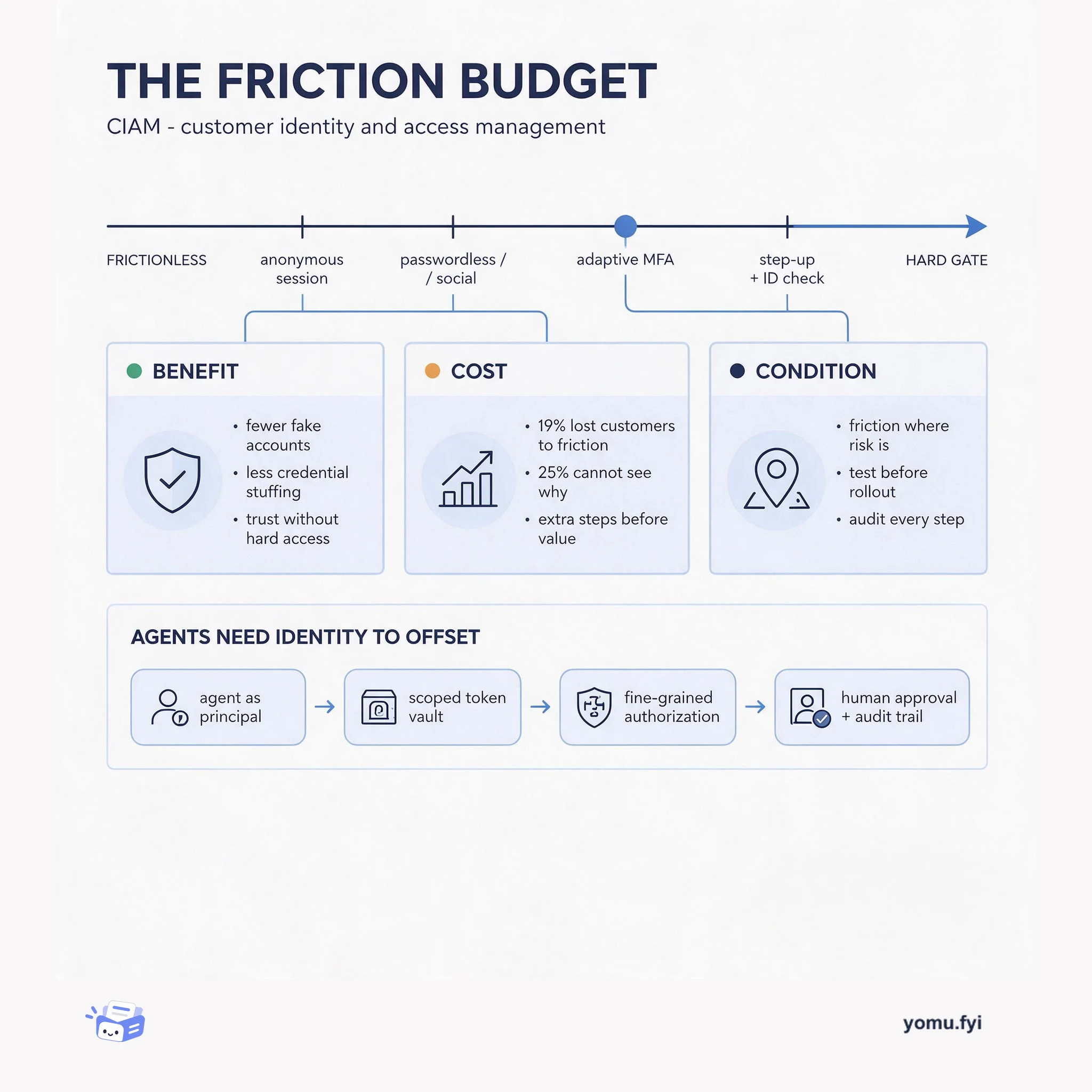
The listed CIAM features include user authentication, token vault, MCP authentication, asynchronous authorization, agent as principal, and fine-grained authorization for RAG.
FAQ
What share of Japanese organizations have AI or agentic features in production?
29% have AI or agentic features fully embedded in production, and another 44% are actively building features that have not yet reached production, for 73% combined.
What is the main cause of delays for organizations building AI features?
Among the 72% experiencing delays, 23% cited identity infrastructure that cannot support agent access patterns as the main cause. Compliance, security review, or governance was the most cited main cause at 32%.
Which CIAM capabilities does the post list for AI agents?
It lists user authentication, token vault, authentication for MCP, asynchronous authorization, agent as principal, and fine-grained authorization for RAG as out-of-the-box features of a modern CIAM platform.
The friction budget is how much identity resistance a customer journey can absorb before it starts costing conversions. This explainer maps CIAM's benefit, its cost, and the condition that decides which side wins.
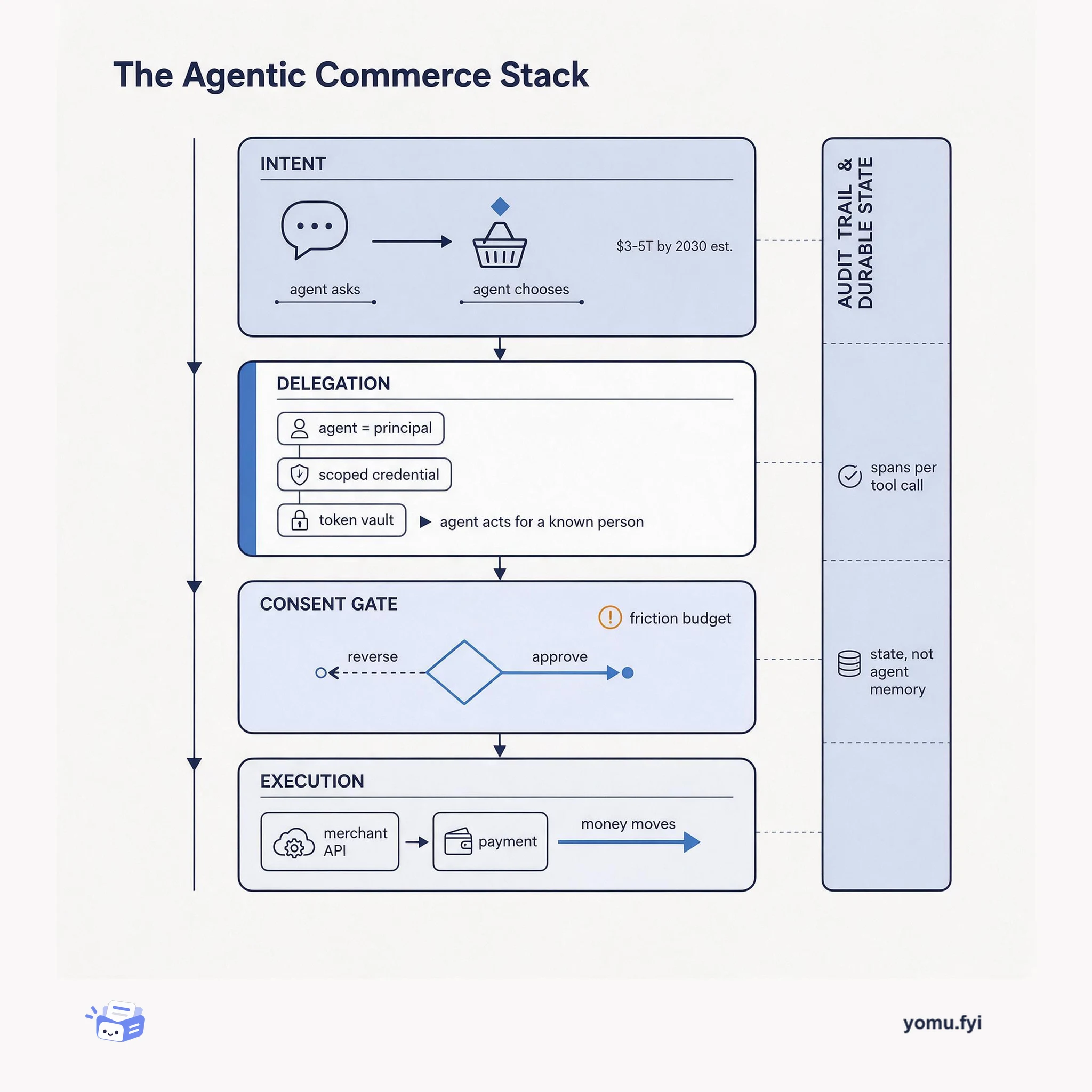
Agentic commerce works only when a shopper's agent can be identified, scoped, and audited at each step. This architecture map shows the delegation, consent, and audit layers that make an agent's purchase safe.
Keep reading
Related reading
The Good Stuff
Paid picks we use ourselves. Links carry a referral code — a subscription through one earns us a commission at no extra cost to you.