The IntelliJ Scala Plugin 2026.3 release introduces more accurate Scala 3 code analysis, including improved resolution of extension methods and contextual arguments to reduce false errors. Twirl template support for Play Framework has been completely rewritten, enhancing parsing, completion, formatting, and reference resolution while reducing false errors in mixed-language templates. Build-tool improvements include mandatory separate main and test modules for sbt projects, better sbt 2.x import, and restored dependency-coordinate completion for sbt and Scala CLI. Debugging now supports breakpoints on single-line conditional return statements and resolves issues with breakpoints in Future callbacks and for comprehensions. Compiler-based highlighting has been made more efficient by reusing valid diagnostics and combining pending checks into single compilation runs, with clear explanations when blocking errors exist.
Takeaways
1
Scala 3 analysis now resolves extension methods more accurately, especially with overloads involving different receiver types, generic receivers, method type parameters, or implicit conversions.
2
Twirl templates in Play Framework projects benefit from a complete architectural rewrite that improves parsing, code completion, formatting, and reference resolution, reducing false errors.
3
Compiler-based highlighting reuses valid diagnostics from previous compilations, even for closed files, and combines pending background checks into a single run to reduce redundant work.
FAQ
What improvements does Scala 3 code analysis receive in this release?
The plugin adds support for Scala 3.10 and improves built-in analysis to reduce false errors. Extension methods resolve more accurately in overloaded contexts, and contextual argument selection uses method arguments and explicit type arguments better to avoid ambiguity and missing-implicit errors.
How has Twirl template support been improved?
Twirl support has been completely rewritten, improving parsing, code completion, formatting, and reference resolution. Find Usages now reliably locates rendering code, and renaming a template automatically updates all references. False errors in embedded HTML, CSS, JavaScript, and JSON are reduced.
What changes were made to debugging capabilities?
Breakpoints can now be placed on single-line conditional return statements, stopping at those statements. Issues where breakpoints were skipped inside Future callbacks and for comprehensions in Scala 3 top-level methods have been fixed. UI freezes during expression completion and watch evaluation are resolved.
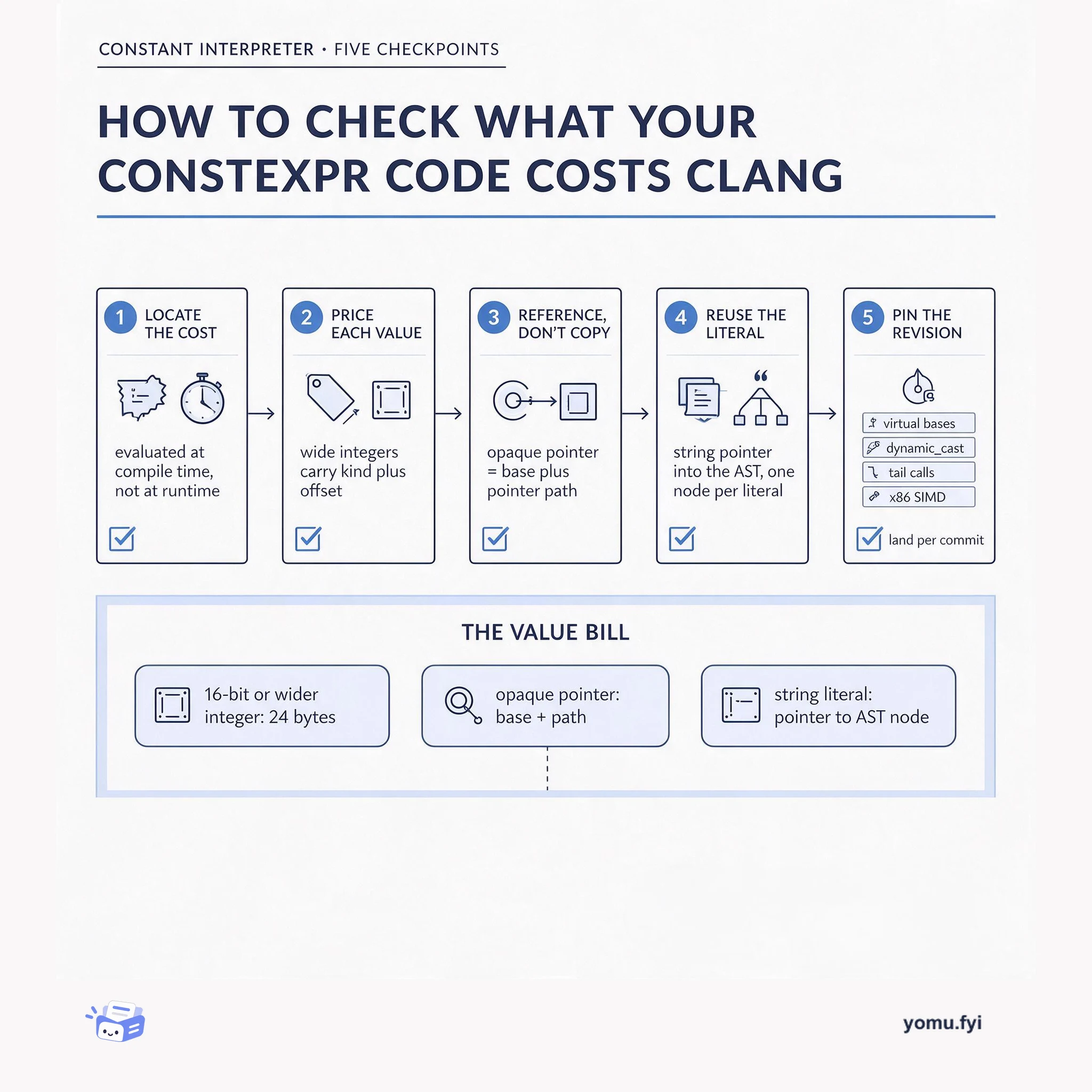
Clang's constant interpreter evaluates constant expressions at compile time, so the bill lands on your build, not your binary. This five-checkpoint guide shows where that memory goes and how to keep it small.
Keep reading
Related reading
The Good Stuff
Paid picks we use ourselves. Links carry a referral code — a subscription through one earns us a commission at no extra cost to you.