AWS Resilience Hub introduced recommended resilience testing, which uses AWS Fault Injection Service to automatically create fault injection experiments from existing policies and resource knowledge. The feature offers four pre-configured tests: Availability Zone recovery, dependency validation, Multi-Region isolation, and Multi-Region recovery. Dependency validation blocks connectivity to selected dependencies using DNS query log analysis with a 35-day look-back window, and validates whether the application remains healthy when they are unavailable, surfacing misclassified dependencies. Each test run produces a pass or fail outcome evaluated against success criteria and the recovery time objective defined in your resilience policy, with an auto-generated report capturing a point-in-time snapshot of resources. This capability removes manual experiment design, helps organizations prove their architecture holds under failure, and feeds results into compliance and reporting workflows.
Context
Organizations with defined resilience policies need to verify applications behave as expected during failures, but manual fault injection experiment design requires deep expertise and risks becoming outdated as architectures evolve.
Approach / What changed
AWS Resilience Hub automatically creates fault injection experiments using AWS Fault Injection Service based on the service’s resources, dependencies, and resilience policy. It provides four pre-configured tests: Availability Zone recovery, dependency validation, Multi-Region isolation, and Multi-Region recovery. Each test run evaluates pass/fail against defined success criteria and RTO, generating a report. The dependency validation test uses DNS query log analysis to identify dependencies and block connectivity to validate soft and hard dependency classifications.
Takeaways
1
Recommended resilience testing in AWS Resilience Hub uses AWS FIS to automatically create fault injection experiments based on existing policies and resource knowledge, removing the need for manual experiment design.
2
The dependency validation test blocks connectivity to selected dependencies, using DNS query log analysis to surface misclassified dependencies and validate whether the application degrades gracefully or fails predictably.
3
Each test run produces a pass/fail outcome evaluated against success criteria and RTO, auto-generates a report, and captures a point-in-time snapshot for compliance and reporting.
FAQ
How does the dependency validation test work?
It blocks connectivity to selected dependencies within an AWS Region using AWS FIS. The test validates whether your application remains healthy when soft dependencies are impaired, and surfaces dependencies you might not have known were hard. It is a sustained test that passes when all success alarms stay in OK state from fault injection through the end.
What tests are available at launch?
Four tests: Availability Zone recovery, dependency validation, Multi-Region isolation, and Multi-Region recovery. They are pre-configured based on your service's architecture and resilience policy.
How do I interpret test results?
A passing test with a soft dependency blocked confirms graceful degradation. A failing test with a soft dependency blocked suggests misclassification. A failing test with a hard dependency confirms critical dependency; verify failure is graceful. A passing test with a hard dependency indicates possible misclassification or the dependency not being exercised.
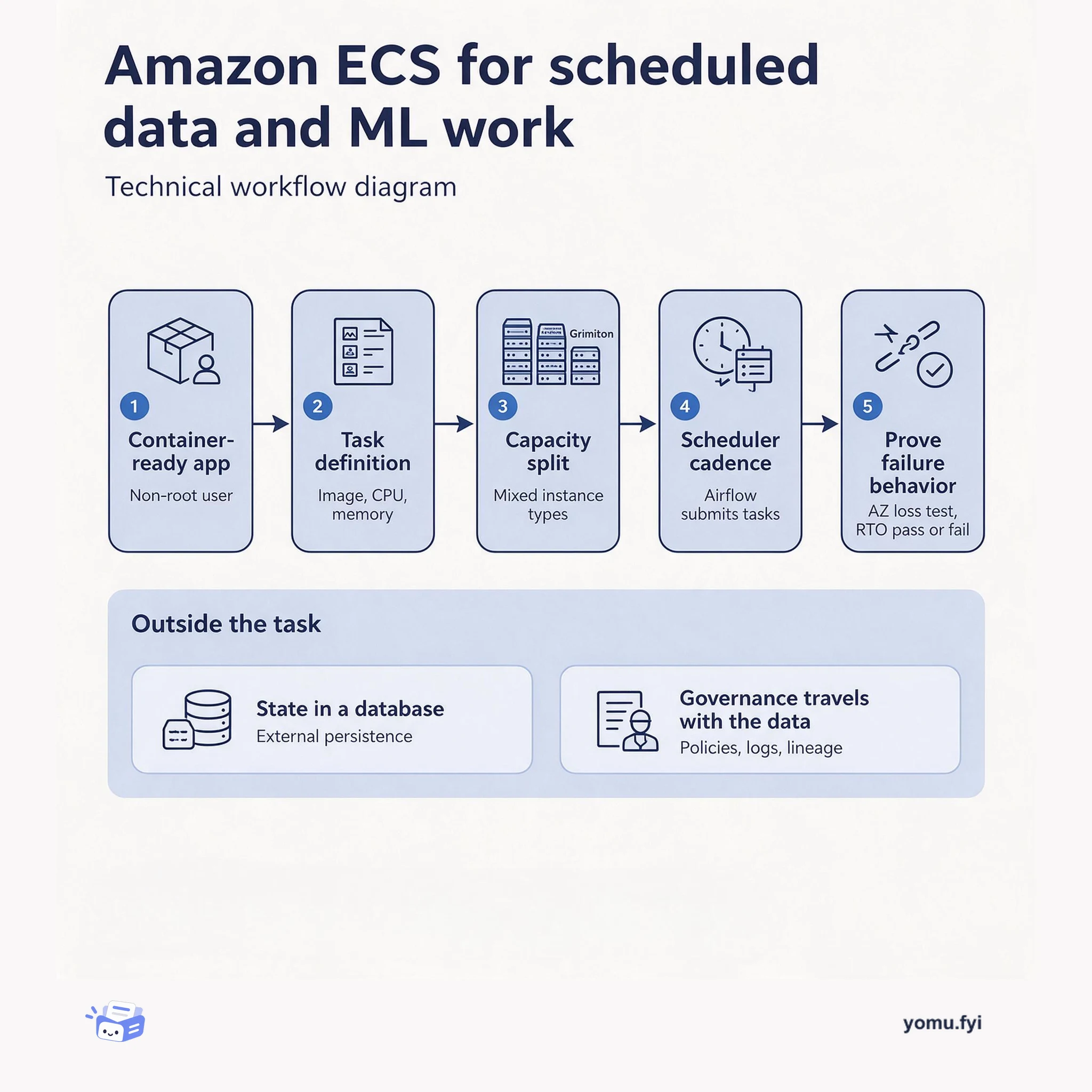
Amazon ECS runs containerized batch and ML jobs as scheduled tasks, but the hard parts are capacity, state, and failure behavior. This five-checkpoint path shows what to verify before you scale.
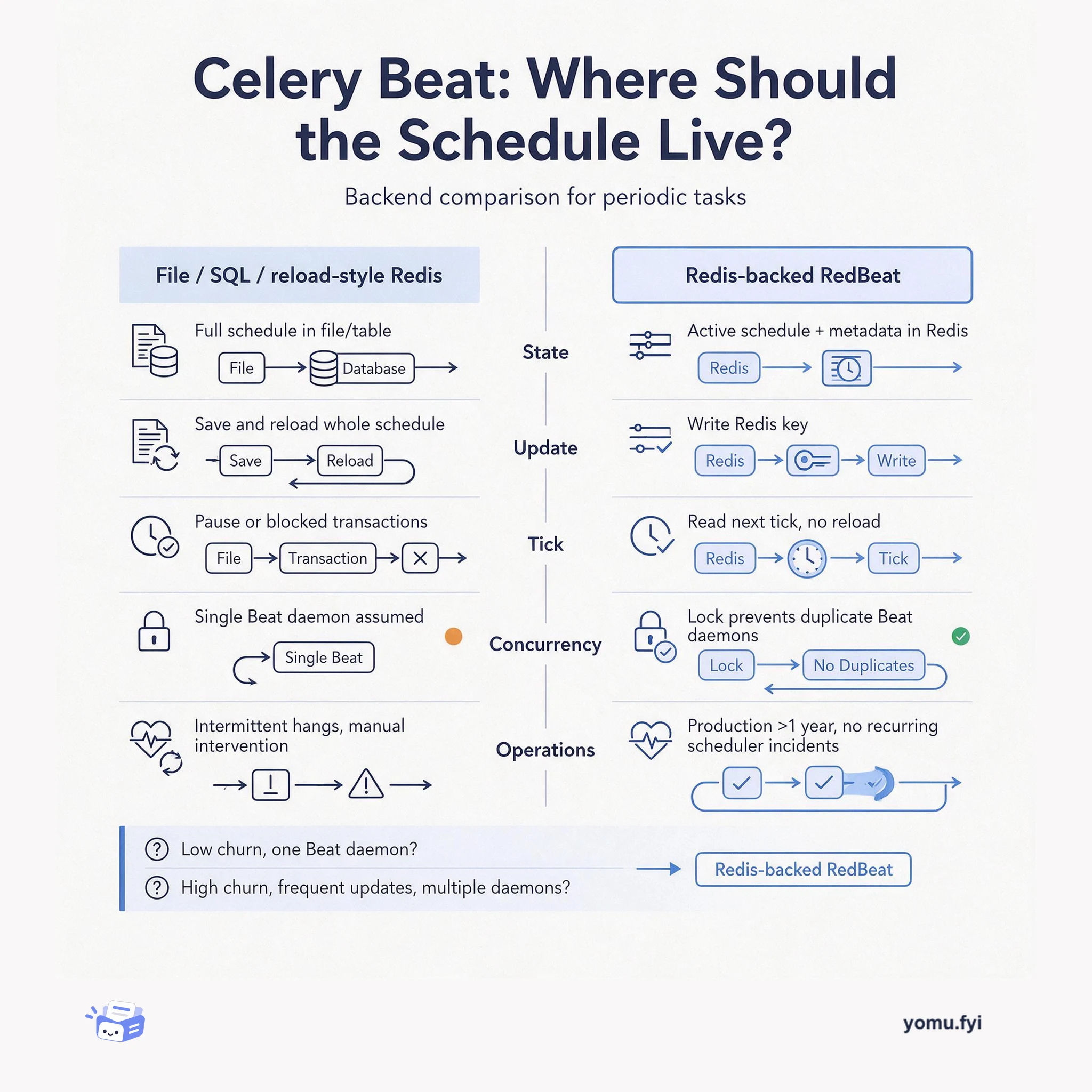
Compare Celery Beat scheduler backends—file, SQL, and Redis/RedBeat—by where the active schedule lives, how updates propagate, and what failure modes each introduces.
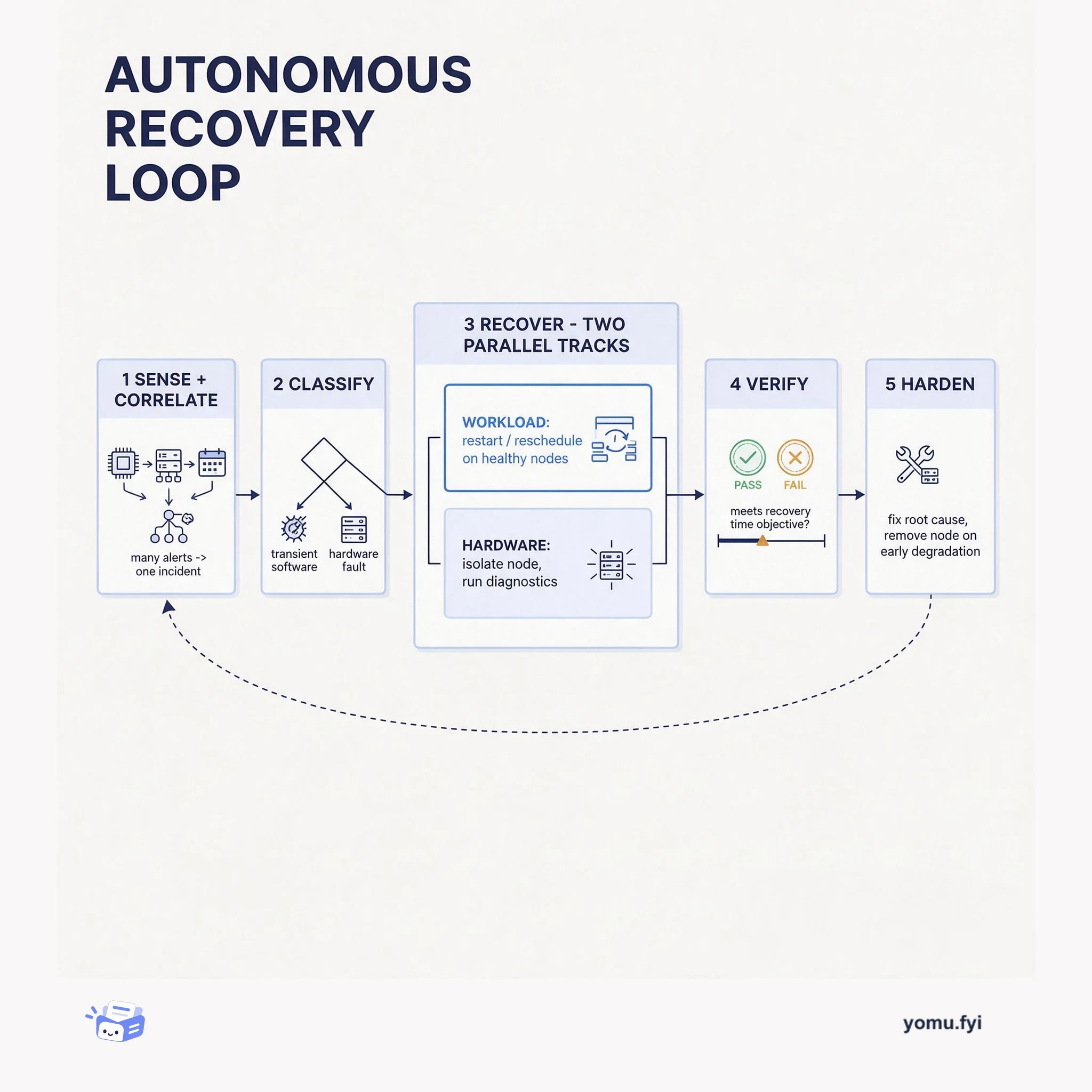
Autonomous Recovery is a closed loop that senses degradation, classifies a fault as transient or hardware, recovers workloads and quarantines hardware in parallel, then verifies against an RTO.
Keep reading
Related reading
The Good Stuff
Paid picks we use ourselves. Links carry a referral code — a subscription through one earns us a commission at no extra cost to you.