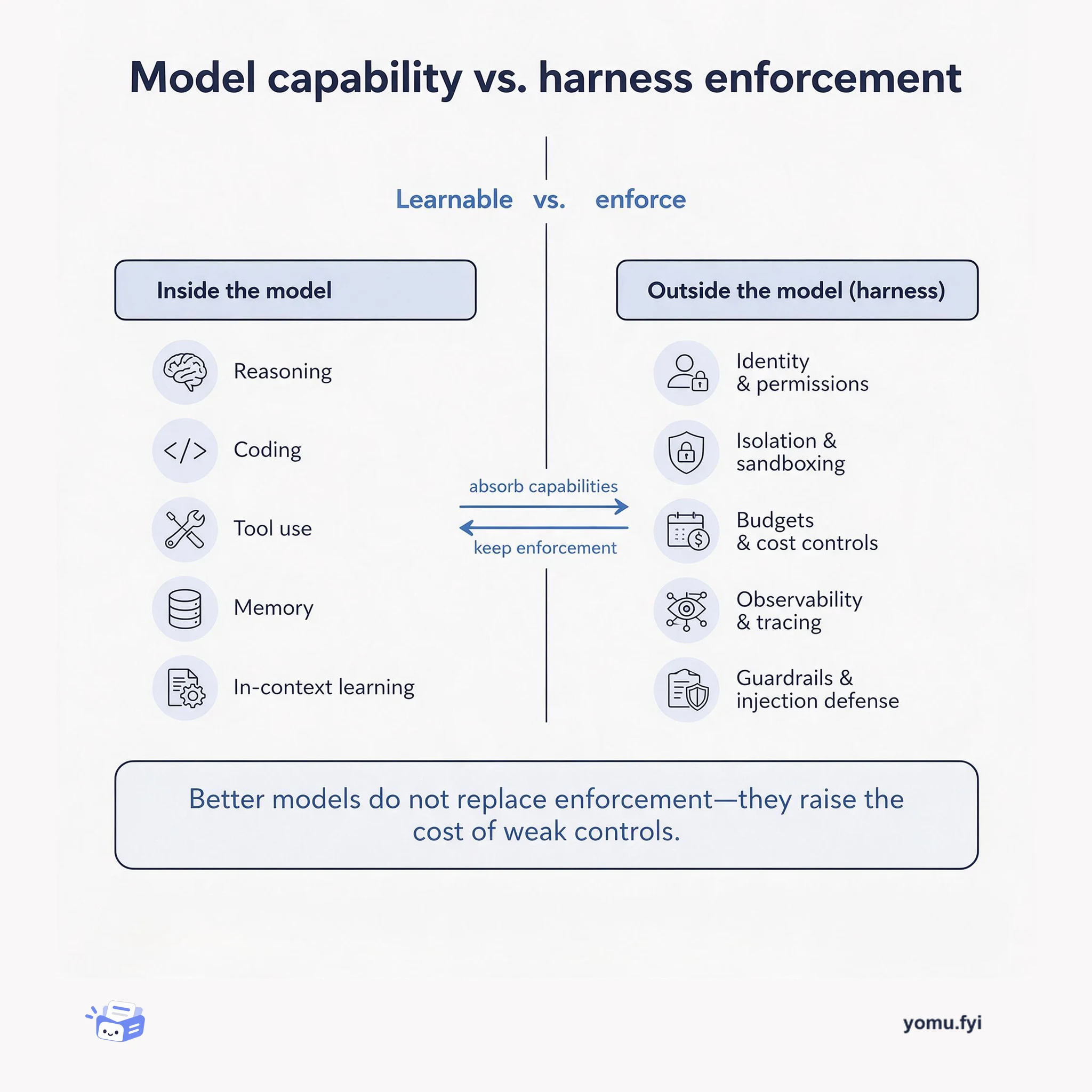
Model vs. Harness: Where AI Agent Controls Belong
A comparison of what AI models should learn versus what agent infrastructure must enforce. See how reasoning, permissions, isolation, budgets, and observability split across the boundary.
Compare Celery Beat scheduler backends—file, SQL, and Redis/RedBeat—by where the active schedule lives, how updates propagate, and what failure modes each introduces.
Celery Beat is the periodic-task scheduler for Celery, and its backend choice determines whether schedule changes require reloads, whether concurrent Beat daemons can double-fire tasks, and how the scheduler recovers from pauses. The RedBeat post contrasts a default file-based schedule, a SQL-backed schedule, and a reload-style Redis schedule with Redis-backed RedBeat. RedBeat moves the active schedule and runtime metadata into Redis, so Beat reads key updates on its next tick and uses a lock to prevent concurrent daemons. This comparison lays out state location, update path, tick behavior, concurrency guard, and operational track record so engineers can choose a scheduler that fits their task churn and reliability needs.
The default file-based scheduler can develop intermittent pauses and hangs, and SQL-backed scheduling can block transactions while saving and reloading the full schedule. RedBeat avoids that reload cycle by keeping the active schedule and runtime metadata in Redis, so Beat reads key updates on its next tick.
RedBeat uses a lock to prevent concurrent Beat daemons. That matters when you run more than one Beat replica for availability, because without a guard two schedulers could enqueue the same periodic task. The lock makes one daemon the active scheduler.
Choose RedBeat when schedule changes are frequent, updates must come from other languages, or reload pauses and blocked transactions are unacceptable. If churn is low and a single Beat daemon owns the schedule, a file or SQL backend may be enough, but it still carries the reload behavior described in the RedBeat post.
The posts behind it
 AWS · · Announcement
AWS Resilience Hub introduced recommended resilience testing, which uses AWS Fault Injection Service to automatically create fault injection experiments from existing policies and resource knowledge. The feature offers four pre-configured tests: Availability Zone recovery, dependency validation, Multi-Region isolation, and Multi-Region recovery. Dependency validation blocks connectivity to selected dependencies using DNS query log analysis with a 35-day look-back window, and validates whether the application remains healthy when they are unavailable, surfacing misclassified dependencies. Each test run produces a pass or fail outcome evaluated against success criteria and the recovery time objective defined in your resilience policy, with an auto-generated report capturing a point-in-time snapshot of resources. This capability removes manual experiment design, helps organizations prove their architecture holds under failure, and feeds results into compliance and reporting workflows.
 Clickhouse · · Announcement
ClickHouse Managed Postgres launched storage alerts in August, warning at 85% disk usage, and those alerts have already helped customers identify issues like unused replication slots. The service now adds five targeted notifications: inactive replication slots, planned switchovers, unplanned failovers, long-running transactions, and connection-usage warnings. The replication-slot notification triggers when a logical slot retains over 10 GiB of unconfirmed WAL data for two hours, excluding managed CDC slots, and includes slot names. Planned-switchover and unplanned-failover notifications each specify the affected service and completion time, distinguishing scaling events from failure recovery. Long-running transactions open for at least two hours and connection usage at 95% of the limit trigger warnings with transaction age, helping operators check idle sessions, locks, or pool settings before impact, with delivery via console, email, or Slack.
 NVIDIA · · Announcement
NVIDIA Mission Control 2.5 extends its autonomous recovery engine, previously limited to Slurm-based HPC, to Kubernetes workloads managed via NVIDIA Run:ai for AI factories, coordinating three separate services: the scheduler for workload placement, the job recovery service for failure-context decisions, and the hardware recovery service for node isolation and diagnostics. When a hardware fault occurs, job recovery restarts the workload on healthy nodes while hardware recovery concurrently isolates the suspect GPU. For transient software errors, only job restart occurs without hardware quarantine. Early degradation signals cause proactive node removal before job scheduling. This consistent recovery model across Kubernetes and Slurm reduces MTTR and improves GPU utilization by shifting from reactive manual intervention to proactive self-healing, benefiting both platform teams and AI practitioners.
 Heroku · · Problem & solution
Heroku Connect relied on Celery Beat to trigger frequent periodic tasks while synchronizing Salesforce and Heroku Postgres data, but the default file-based scheduler developed intermittent pauses and hangs that required manual intervention. Existing SQL-backed scheduling introduced blocked transactions and pauses from periodically saving and reloading the full schedule, while an existing Redis-backed package retained similar reload behavior. RedBeat moves the active schedule and runtime metadata into Redis, allowing updates through Redis keys that Beat reads on its next tick without pausing or reloading. It also uses a lock to prevent concurrent Beat daemons, supports schedule updates from other languages, and has run in production for more than a year without recurring scheduler-related incidents.
More like this
A comparison of what AI models should learn versus what agent infrastructure must enforce. See how reasoning, permissions, isolation, budgets, and observability split across the boundary.
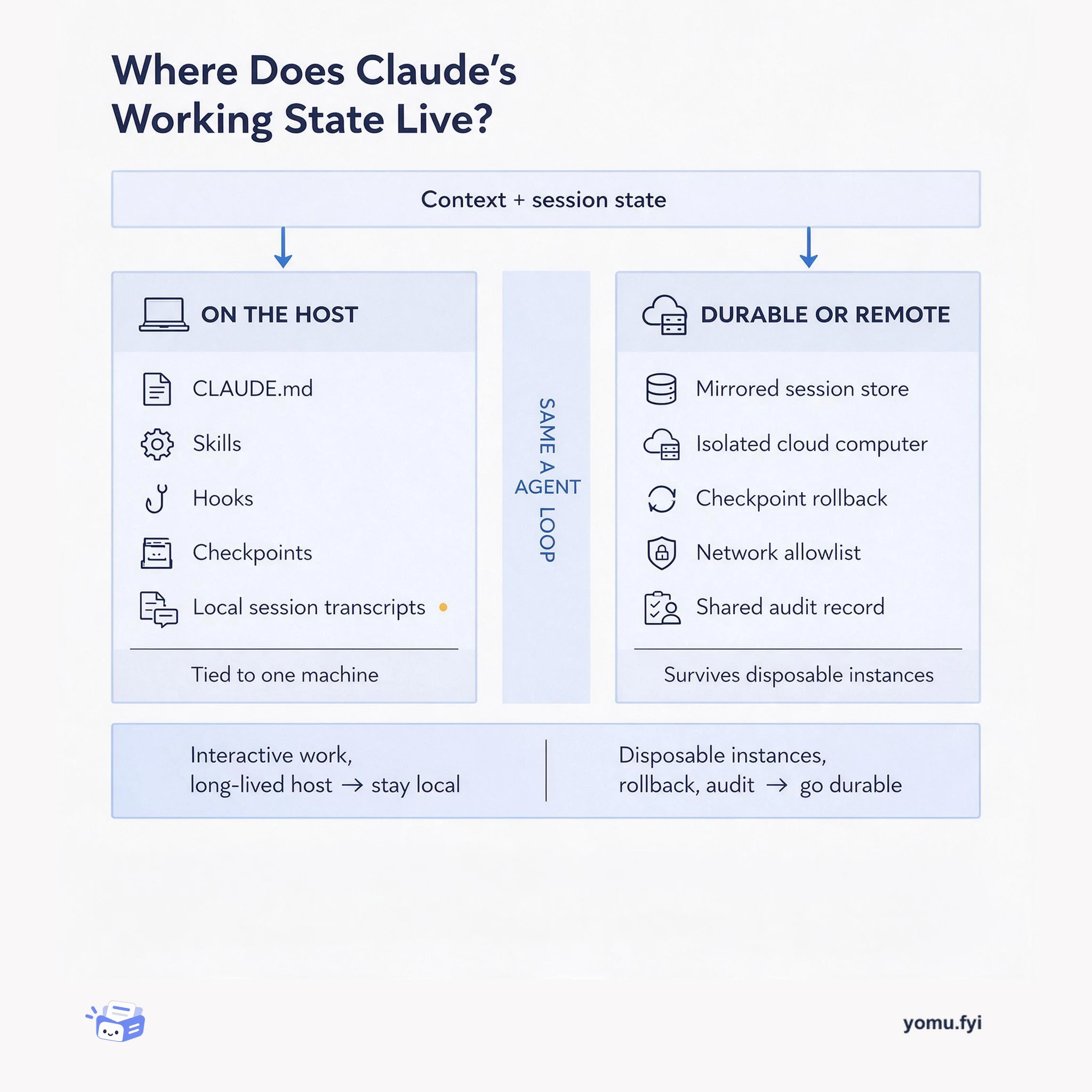
Compare two places to keep Claude's working state: curated files on your own machine versus a durable session store or isolated cloud computer, and learn which one fits your deployment.
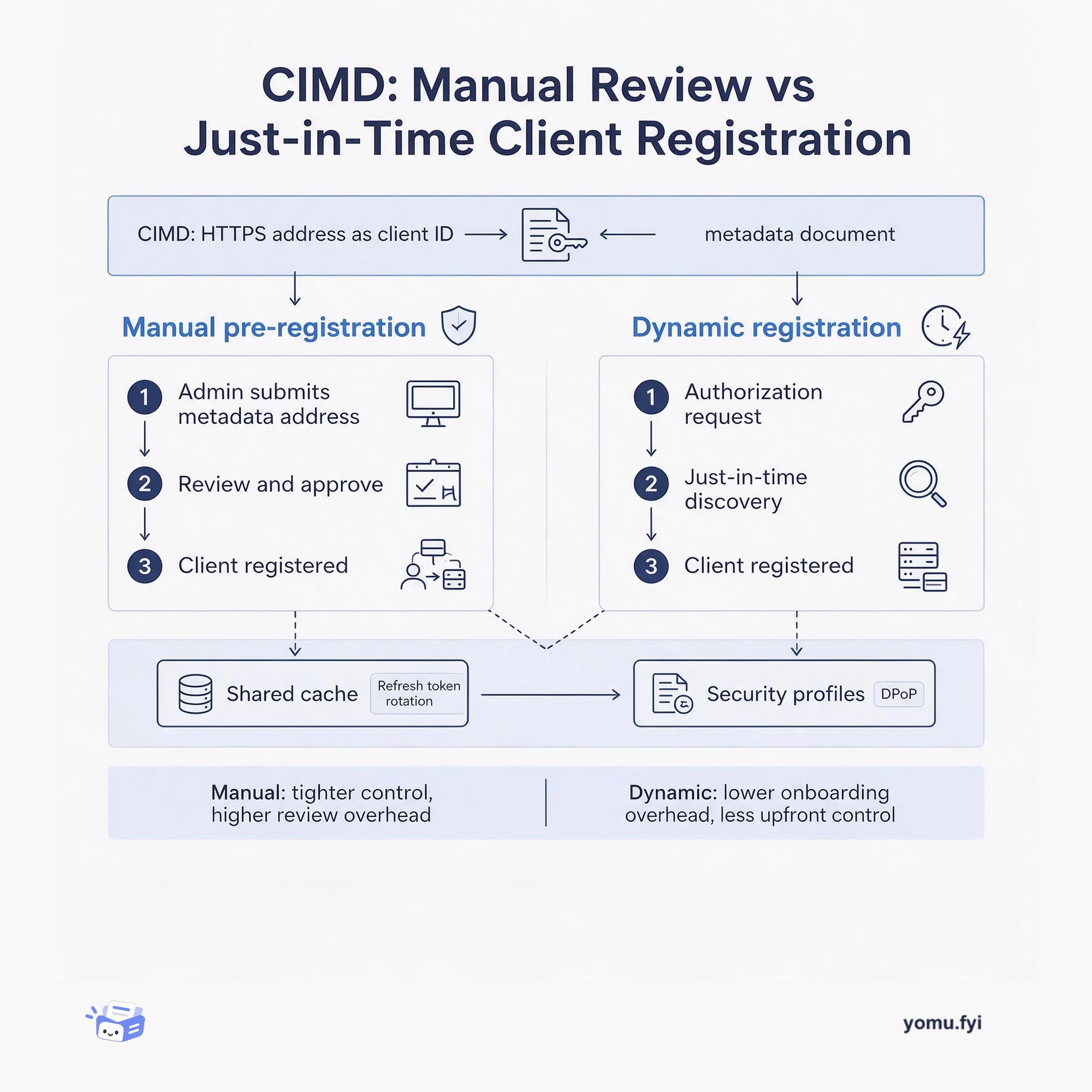
CIMD uses an HTTPS URL as an OAuth client identifier that points to a metadata document. This comparison shows when to pre-register clients manually and when to let dynamic discovery handle agent onboarding.
The Good Stuff
Paid picks we use ourselves. Links carry a referral code — a subscription through one earns us a commission at no extra cost to you.
One useful email. Unsubscribe anytime.