AG-UI as the Agent–UI Contract Layer
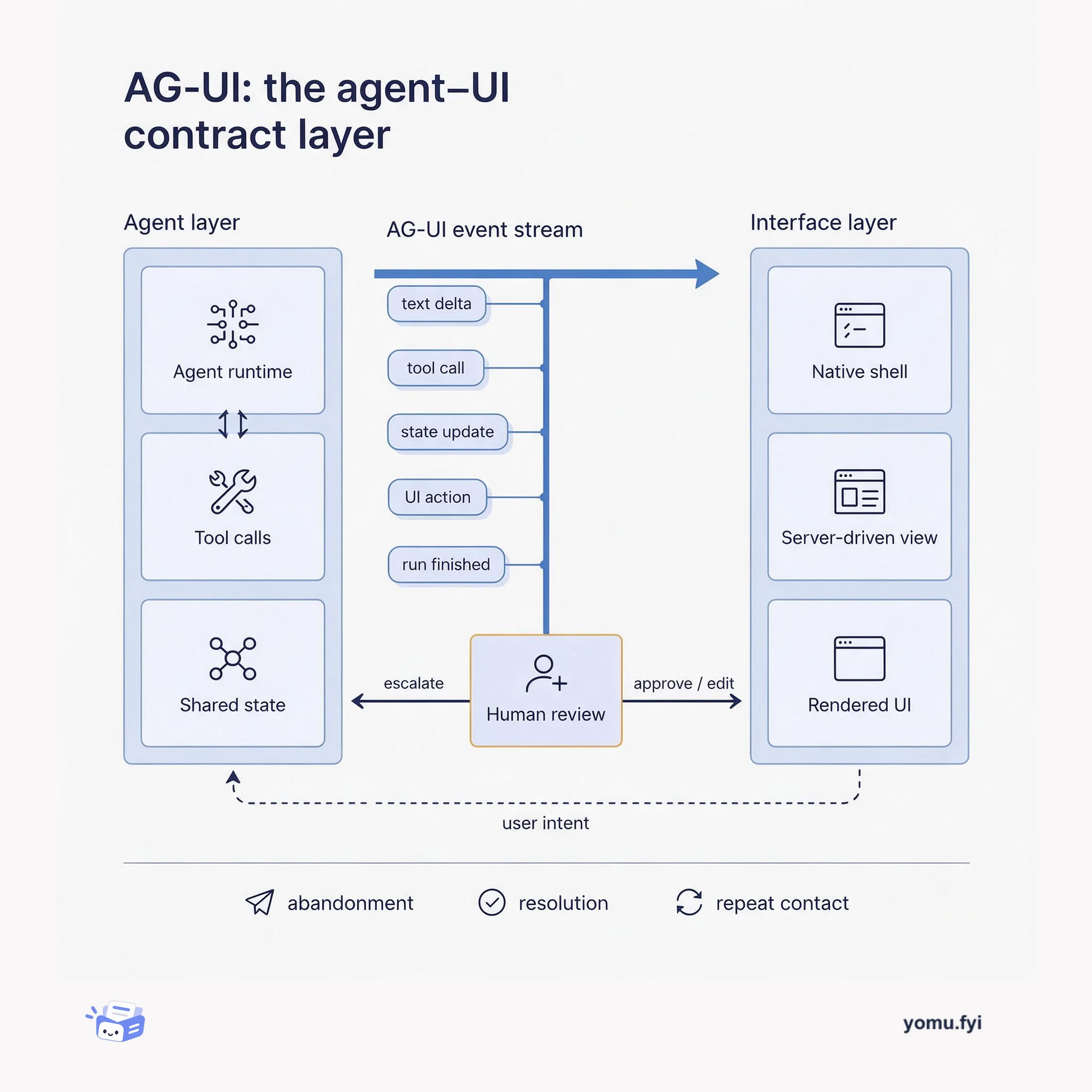
AG-UI is a typed event contract between an agent backend and a frontend, turning streamed agent state into UI. This diagram maps the layers and shows where human review plugs in.
Loading…
Topic
1 post about A2UI. Every summary links to the original.
See the idea
AG-UI is a typed event contract between an agent backend and a frontend, turning streamed agent state into UI. This diagram maps the layers and shows where human review plugs in.
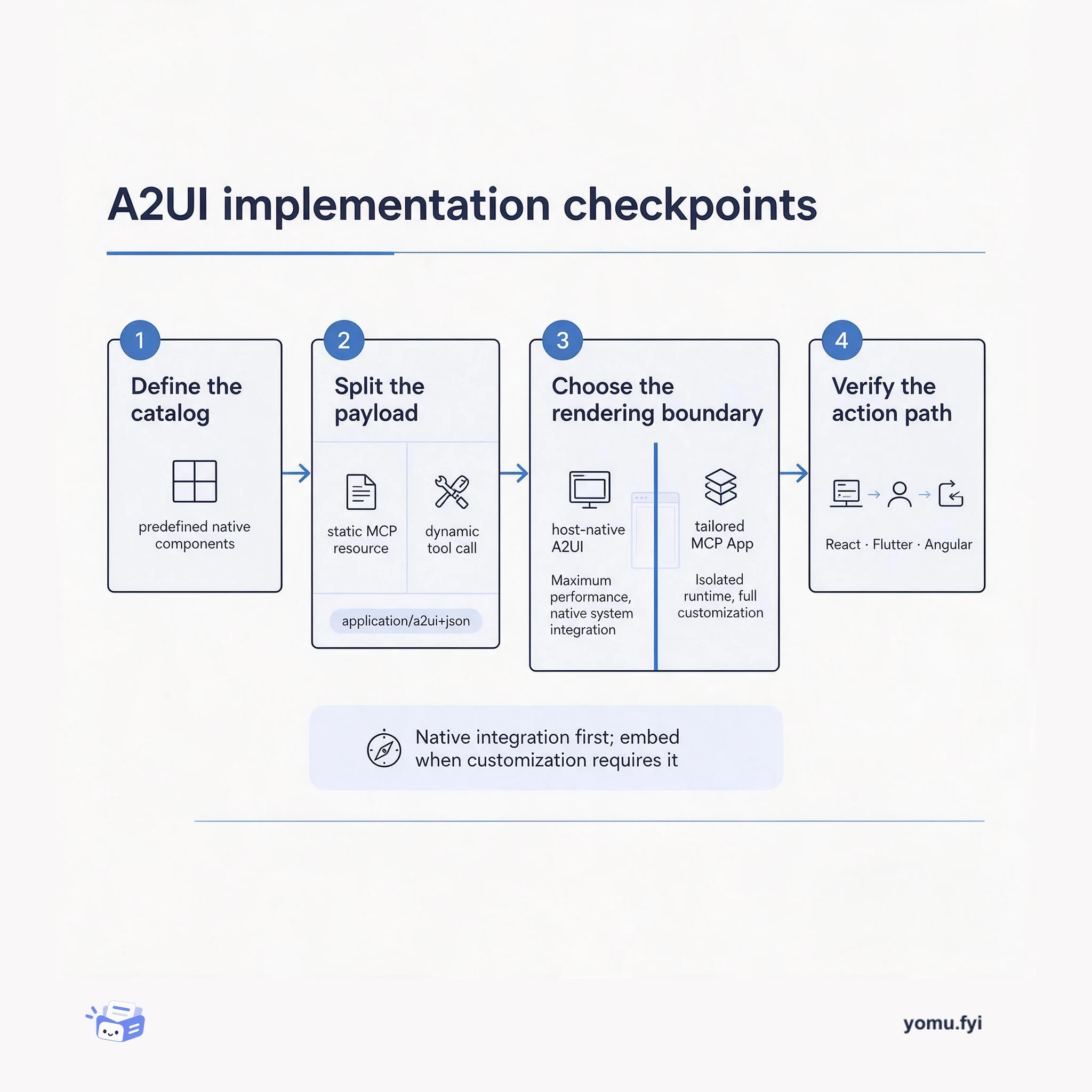
A practical guide to applying A2UI: define the component boundary, separate tool data from UI resources, choose native or embedded rendering, and verify the action path.
The Good Stuff
Paid picks we use ourselves. Links carry a referral code — a subscription through one earns us a commission at no extra cost to you.
Newest first
Agentic UIs must balance deep customization with seamless integration: MCP Apps provide standard-web flexibility in an iframe, while A2UI renders declarative JSON through the host application's native components. The post presents three architectural patterns for combining them, including A2UI over MCP, where MCP servers return application/a2ui+json resources for native rendering and can separate static MCP Resources from dynamic Tool calls. This arrangement avoids iframe-related visual fragmentation, keeps backend tool access separate from frontend rendering, and supports rendering across React, Flutter, or Angular through a predefined component catalog. The broader combination also reserves MCP Apps for highly tailored experiences and describes A2UI in MCP Apps, where an embedded app can process A2UI responses and route user actions through an AppBridge; the conclusion recommends choosing among patterns according to project constraints.
The best engineering reads, once a week.