AG-UI is a typed event contract between an agent backend and a frontend, turning streamed agent state into UI. This diagram maps the layers and shows where human review plugs in.
AG-UI defines a typed event stream that carries agent output, tool calls, shared state, and UI actions from a backend to a frontend, so both sides implement one contract instead of a bespoke WebSocket format. The architecture has three bands: the agent layer that produces state, the event spine that transports it, and the interface layer that renders it, with a return path for user intent. Human review is a branch on that spine, where low-confidence events escalate and approved edits flow back into the run. The payoff is that interface work stops being rewritten per agent framework, and one stream can feed native shells, server-driven views, or web clients.
FAQ
Does a shared event contract replace server-driven UI?
No — they solve different halves of the problem. Yelp's Assistant keeps a native shell and input bar while the conversation area is server-driven, fetching a view template once and hydrating it with data each turn. AG-UI standardizes how agent events arrive; it does not decide how the interface renders them.
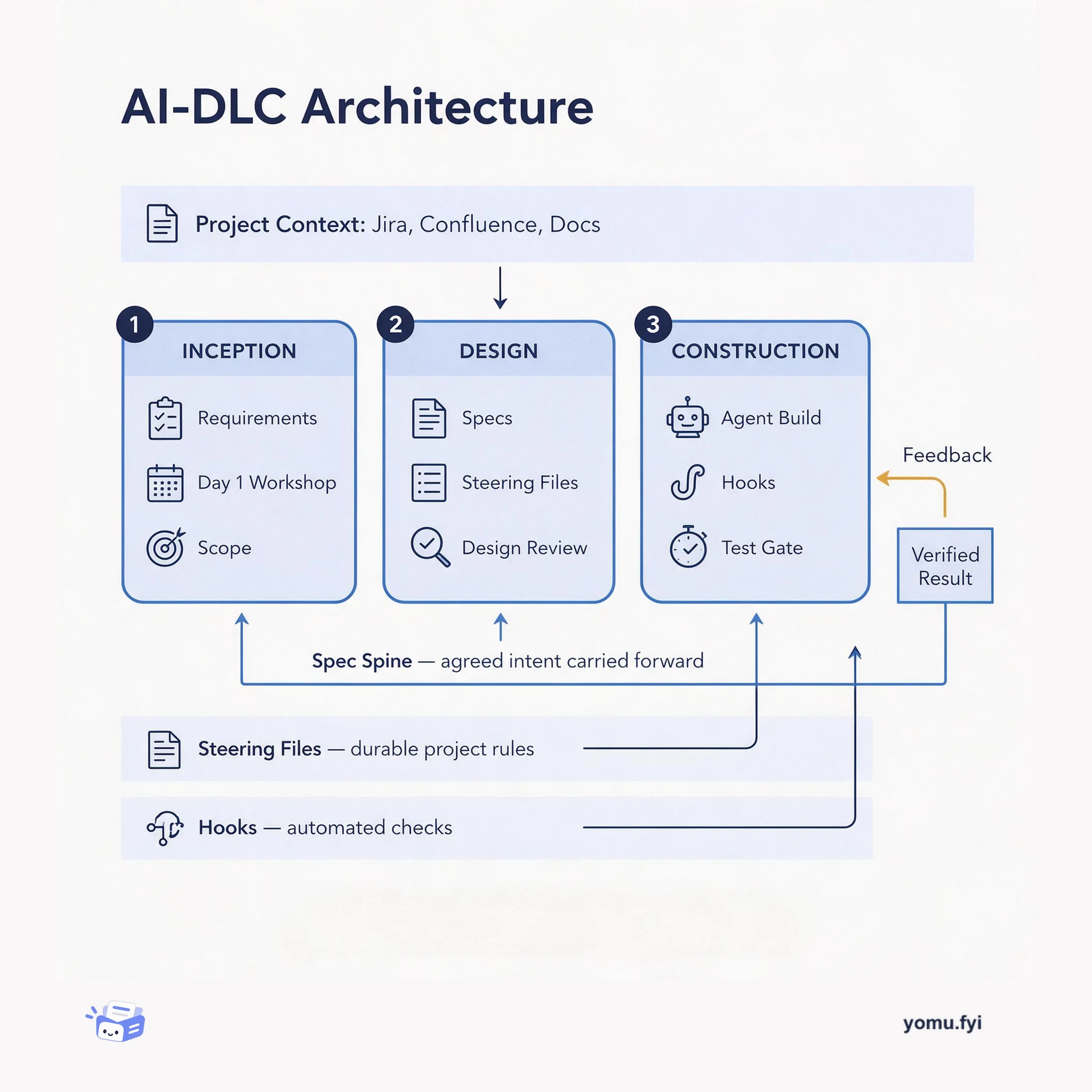
AI-DLC is an AI-driven development lifecycle that runs delivery through Inception, Design, and Construction, with specs, steering files, and hooks keeping agents aligned to agreed intent.
Apple Silicon's defining choice is one shared memory pool for CPU, GPU, and Neural Engine. This diagram maps that fabric, the on-package bandwidth it buys, and the scaling limits it imposes.
Antimicrobial resistance surveillance is a layered data architecture: raw reads and demand signals flow in, get normalized into governed tables, and answer plain-language queries. The diagram maps each boundary.
The Good Stuff
Paid picks we use ourselves. Links carry a referral code — a subscription through one earns us a commission at no extra cost to you.