BigQuery in the Right Lane: Five Checkpoints for AI Data Pipelines
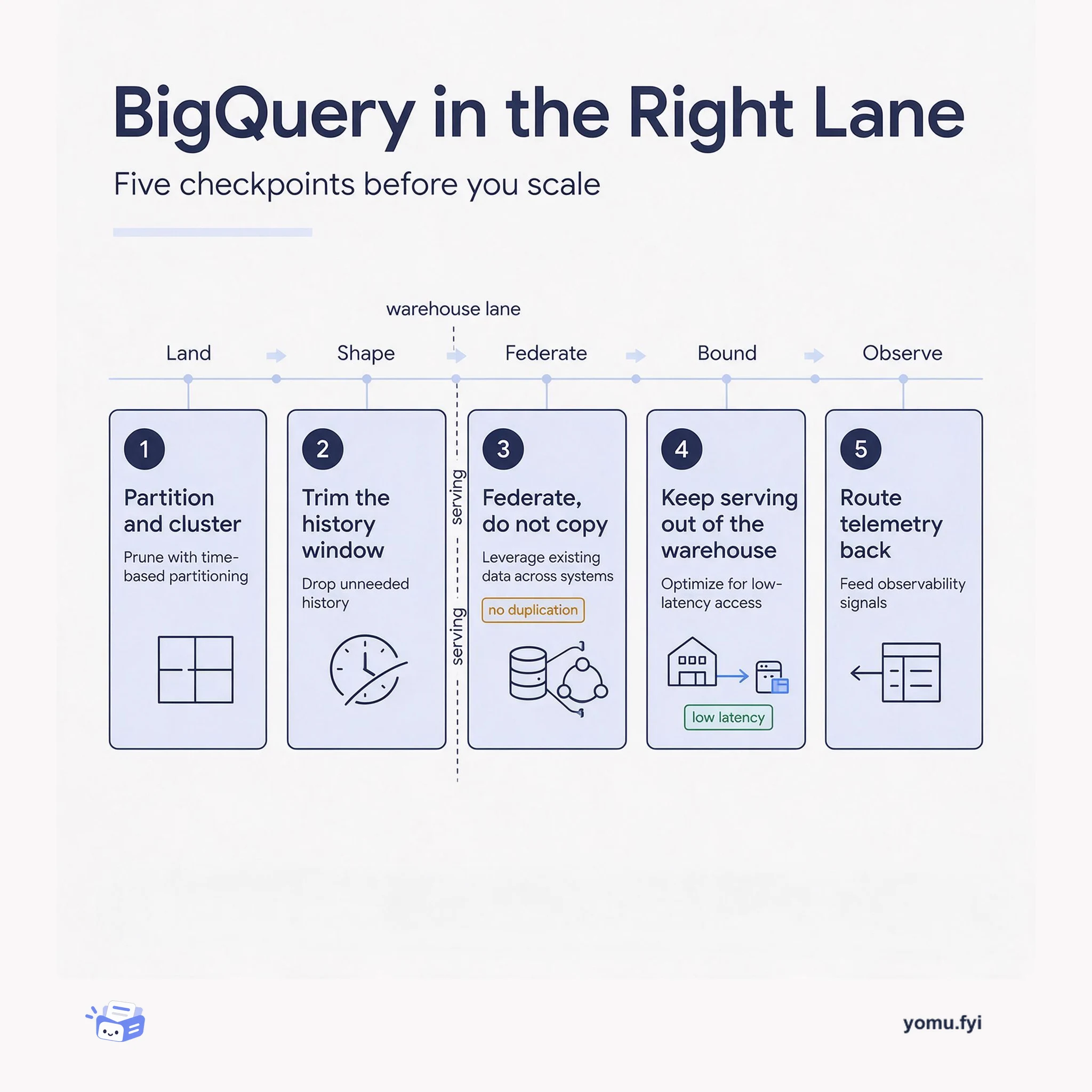
A five-checkpoint workflow for keeping BigQuery in the right lane: land and shape data once, tune partitions and history windows, and federate instead of copying.
Loading…
Topic
23 posts about Apache Iceberg. Every summary links to the original.
See the idea
A five-checkpoint workflow for keeping BigQuery in the right lane: land and shape data once, tune partitions and history windows, and federate instead of copying.
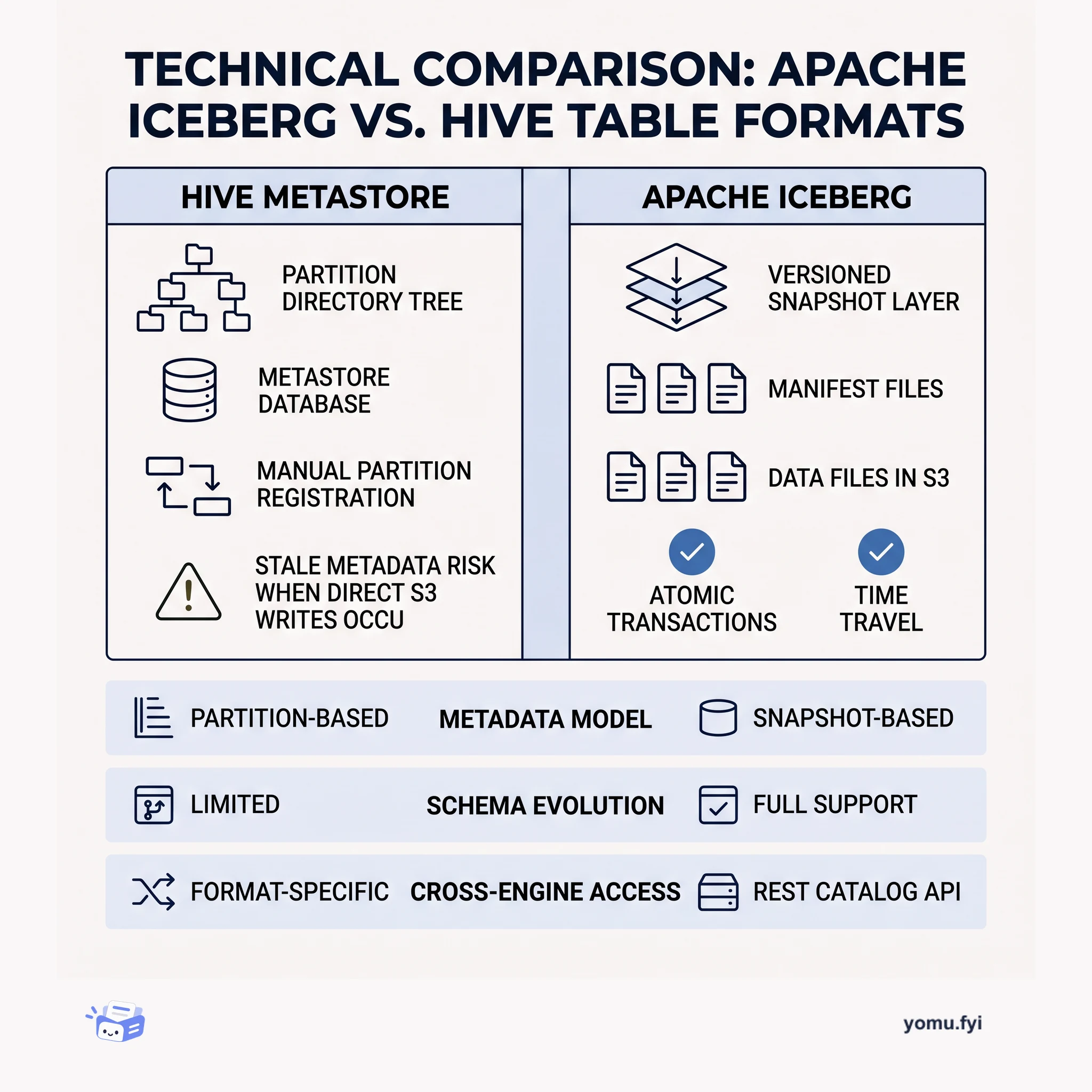
Apache Iceberg replaces Hive's partition-based metadata with a versioned catalog layer, trading operational simplicity for ACID guarantees, schema evolution, and cross-engine compatibility.
The Good Stuff
Paid picks we use ourselves. Links carry a referral code — a subscription through one earns us a commission at no extra cost to you.
Newest first
Catalog Commits is generally available for Unity Catalog managed Delta tables, aligning Delta with Iceberg’s catalog-oriented model and making the catalog responsible for table discovery, access, and latest table state. The change addresses three coordination problems: metadata “split brain” when engines write directly to storage, fragmented multi-engine governance, and the historical inability to coordinate atomic writes across multiple tables. With Catalog Commits enabled, Unity Catalog brokers table access through standardized APIs, keeping catalog and table state synchronized and enabling consistent authorization, holistic auditability, automated optimizations, and multi-statement, multi-table ACID transactions on Databricks. The release supports Databricks products and engines including Delta Spark, Delta Flink, Starburst Trino, DuckDB, and StreamNative, while Delta Kernel provides a shared path for connector support.
Databricks and Google Cloud announce bidirectional catalog federation that lets customers access the same data from Unity Catalog or BigQuery without duplication. The interoperability uses Apache Iceberg REST catalog APIs, enabling both platforms to read and write the same tables through a common open interface. Google Cloud's catalog federation is in preview for reading Unity Catalog-managed tables from BigQuery, while Google Cloud's Lakehouse federation is in private preview for Databricks users to govern and read foreign Iceberg tables. Unity Catalog's policies, fine-grained access controls, and lineage tracking apply to federated data, and users can query it with Genie using natural language. The announcement positions open standards as a path to interoperability across data platforms and previews future catalog metadata exchange through Iceberg REST catalog APIs.
Real-time decisioning for AI agents depends on more than customer records: it requires a customer context layer that captures what people are doing now and connects that behavior to identity. The post positions the data platform as the center of a composable martech architecture, with agents and applications operating on shared data in open formats such as Apache Iceberg and Delta Lake. Snowplow’s described approach places structured event collection, schema validation, enrichment, and identity resolution before data reaches the platform, while operating in the customer’s cloud environment. It distinguishes historical profiles from granular behavioral event streams and argues that agent interaction outcomes should return to the foundation as first-class events. The resulting four-stage loop—collect, resolve and enrich, serve, and learn—supports simultaneous real-time and historical context, with decision quality dependent on source data coherence.
The best engineering reads, once a week.