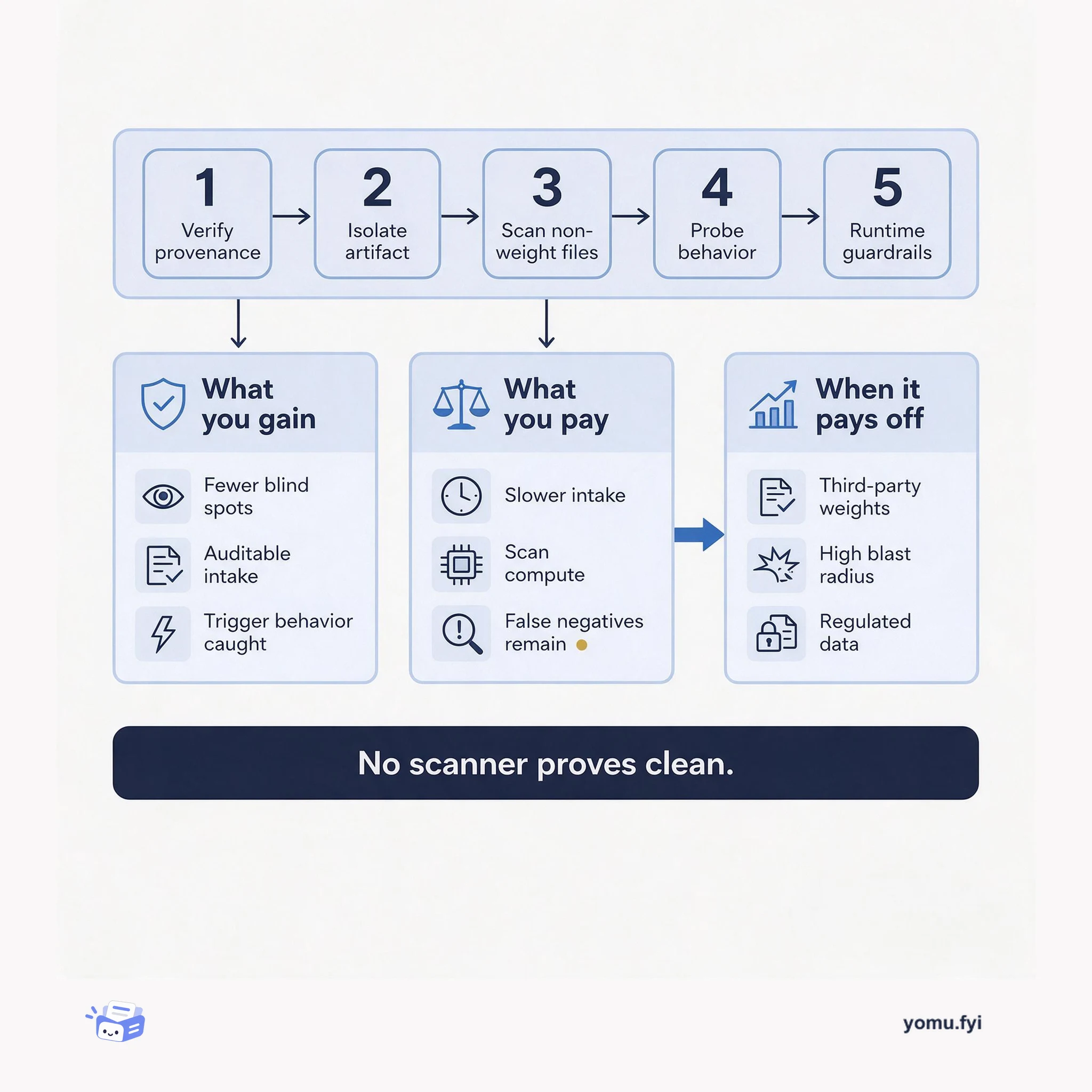
Backdoor Defense Is a Trade-off, Not a Scanner
A model that passes benchmarks can still defect only on a trigger. This explainer maps the trade-off between deeper backdoor verification and the friction, latency, and cost it adds.
 Auth0Daryl MartisProblem & solution
Enterprises centralize authentication into a single Auth0 environment but must comply with frameworks like PCI-DSS, HIPAA, and SOC 2 that restrict data to private channels. Auth0 Outbound PrivateLink provides a secure unidirectional connection between Auth0 and AWS infrastructure, avoiding the public internet. However, a single PrivateLink connection per environment cannot directly reach multiple isolated VPCs for staging and production. The Intelligent Gateway Pattern solves this by deploying an API gateway or reverse proxy at the PrivateLink termination point to fan out traffic. Auth0 Actions append context such as custom headers like X-Target-Env or specific paths, and the gateway inspects these to route requests to the appropriate isolated VPC, decoupling secure transport from internal routing. This pattern unblocks identity consolidation by allowing a single Auth0 tenant to serve both staging and production workloads while maintaining strict VPC isolation.
Enterprises using a single Auth0 environment for identity consolidation face a network topology challenge: strict VPC isolation policies require staging and production networks to live in completely isolated VPCs, but Auth0 supports only one outbound PrivateLink connection per environment.
Deploy an API gateway or reverse proxy (e.g., NGINX, HAProxy) at the PrivateLink termination point inside AWS. This gateway receives traffic over the single PrivateLink connection and fans it out to multiple internal services. Auth0 Actions append context (custom headers, paths, JWT claims) to each request, and the gateway inspects these to route traffic to the appropriate isolated VPC.
Auth0 Outbound PrivateLink establishes a secure unidirectional connection between Auth0 and AWS infrastructure, ensuring traffic never traverses the public internet.
A single Auth0 environment supports only one outbound PrivateLink connection, which cannot directly reach multiple isolated VPCs for staging and production.
The Intelligent Gateway Pattern uses an API gateway at the PrivateLink termination to fan out traffic, with Auth0 Actions appending context like X-Target-Env headers for routing.
Deploy an API gateway or reverse proxy at the PrivateLink termination point. The gateway receives all traffic and fans it out to different VPCs based on context appended by Auth0 Actions, such as custom headers or paths.
Auth0 Actions can append custom HTTP headers like X-Target-Env, specific URL paths, or inject JWT claims. The gateway inspects these to determine the target VPC.
Auth0 natively supports only one outbound PrivateLink connection per private cloud environment. The Intelligent Gateway Pattern works around this limit by using a single connection and a fan-out gateway.
Summaries are generated from the original by a language model. Check the original before relying on it.
See the idea
A model that passes benchmarks can still defect only on a trigger. This explainer maps the trade-off between deeper backdoor verification and the friction, latency, and cost it adds.
Keep reading
The Good Stuff
Paid picks we use ourselves. Links carry a referral code — a subscription through one earns us a commission at no extra cost to you.
One useful email. Unsubscribe anytime.
