AWS Systems Manager: Closed-Loop Automation vs Manual Runbooks
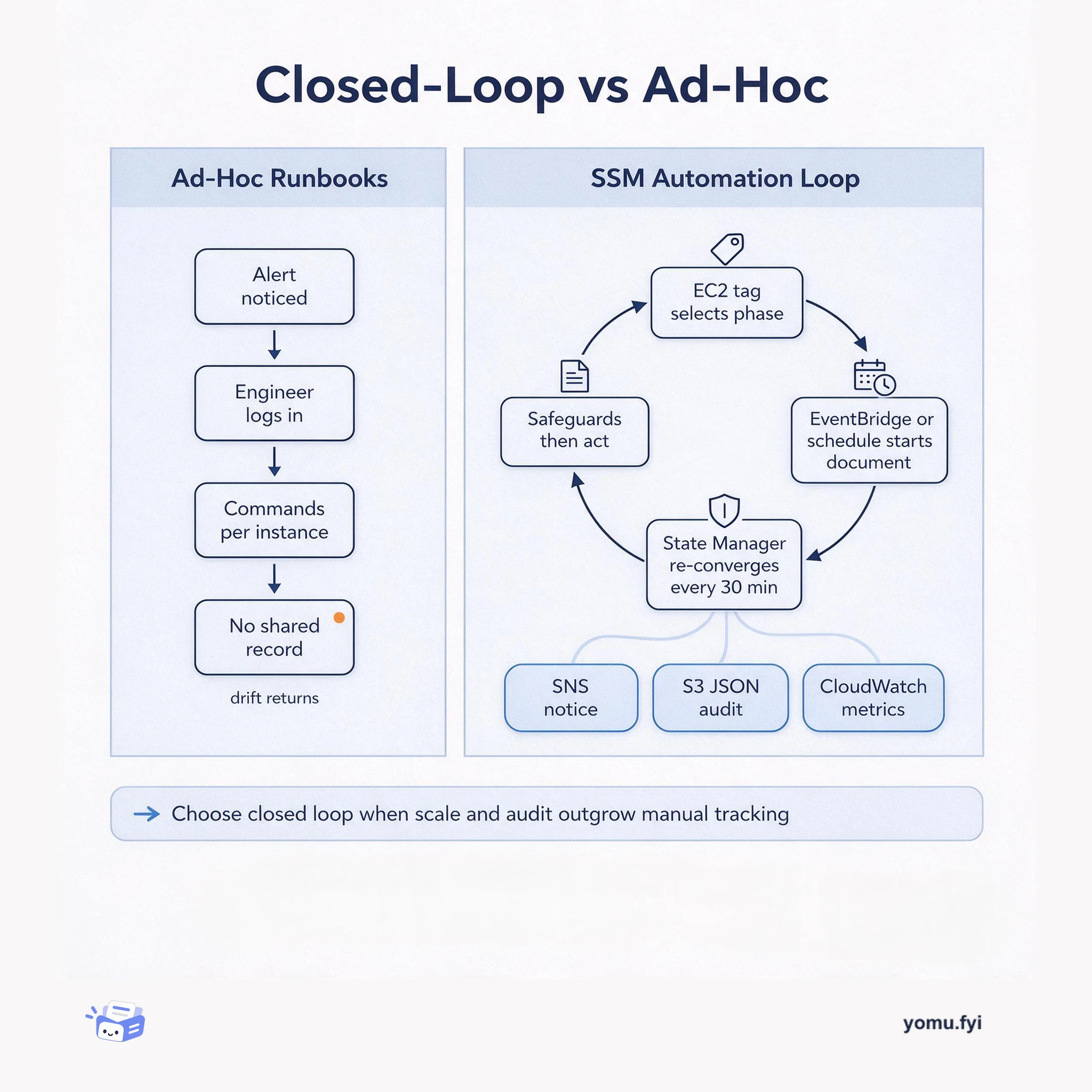
A side-by-side comparison of ad-hoc, human-run remediation and tag-driven AWS Systems Manager Automation, showing what each costs in audit trail, drift, and time to recover.
 Red HatJoon PaikProblem & solution
An outage of a central Red Hat Ansible Automation Platform controller halts CI/CD pipelines and automated remediation. To maintain continuous availability, platform teams can deploy a federated multi-cluster architecture managed through GitOps, using Git repositories as a single source of truth for declarative Infrastructure as Code. This approach decouples platform configuration from workload execution, with GitHub Actions coordinating deployment and integrating with ServiceNow for change governance and Splunk for centralized logging. The framework operates in two stages: declarative infrastructure provisioning via the main branch runs playbooks/configure_aap.yml to configure enterprise settings and inventory mappings, while dynamic workload dispatch via the deploy branch uses playbooks/dispatch_round_robin.yml to route jobs across clusters using round-robin or explicit targeting. Key use cases include continuous operations across geographic clusters, rolling updates by diverting workloads to a secondary datacenter, and phased platform migrations by running distinct Ansible Automation Platform versions side by side.
A central Red Hat Ansible Automation Platform controller outage halts CI/CD pipelines and automated remediation, requiring a federated multi-cluster approach for continuous availability.
Federated multi-cluster deployment managed through GitOps, using Git repositories as single source of truth, with two operational stages: declarative infrastructure provisioning via main branch and dynamic workload dispatch via deploy branch, integrating with ServiceNow and Splunk.
The architecture decouples platform configuration from workload execution, allowing GitHub Actions to coordinate deployment while integrating with ServiceNow for change governance and Splunk for logging.
The main branch triggers playbooks/configure_aap.yml to configure enterprise settings, inventory mappings, and synchronize Git workload repositories, while the deploy branch uses playbooks/dispatch_round_robin.yml to route jobs across clusters using round-robin or explicit targeting.
Key use cases include continuous operations across geographic clusters, rolling updates by diverting workloads to a secondary datacenter, and phased platform migrations by running distinct Ansible Automation Platform versions side by side.
The deploy branch playbook dispatch_round_robin.yml evaluates the target_aap variable; if set to auto, jobs alternate across clusters using the GitHub index round-robin algorithm; if set to an explicit environment like dc1, it filters gateway labels accordingly.
It integrates with ServiceNow Flow Designer to initiate deployment pipelines upon change request approval, and streams event logs to centralized analytics platforms such as Splunk.
Continuous operations across geographic clusters, rolling updates by diverting workloads to a secondary datacenter during maintenance, and phased platform migrations by running distinct Ansible Automation Platform versions side by side.
Summaries are generated from the original by a language model. Check the original before relying on it.
See the idea
A side-by-side comparison of ad-hoc, human-run remediation and tag-driven AWS Systems Manager Automation, showing what each costs in audit trail, drift, and time to recover.
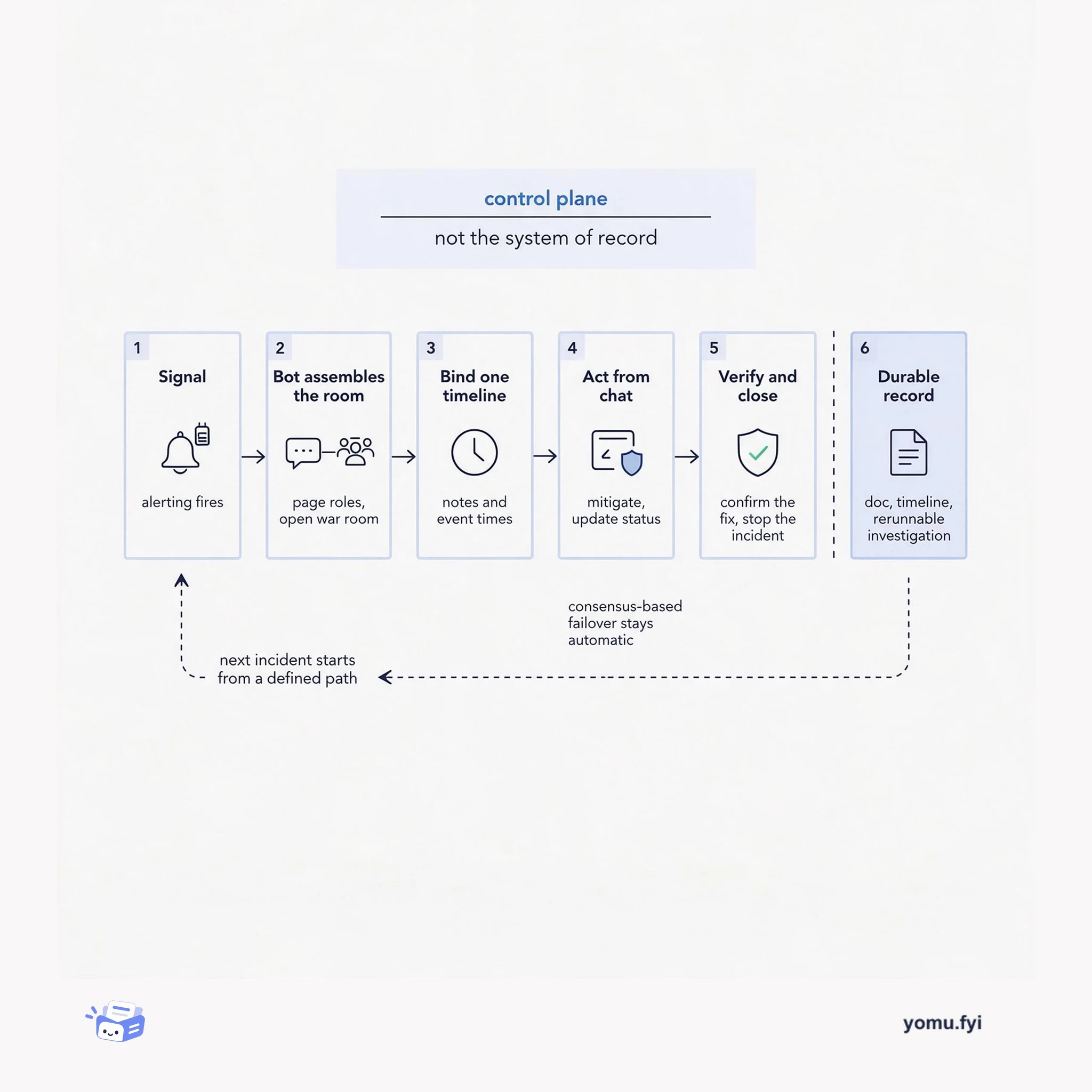
ChatOps turns a chat channel into the control plane for an incident: a bot pages roles, opens the room, runs mitigations, and timestamps every action. This flow shows where the channel helps and where it stops.
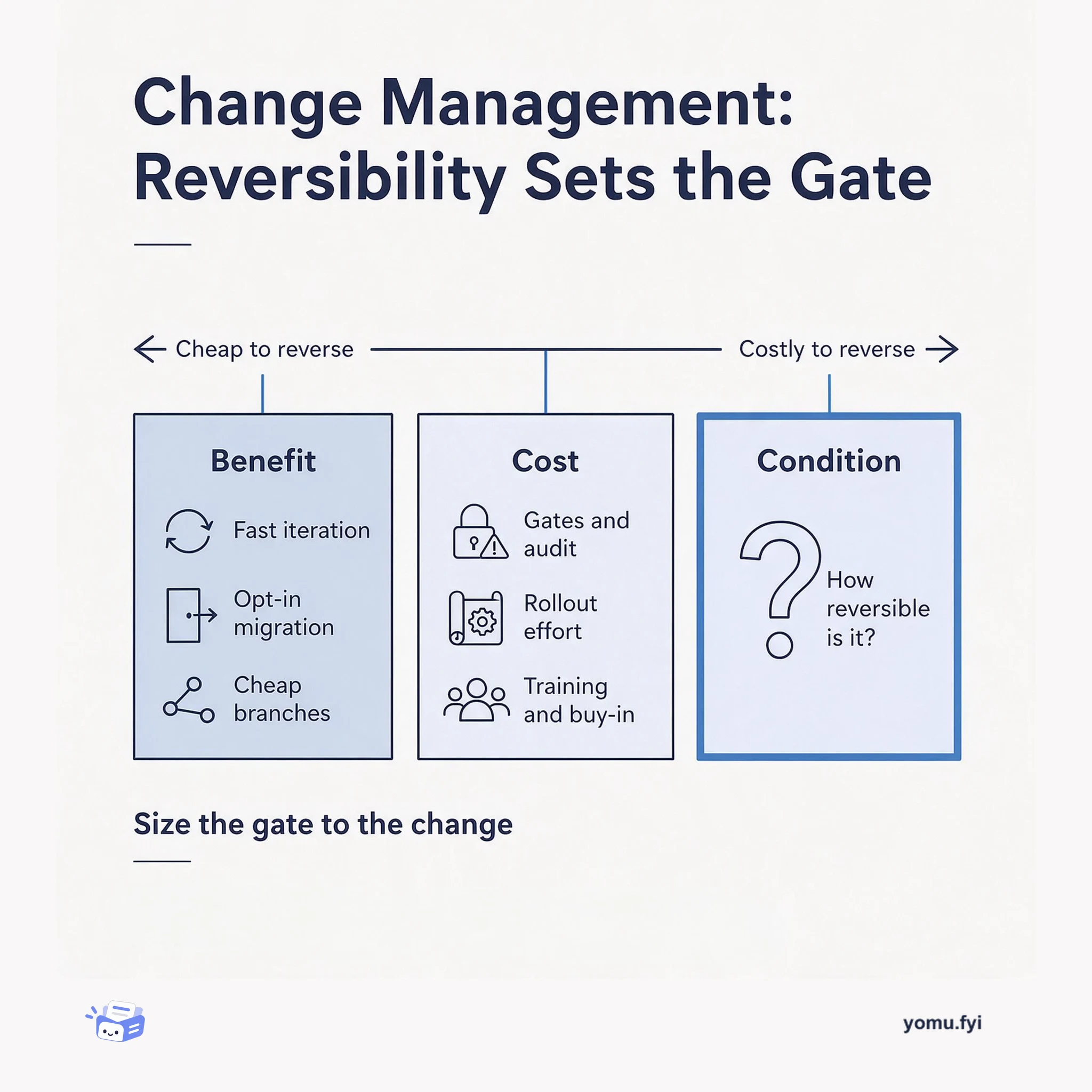
A trade-off map for change management: reversible changes can move fast with light gates, while irreversible ones need staged rollout, auditability, and adoption work.
Keep reading
The Good Stuff
Paid picks we use ourselves. Links carry a referral code — a subscription through one earns us a commission at no extra cost to you.
One useful email. Unsubscribe anytime.