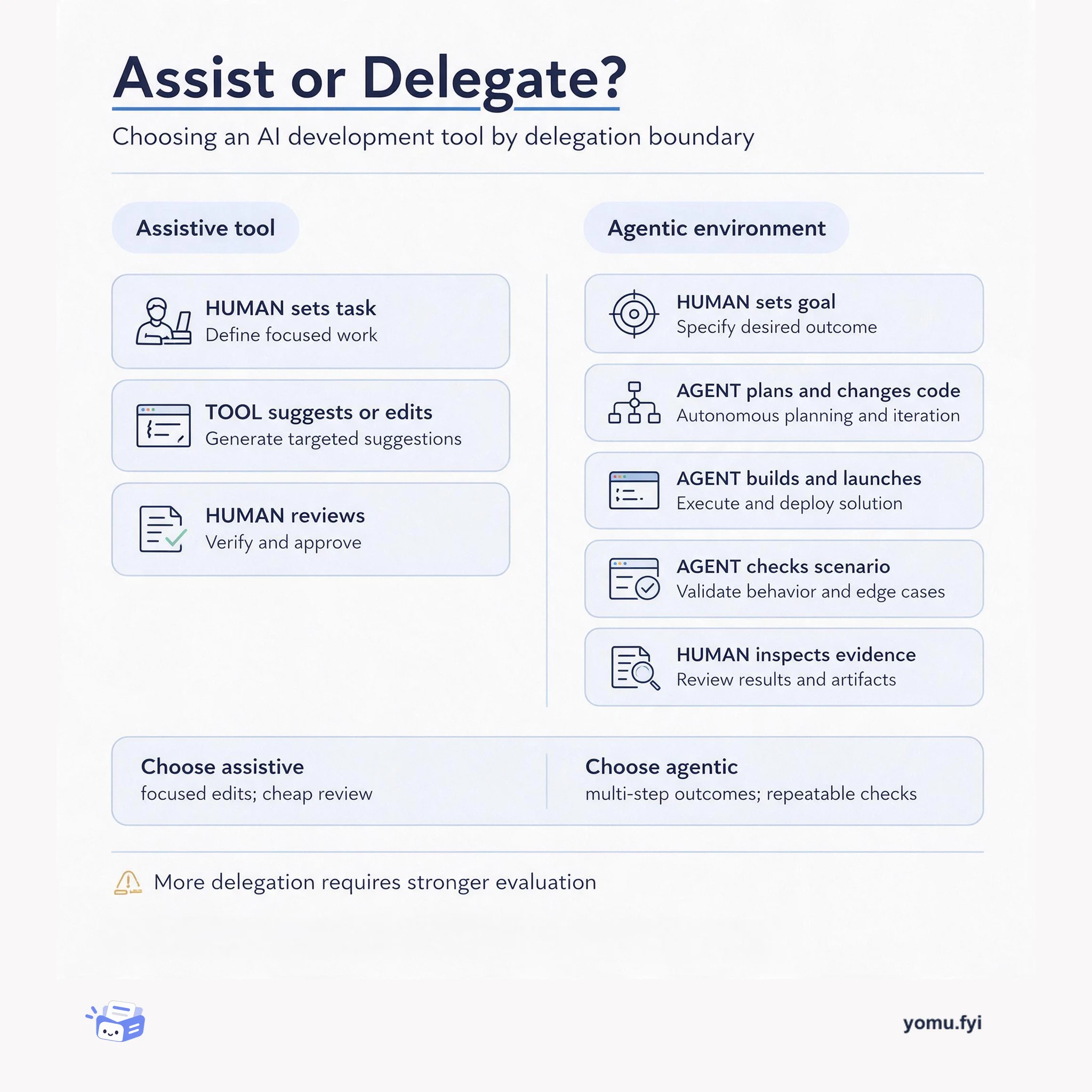
Assist or Delegate? Choosing an AI Development Tool
Compare assistive coding tools with agentic development environments to see where human control, automation, verification, and evaluation belong in the workflow.
 DatabricksDatabricks StaffExplainer
The guide explains how MLOps frameworks close the gap between notebook experimentation and reliable, scalable machine-learning production by applying automation, version control, and continuous delivery across the lifecycle. It describes experiment tracking, model registries, workflow orchestration, feature stores, deployment and serving, and monitoring as the capabilities needed to make training reproducible, prevent training-serving skew, automate pipelines, and detect degradation after release. MLflow is presented as a modular open-source option with Tracking, Model Registry, Models, and Projects, supporting run history, lifecycle stages, standardized packaging, and reproducible execution across environments. Kubeflow suits Kubernetes-standardized organizations and large distributed GPU workloads, while Metaflow, cloud-native services, and unified platforms such as Databricks are positioned as alternatives according to developer experience, cloud alignment, or operational preferences.
MLOps frameworks apply software engineering practices to the machine learning lifecycle, addressing the operational gap between experimentation and production. The guide covers the capabilities a complete workflow needs and compares framework choices according to infrastructure, scale, cloud alignment, developer experience, and management overhead.
The guide first defines the operational problems MLOps addresses, then outlines lifecycle capabilities including tracking, registries, orchestration, feature stores, serving, and monitoring. It uses MLflow and Kubeflow as detailed examples and offers selection guidance for open-source tools, managed cloud services, unified platforms, Kubernetes environments, and data science-focused teams.
MLflow combines experiment tracking, a model registry, standardized model packaging, and reproducible project execution without requiring teams to adopt a specific infrastructure stack.
Feature stores help keep training and inference transformations consistent, reducing training-serving skew by centralizing feature computation and storage.
Open-source tools provide flexibility and avoid vendor lock-in but require maintenance; managed platforms reduce operational overhead while introducing greater cloud-provider dependency and potentially less flexibility.
A model registry centralizes trained models, their versions, and lifecycle stages such as staging, validation, production, and archival. It also provides an audit trail and lets teams roll back to a prior model version when a deployed model degrades.
A feature store centralizes the computation and storage of machine-learning features. It helps ensure that transformations used to create training data are applied consistently during inference, preventing training-serving skew.
Open-source tools such as MLflow, Kubeflow, and DVC offer flexibility and help avoid vendor lock-in, but teams must deploy and maintain them. Managed platforms provide integrated security and governance with less operational work, though they can reduce flexibility and increase cloud-provider dependency.
Summaries are generated from the original by a language model. Check the original before relying on it.
See the idea
Compare assistive coding tools with agentic development environments to see where human control, automation, verification, and evaluation belong in the workflow.
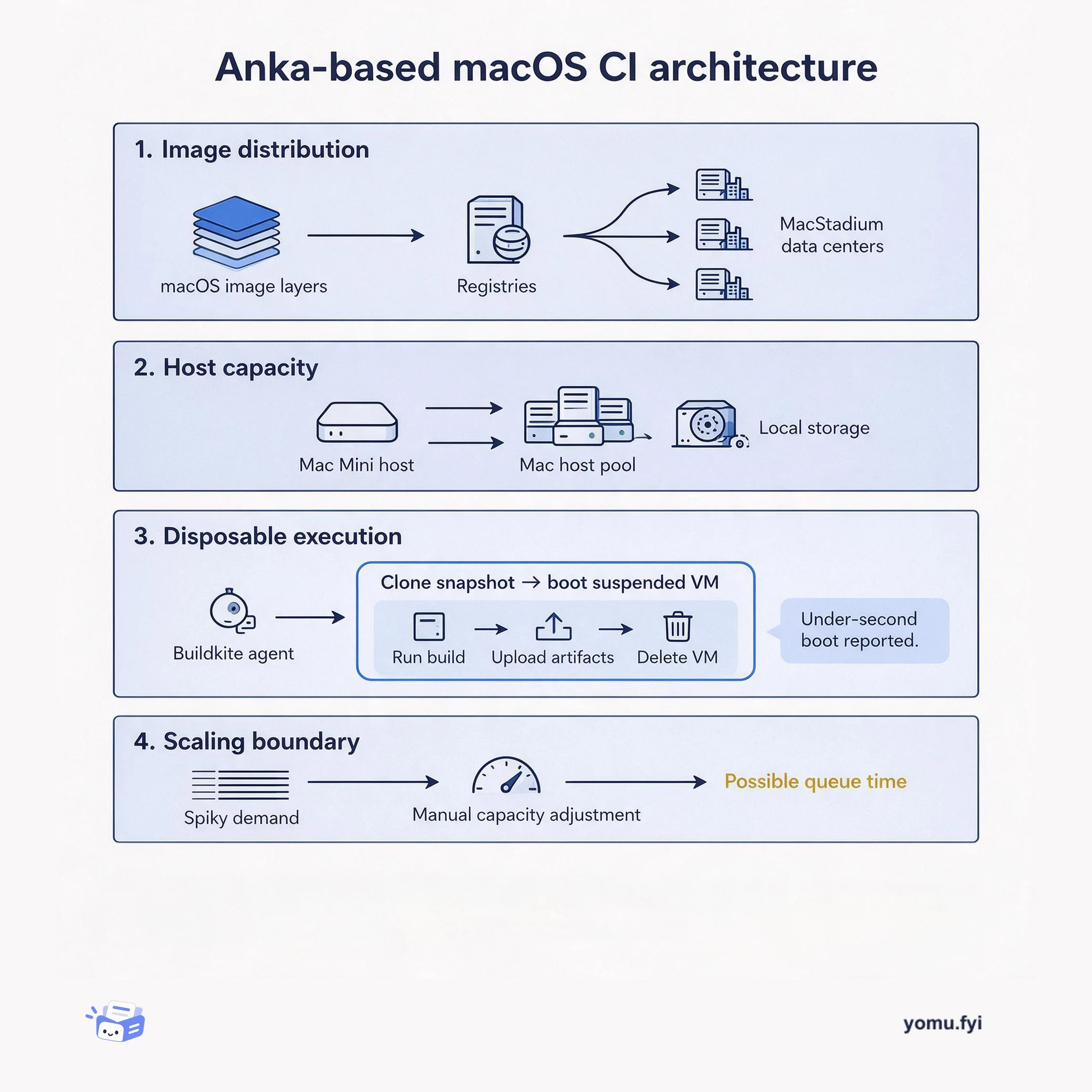
Anka is a Docker-like macOS virtualization layer for disposable CI environments. This architecture shows how images, Mac hosts, snapshots, build agents, and artifacts connect.
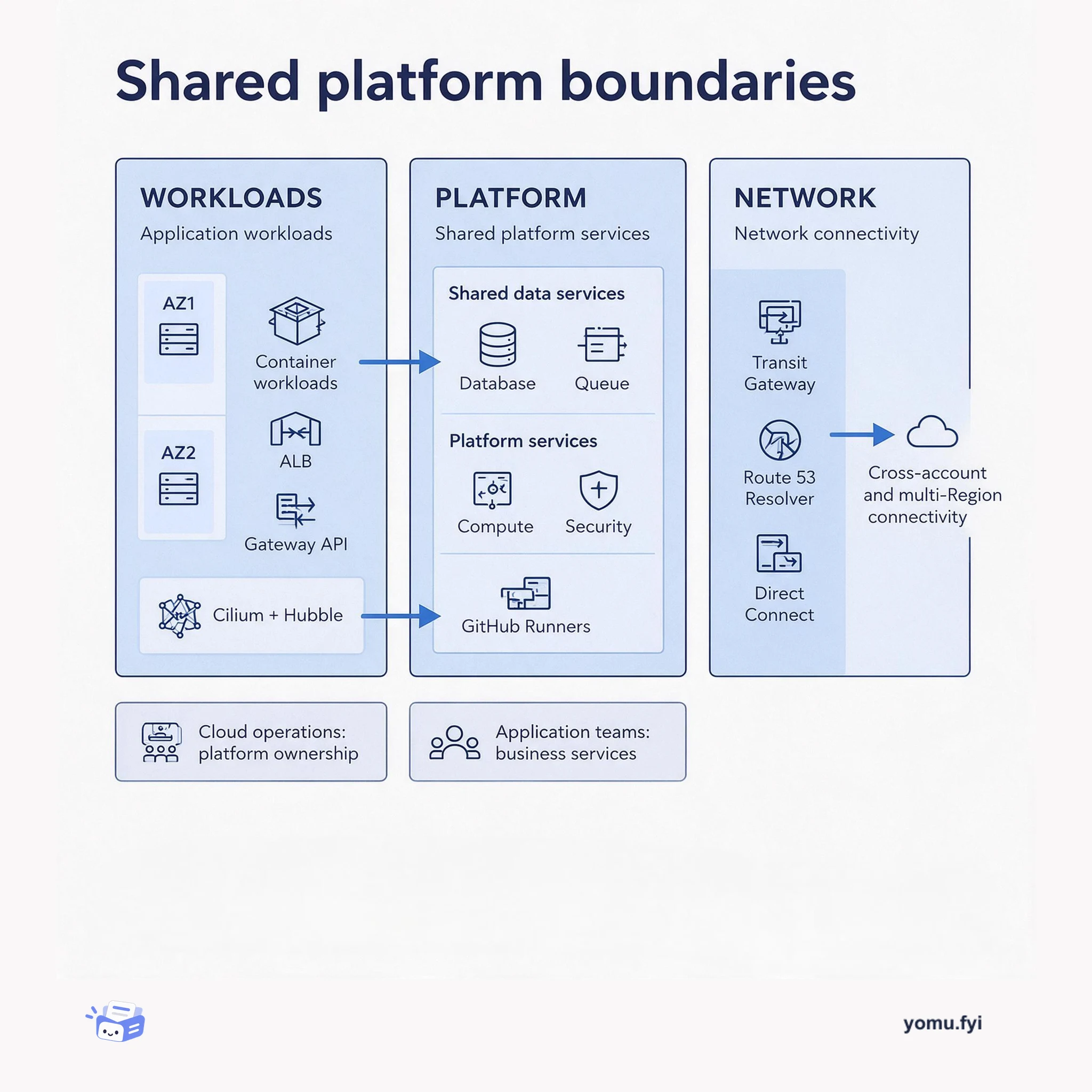
See how a shared Amazon EKS architecture separates workloads, platform services, and network connectivity so teams can scale delivery without multiplying operational ownership.
Keep reading
The Good Stuff
Paid picks we use ourselves. Links carry a referral code — a subscription through one earns us a commission at no extra cost to you.
One useful email. Unsubscribe anytime.