ARM Is a Stack Decision, Not a CPU Checkbox
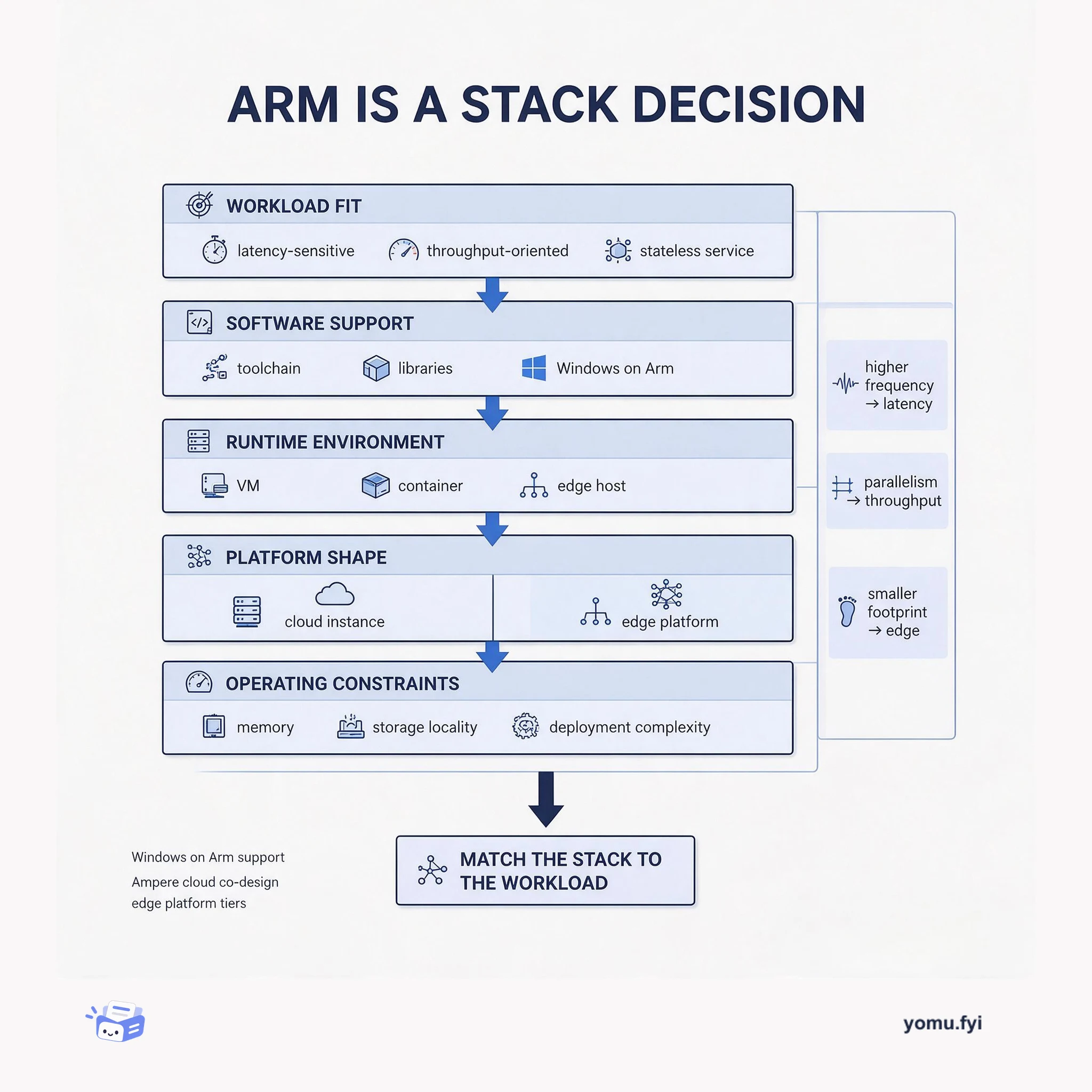
An architecture view of ARM deployments, from workload fit and software support to platform choice, showing where performance, memory, storage, and operations shape the decision.
 Red HatDaniel FroehlichExplainer
Choosing an edge platform requires balancing hardware footprint, workload needs, high availability, and operational complexity; the options range from RHEL with Podman or KVM to OpenShift clusters. The guide organizes Red Hat's offerings into RHEL-based and OpenShift-based deployments, noting that both traditional virtual machines and modern containerized workloads can coexist and that platforms can overlap as requirements grow. It details image-mode RHEL (bootc), transactional updates with rollbacks, efficient over-the-air delivery, offline installation, and dependency pre-resolution for constrained or disconnected sites. RHEL is positioned for static workloads of one to five components, while Red Hat Device Edge adds MicroShift when lightweight Kubernetes is needed. Kubernetes becomes more appropriate for larger microservices or event-driven systems, automated recovery, dynamic workloads, cross-environment scaling, and rolling updates; the series next covers OpenShift topologies.
Edge architects must choose among platforms with different hardware footprints, capabilities, availability characteristics, and operational demands. The decision also depends on workload architecture, container scheduling needs, update frequency, scalability, connectivity, and whether Kubernetes complexity is justified.
The guide compares RHEL-based and OpenShift-based edge topologies, from minimal RHEL deployments using Podman or KVM through Red Hat Device Edge with MicroShift and larger OpenShift clusters. It explains image-mode RHEL (bootc), transactional updates, rollback, over-the-air delivery, offline installation, and criteria for adopting Kubernetes.
RHEL supports RPM-based applications, KVM virtual machines, and Podman containers, with minimum requirements of 1 core, 1.5 GiB RAM, and 10 GiB of disk.
Red Hat Device Edge combines RHEL with MicroShift, a lightweight Kubernetes distribution intended to bring container orchestration to resource-constrained devices.
Kubernetes is generally better suited to larger microservices or event-driven workloads, automated recovery, dynamic components, cross-environment deployment, and rolling updates.
Summaries are generated from the original by a language model. Check the original before relying on it.
See the idea
An architecture view of ARM deployments, from workload fit and software support to platform choice, showing where performance, memory, storage, and operations shape the decision.
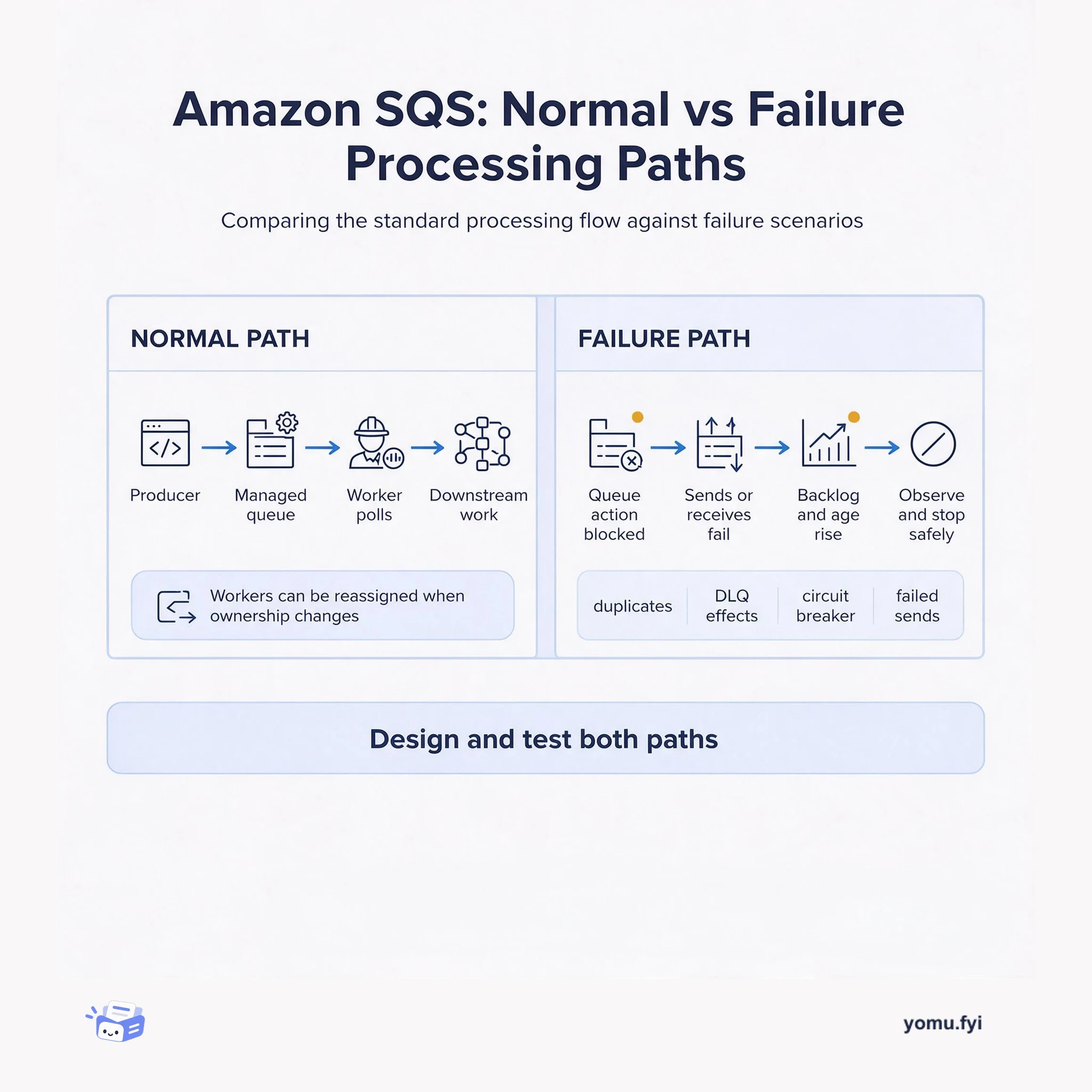
Amazon SQS connects producers and workers, but its real design test is failure. Compare the processing path with the signals and controls needed when queue operations break.
Keep reading
The Good Stuff
Paid picks we use ourselves. Links carry a referral code — a subscription through one earns us a commission at no extra cost to you.
One useful email. Unsubscribe anytime.