An architecture view of ARM deployments, from workload fit and software support to platform choice, showing where performance, memory, storage, and operations shape the decision.
ARM deployment decisions span more than processor selection. This explainer maps the stack from workload characteristics and software/toolchain support through operating environment, cloud instance, memory, storage, and operational constraints. Examples from Windows on Arm, Ampere-based cloud services, and edge platform guidance show why latency, throughput, single-thread performance, footprint, and deployment complexity must be evaluated together.
Antimicrobial resistance surveillance is a layered data architecture: raw reads and demand signals flow in, get normalized into governed tables, and answer plain-language queries. The diagram maps each boundary.
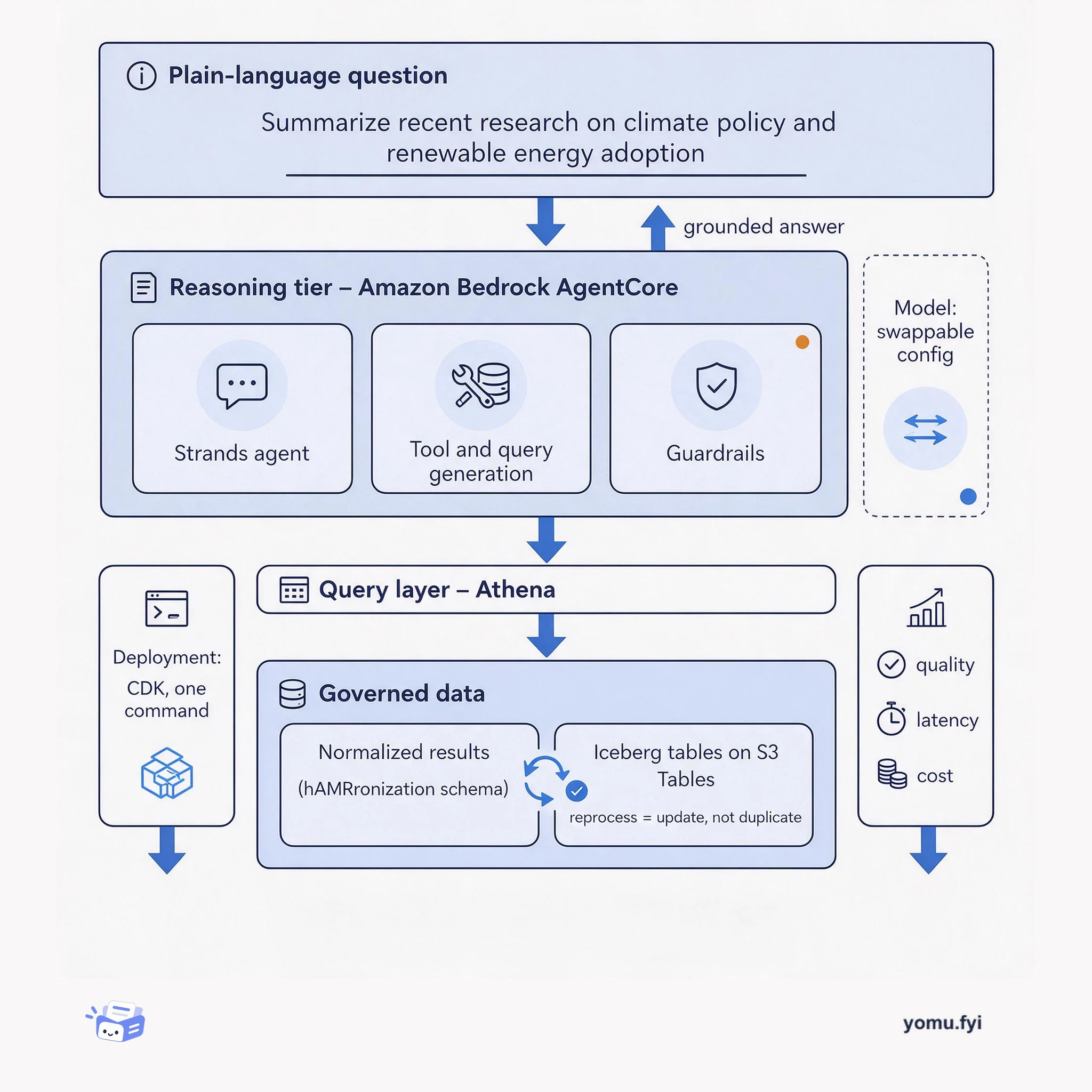
Amazon Bedrock is the managed reasoning tier in an agent architecture, not the whole system. This layered view shows the pipelines, governed tables, query layer, and guardrails around it.
API versioning as an architecture: requests enter through a version header, pass through a chain of reversible version changes, and reach controllers that only ever see the latest model.
The Good Stuff
Paid picks we use ourselves. Links carry a referral code — a subscription through one earns us a commission at no extra cost to you.