The rise of AI agents and MCP-based ecosystems introduces identity challenges when onboarding numerous clients without manual overhead. Auth0 expands its Client ID Metadata Document (CIMD) support with two registration modes — manual pre-registration and dynamic registration — for OAuth clients. Manual pre-registration requires an administrator to submit a metadata URL for review and approval, while dynamic registration enables just-in-time client discovery during authorization flows. CIMD uses an HTTPS URL as the client identifier pointing to a metadata document with the client’s name, redirect URIs, and authentication methods; Auth0’s implementation uses shared caching to reduce database write pressure and support more dynamic clients without latency. Application Profiles centrally manage security policies such as refresh token rotation and DPoP across dynamically registered clients, aiming to provide a practical identity foundation for MCP servers and agentic applications.
Context
The rapid growth of AI agents and MCP-based ecosystems creates identity challenges when onboarding numerous OAuth clients, as traditional client registration approaches introduce operational overhead, credential management risks, and configuration drift.
Approach / What changed
Expanding Client ID Metadata Document (CIMD) support in Auth0 with manual pre-registration and dynamic registration modes, and introducing Application Profiles for centrally managing security policies on dynamically registered CIMD clients.
Takeaways
1
CIMD uses an HTTPS URL pointing to a metadata document as the client identifier, enabling standards-based client identity without requiring a separate registration transaction for every connection.
2
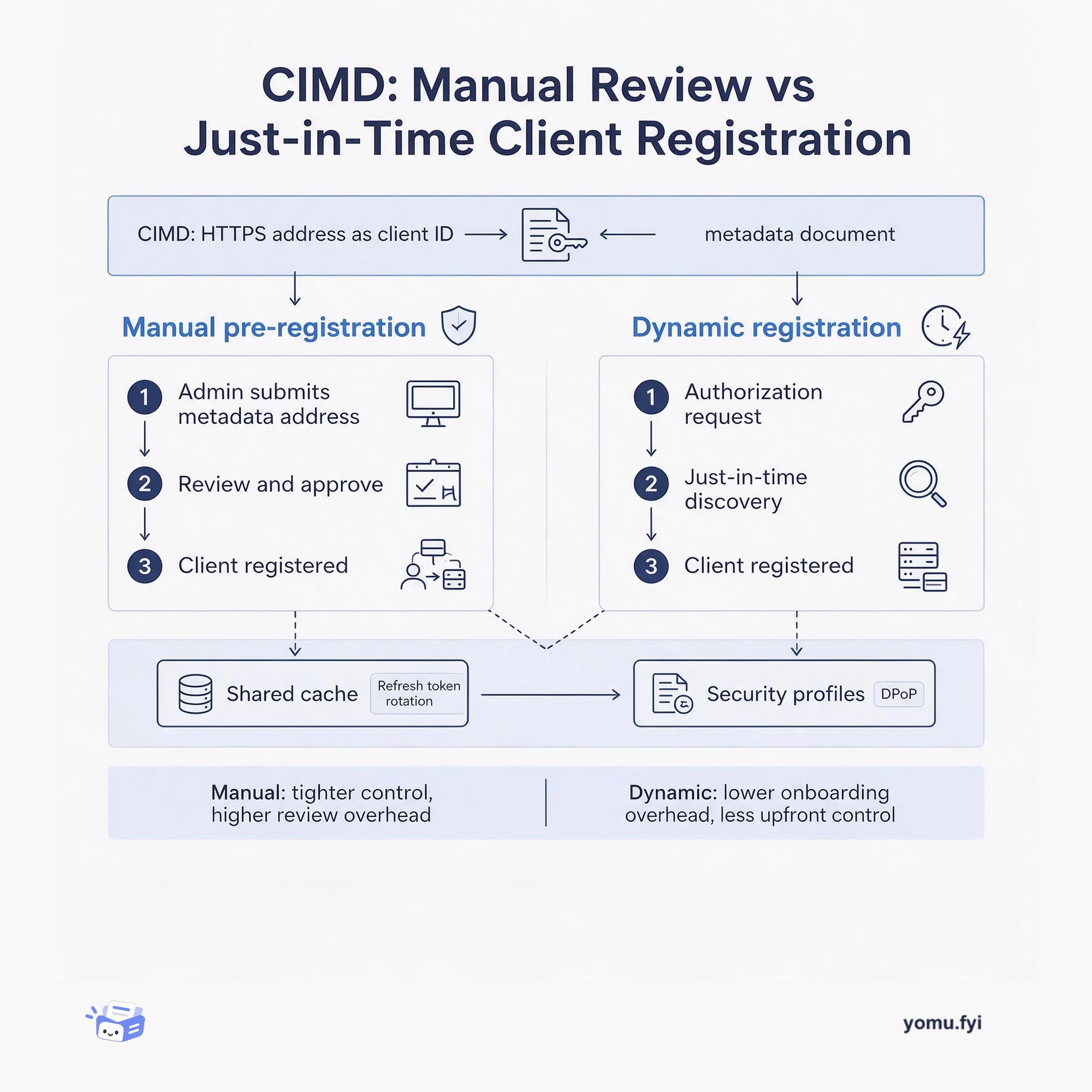
Dynamic CIMD registration enables just-in-time client discovery during authorization flows, reducing the need for manual provisioning as new clients connect.
3
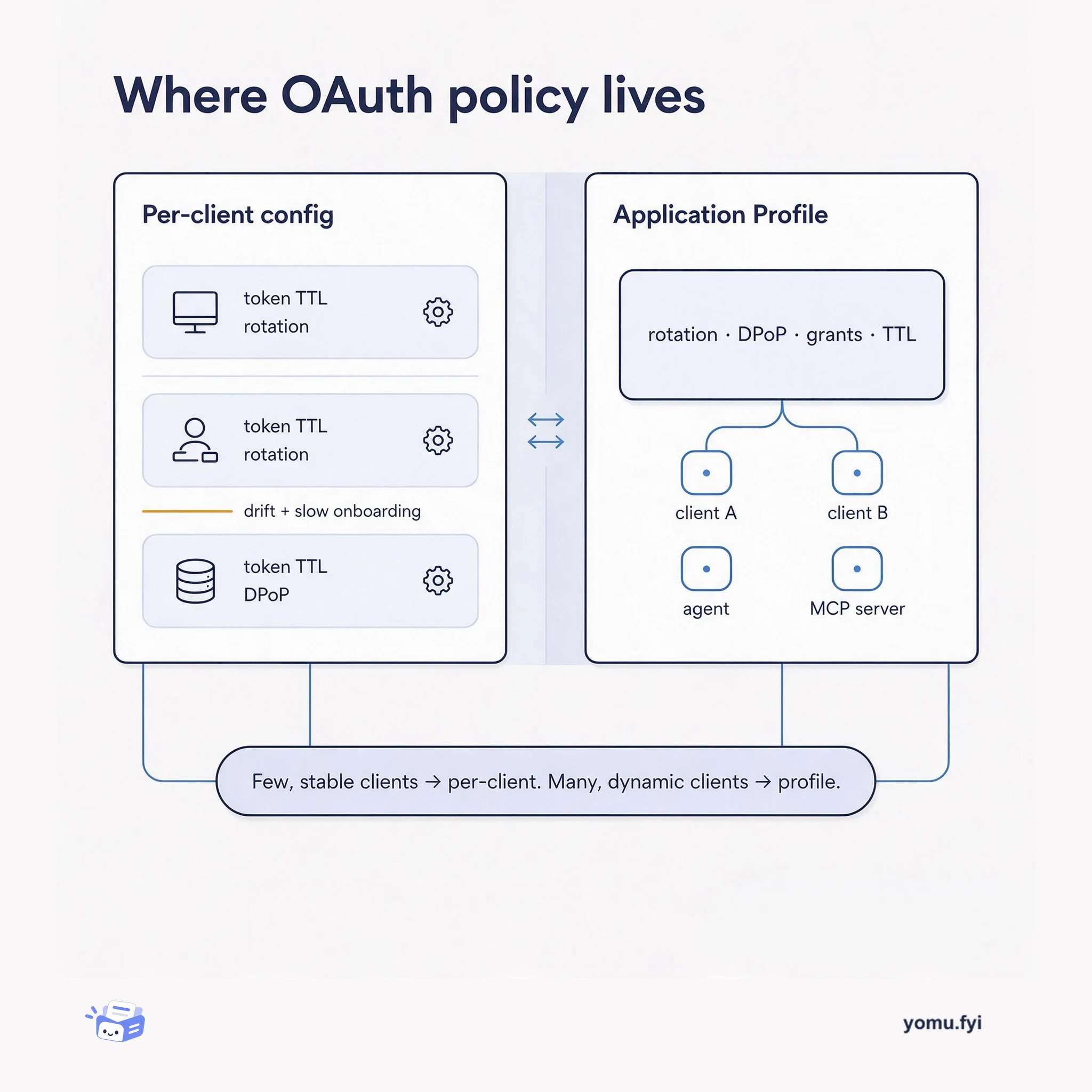
Application Profiles allow administrators to centrally manage security policies such as refresh token rotation and DPoP across dynamically registered CIMD clients, reducing operational overhead at scale.
FAQ
What problem does CIMD solve for AI agent identity?
CIMD allows OAuth clients to identify themselves via an HTTPS URL pointing to a metadata document, eliminating the need for a separately provisioned client record and reducing operational overhead in dynamic agent ecosystems.
How does dynamic CIMD registration work?
When a client initiates authorization, Auth0 uses the client's metadata URL to retrieve and validate metadata, enabling just-in-time client discovery and registration without manual provisioning or pre-registration.
What are Application Profiles used for?
Application Profiles let administrators centrally manage security and authorization settings for dynamically registered CIMD clients, including refresh token policies, DPoP, and Organizations, enforcing consistent controls at scale.
CIMD uses an HTTPS URL as an OAuth client identifier that points to a metadata document. This comparison shows when to pre-register clients manually and when to let dynamic discovery handle agent onboarding.
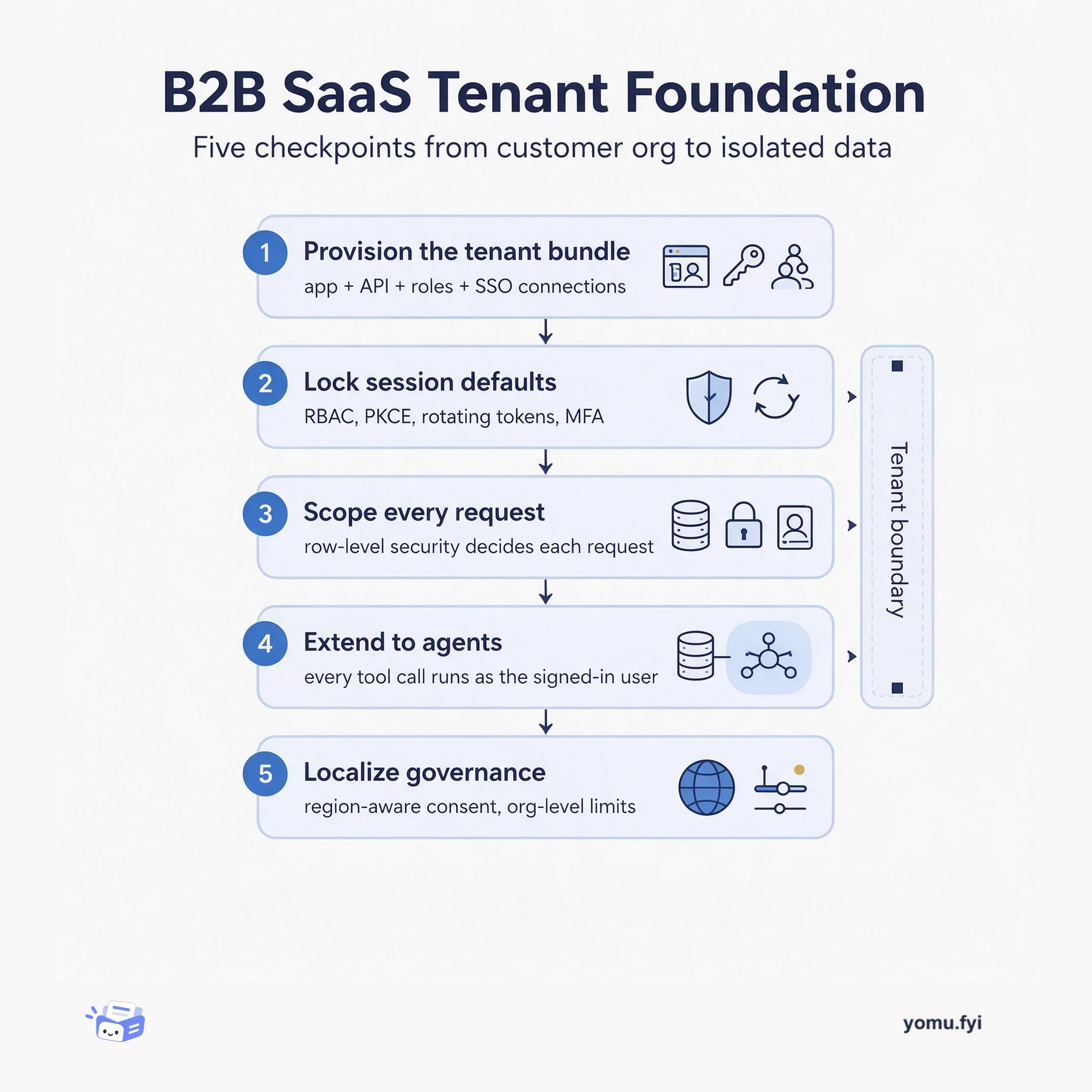
A five-checkpoint walkthrough of what a B2B SaaS tenant actually needs: provisioning, identity and session defaults, per-tenant data isolation, agent access, and localized governance.
Application Profiles bundle token, rotation, and DPoP policy once and attach it to many OAuth clients. This comparison shows when a shared profile beats configuring each client by hand.
Keep reading
Related reading
The Good Stuff
Paid picks we use ourselves. Links carry a referral code — a subscription through one earns us a commission at no extra cost to you.