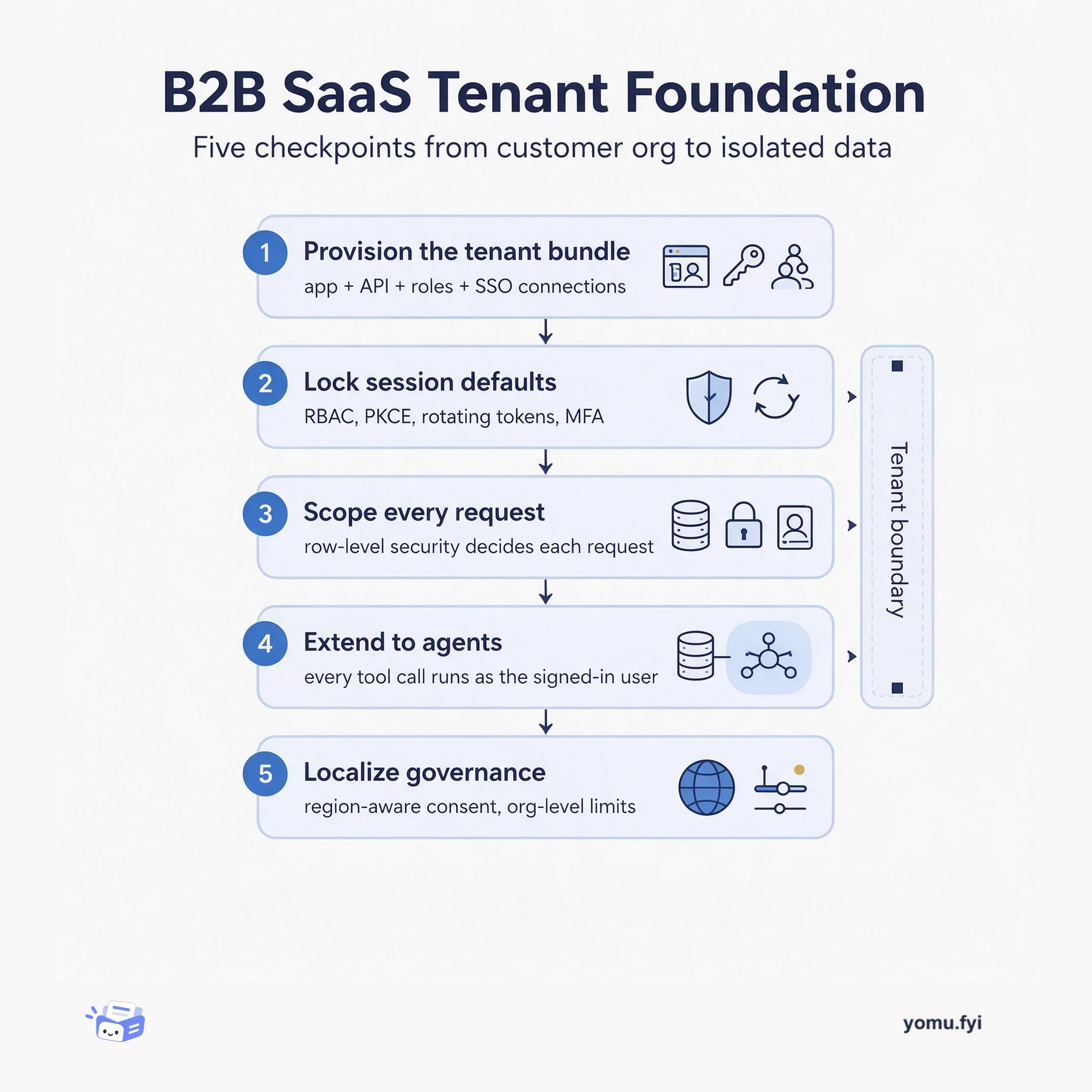
Five Checkpoints for a B2B SaaS Tenant Foundation
A five-checkpoint walkthrough of what a B2B SaaS tenant actually needs: provisioning, identity and session defaults, per-tenant data isolation, agent access, and localized governance.
Loading…
Topic
2 posts about B2B SaaS. Every summary links to the original.
See the idea
A five-checkpoint walkthrough of what a B2B SaaS tenant actually needs: provisioning, identity and session defaults, per-tenant data isolation, agent access, and localized governance.
The Good Stuff
Paid picks we use ourselves. Links carry a referral code — a subscription through one earns us a commission at no extra cost to you.
Newest first
Engaging with customers on social media is a key part of customer experience strategy to drive sales and retain customers. A CX for Growth webinar with Chatdesk CEO Aneto Okonkwo offered three main takeaways for B2B SaaS companies. First, build foundations by choosing the right channels, creating processes and scripts, setting up tools like Intercom, and assembling a team. Second, respond as fast as possible—a Twitter study showed that responding within six minutes makes customers willing to pay almost $20 more. Third, use social media to strengthen relationships by creating hubs for customer stories and turning negative comments into positive experiences. The session also advised starting moderation when advertising begins and being authentic rather than buying followers.
Teams building B2B SaaS on Auth0 repeatedly configure applications, APIs, M2M clients, MFA, attack protection, branding, custom domains, and enterprise SSO. The new Terraform Auth0 Modules package this foundation into ready-made modules, starting with the b2b-saas-starter module on the Terraform Registry. A single module block creates an application, API, tenant settings, attack protection, and MFA, with security defaults like RBAC enforcement, PKCE, rotating refresh tokens, and TOTP MFA. Roles, permissions, and enterprise SSO connections for customer organizations are described as data inside the module, which validates input to prevent errors. The module supports multiple applications per tenant by letting other instances skip tenant-wide resources, and each default can be overridden via module inputs.
The best engineering reads, once a week.