BIMI: The Identity Proof Behind the Logo
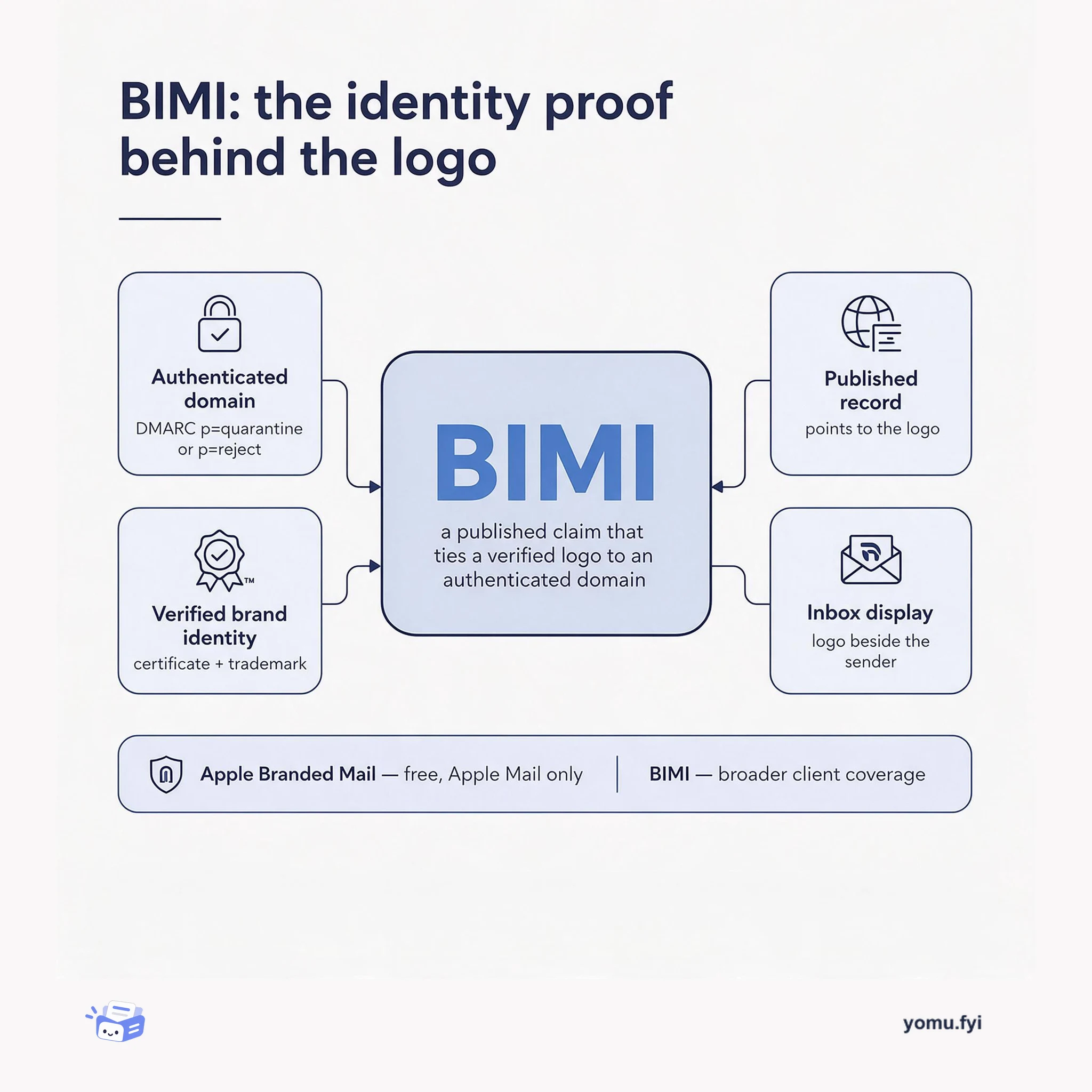
BIMI is a DNS-published claim that ties a verified brand logo to an authenticated domain, so mailbox providers can display it. Here is what each part of that claim requires.
Loading…
Topic
4 posts about Digital Identity. Every summary links to the original.
See the idea
BIMI is a DNS-published claim that ties a verified brand logo to an authenticated domain, so mailbox providers can display it. Here is what each part of that claim requires.
The Good Stuff
Paid picks we use ourselves. Links carry a referral code — a subscription through one earns us a commission at no extra cost to you.
Newest first
Uber integrated Apple’s Verify with Wallet API into its cross-app Identity Verification Platform to support government-backed digital IDs across driver onboarding, age-gated ordering, and car rental use cases. The central challenge was allowing each use case to request only its Apple-approved identity data while operating through a scalable, platform-agnostic service rather than separate integrations. Server-side configurations map Uber identity models to PassKit objects, set one-time or persistent storage intent, and validate responses using HPKE decryption, CBOR payloads, session transcripts, MSOs, device signatures, and issuer certificate chains under ISO/IEC 18013-5. A registry of IACA certificates, sourced from jurisdictional portals and AAMVA’s VICAL, supports overlapping certificate rotations, while the platform is intended to accommodate new document types and cross-platform digital credential integrations.
This installment in a Devday23 presentation series addresses how to move an enterprise-ready SaaS application beyond its MVP. It focuses on the functionality needed to help an application stand out to enterprise customers, including user provisioning and automation that can scale. The stated goal is to support growth from a working MVP toward enterprise adoption. Aaron Parecki shared material on Okta Workflows, provisioning, SaaS application maturity, and SCIM, with links to a SCIM developer video and Workflow Connector Builder tutorials. The broader series also points to upcoming coverage of authentication mechanisms and deployment automation, positioning enterprise readiness as an ongoing progression rather than a single feature.
Moving a SaaS application from B2C or small-company B2B customers to enterprise customers raises questions about whether enterprise buyers have different expectations. This installment of the Devday23 enterprise-ready presentation series focuses on what enterprises look for when selecting SaaS applications, with particular attention to identity and how customers would use the application. The WIC Devday 23 virtual conference addressed the topic through a presentation by Jon Lehtinen, director for “Okta on Okta” products at Okta. The broader series also covers enterprise readiness, authentication considerations, user management, authentication mechanisms, building an enterprise-ready MVP SaaS app, and taking that app beyond MVP, while the supplied text does not provide the presentation’s specific answers or conclusions.
Okta’s Workforce Developer Advocacy Team has launched a monthly Workforce Identity Developer Podcast for education about identity and development for customers using Okta as their identity provider. The first highlighted episodes cover Workforce Identity, security history, phishing-resistant MFA, and the relative benefits and drawbacks of WebAuthN and Passkeys; another compares OAuth application integrations with older SSWS tokens. A further episode discusses building SaaS for enterprise customers, including the “Enterprise-Ready MVP,” broadening “Okta Developers” to people building code for Okta customers, and extreme enterprise use cases. Audio is available on Casted, while new content and feedback are supported through social channels, YouTube, and comments on the developer forum.
The best engineering reads, once a week.


