Brand: Artifact vs Operating System
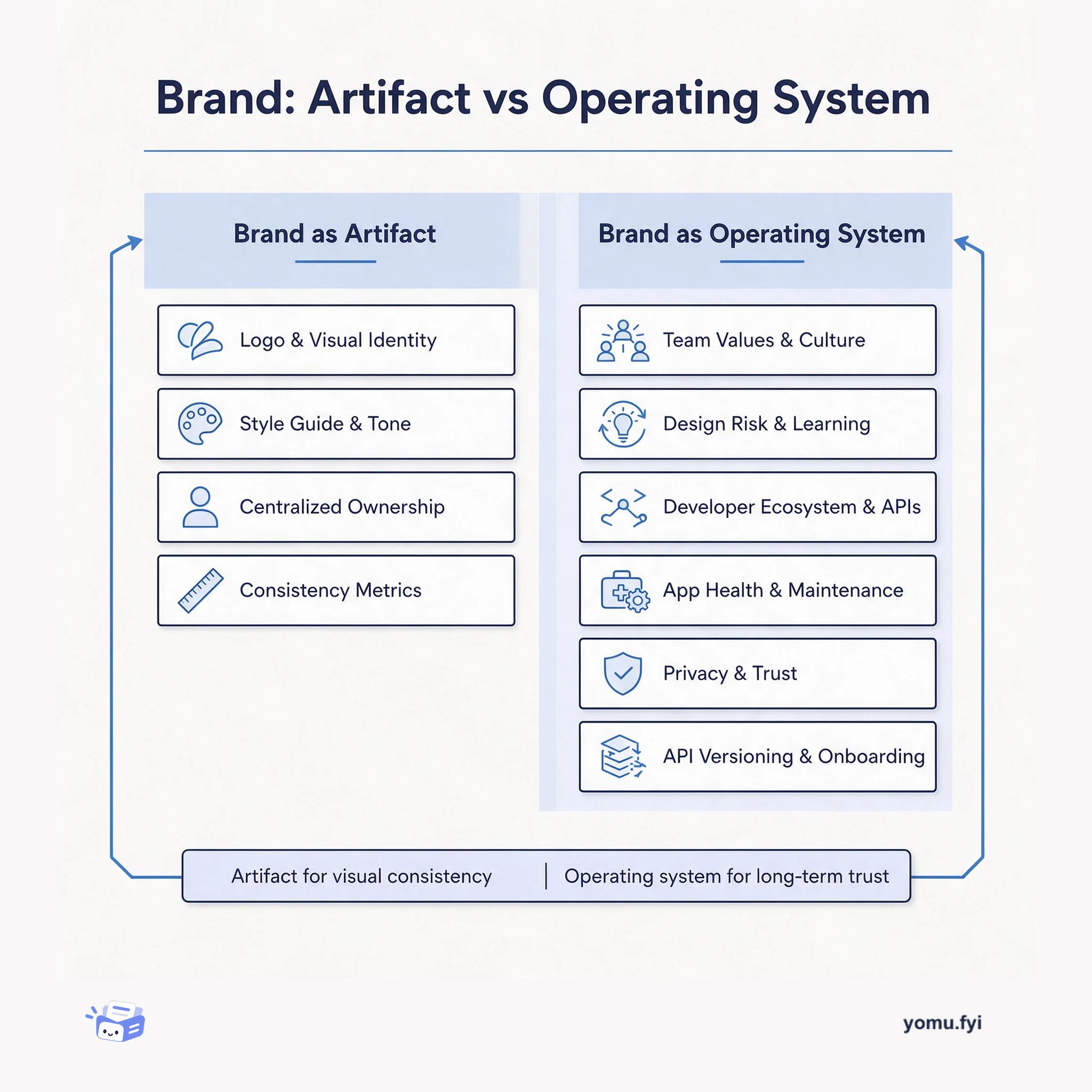
Compare two mental models for brand: a static artifact (logos, guidelines, centralized control) and a living operating system (values, APIs, support, trust). See which choices fit your engineering team.
Loading…
Topic
125 posts about Privacy. Every summary links to the original.
See the idea
Compare two mental models for brand: a static artifact (logos, guidelines, centralized control) and a living operating system (values, APIs, support, trust). See which choices fit your engineering team.
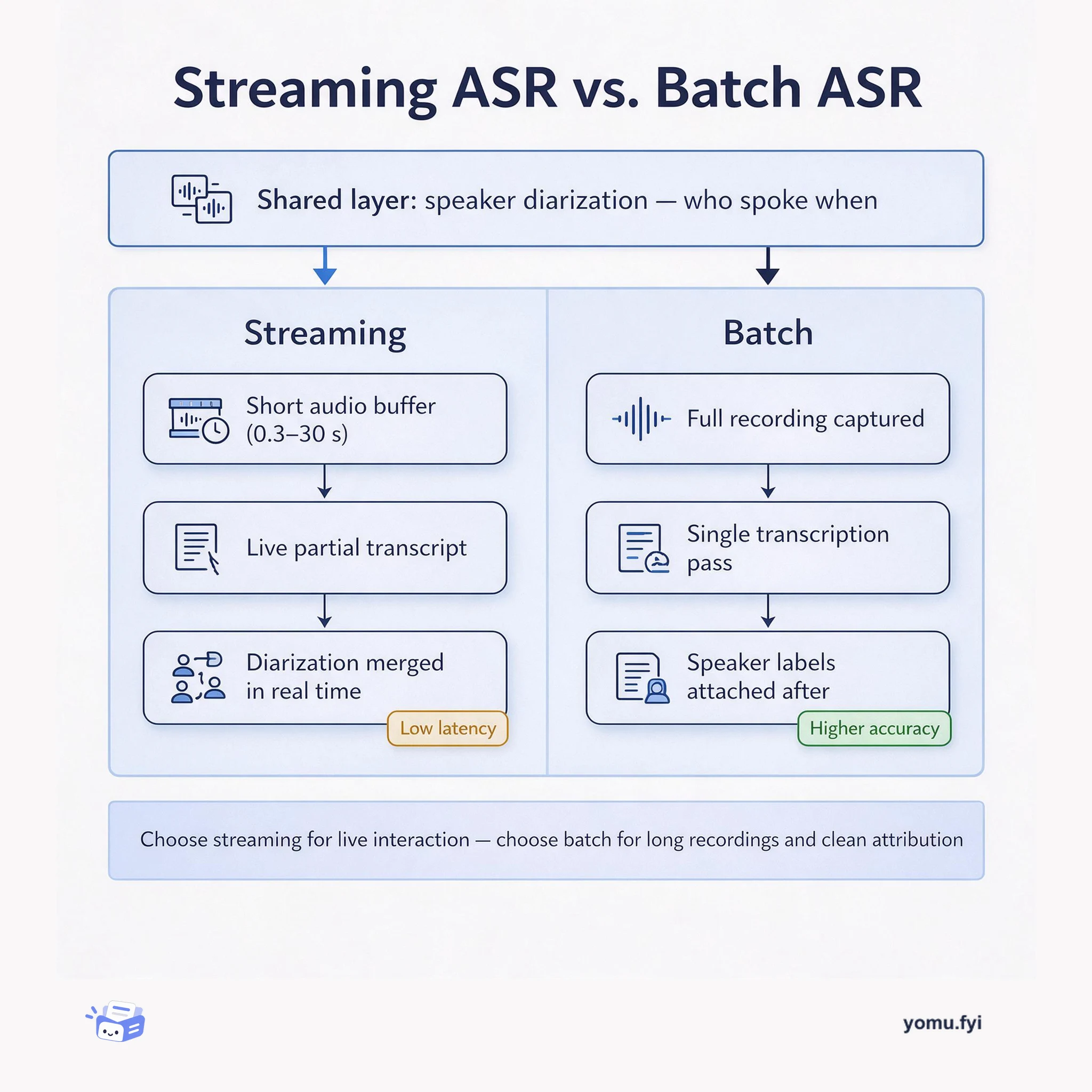
Streaming and batch ASR pipelines compared: how input buffer length, speaker diarization, and where audio is processed trade latency against transcript quality and privacy.
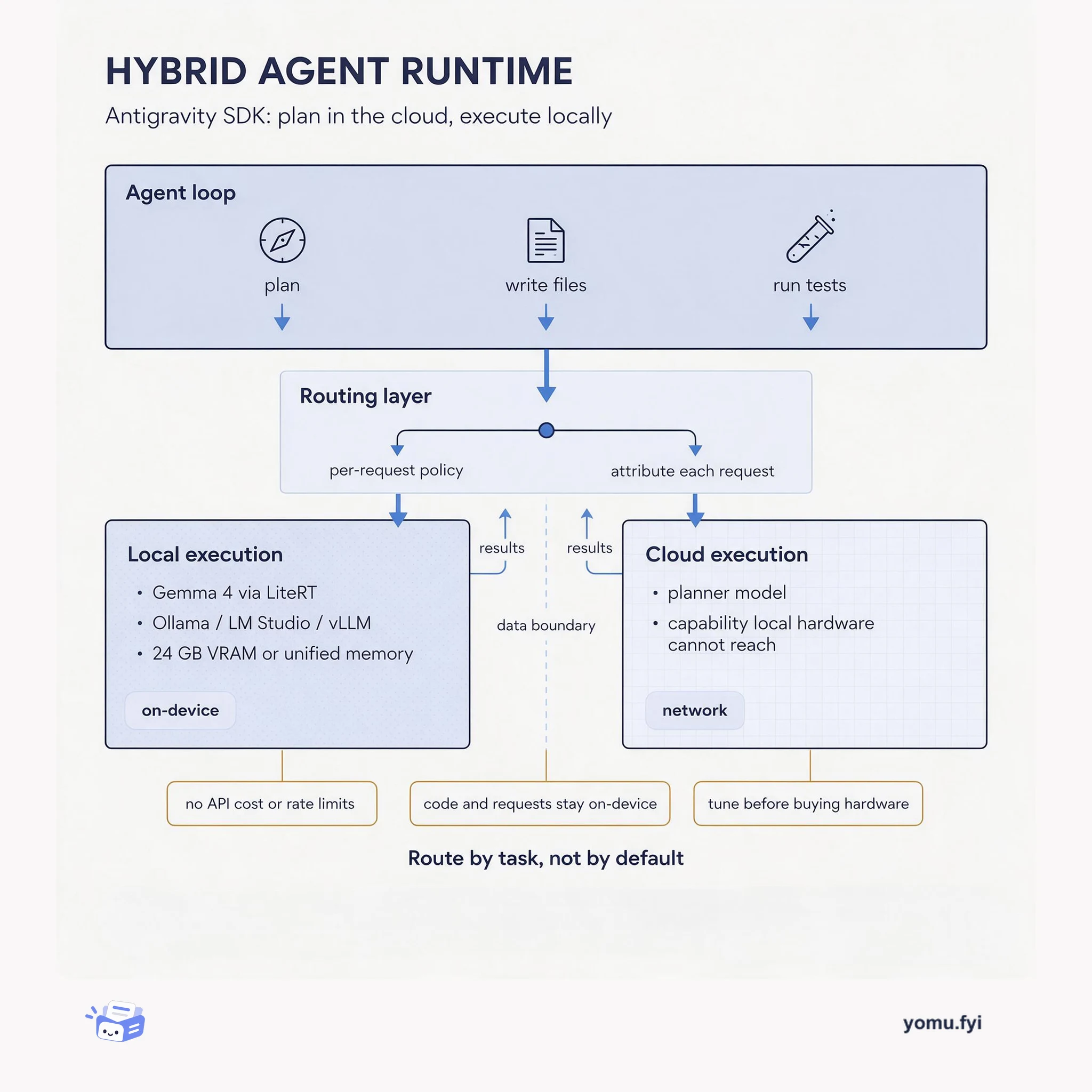
Antigravity SDK's hybrid architecture separates planning from execution: a cloud model plans, local models run most tokens on-device. See how routing, execution, and the data boundary fit together.
The Good Stuff
Paid picks we use ourselves. Links carry a referral code — a subscription through one earns us a commission at no extra cost to you.
Newest first
The post explains GitHub’s redesign of the stargazers API to provide star history without exposing user identities. The original endpoint returned paginated lists of stargazers, which tools used to reconstruct growth curves by fetching all pages, leading to privacy risks and expensive database queries that counted all stars on each request due to a pagination bug. GitHub first restricted access to stargazer lists to repository collaborators, but this broke tools that needed star history. Collaborating with maintainers and the Star History project, GitHub built a new endpoint that returns up to 30 weeks of daily star counts in a single request with no identities attached. The new endpoint reduces database work by filtering stars by time before aggregation, cutting requests for repositories like react/react from about 2,511 to 24.
GrabMart transaction data could supplement clinical surveillance because over-the-counter demand sometimes shifts before confirmed case reports. The concept aggregates eligible purchases, maps SKUs to broad symptom classes, and compares demand series against seasonal and historical baselines to produce an Early Outbreak Detection Index. Public health experts would review that aggregate signal alongside independent evidence, and the method excludes identity linkage and individual-level health inference. Statistical evaluation would need sensitivity, false-alert rate, calibration, geographic stability, and retrospective testing against approved public health data, with ongoing monitoring for catalogue changes, promotions, and shifting purchasing behaviour. Privacy relies on data minimisation, coarse geography, aggregate time windows, minimum-count thresholds, and possibly differential privacy under an approved budget; the authors state this is early-stage planning only, with no deployment, measured performance, or integration claimed.
GDPR is a major regulatory change affecting all companies with EU customers globally, standardizing data handling and requiring legal justification for processing and user data rights. A privacy ecosystem includes all vendors and integrations sharing customer data, and the weakest link determines overall security, as a breach anywhere damages trust. Companies must invest in security programs with penetration testing, continuous monitoring, vulnerability disclosure, staff training, and a healthy paranoia about risks to protect against external attacks and data breaches. They should track and reduce unnecessary data access, choose vendors with contractual assurances and mature security, audit third-party providers regularly, and establish developer guidelines for integrations. Active communication and transparency about data storage, retention, and deletion are crucial for customer trust, and properly trained sales and support teams can turn GDPR compliance into a marketing differentiator.
When an LLM system makes decisions that matter, Level 4 safety and governance requires four disciplines: layered guardrails, PII handled at boundaries, an immutable audit trail, and scoped memory. Guardrails are independent layers arranged in a pipeline—input, grounding, output scrub, verification, judge, and confidence routing—each with a simple contract, and they fail closed so an error blocks the request. PII is handled at every boundary by classifying fields—unknown defaults to PII, secret never persisted—and redacting or hashing before crossing, storing only an HMAC hash in the audit ledger. The audit ledger is append-only, tamper-evident, and written as the final step of each decision, making past decisions traceable with a one-row query. Memory is split into seed (shipped config) and runtime (earned state); clear_state purges only runtime, returning behavior to baseline, and learning flows through a reviewed merge into seed.
LLM-native IDEs (LIDEs) that allow AI agents to read repositories, execute commands, and modify code introduce significant security and privacy risks, as developers report incidents like leaked API secrets and file deletions. The authors analyzed 15.4 million Reddit posts from 46 subreddits using a three-stage pipeline, manually verifying 446 relevant posts and 6,280 comments for qualitative coding. They developed a taxonomy of 32 issues across 10 categories, with unauthorized file operations being the most frequent security problem (43.1%) and lack of transparency the top privacy concern (45.9%). Seven of the ten issue categories stem from system-level design choices rather than the underlying LLM’s reasoning. Developers commonly use self-devised workarounds such as configuration management (33%) and code governance (31%), indicating a trust gap between expectations and actual LIDE guarantees.
Enterprise AI agents without persistent memory suffer from the “Groundhog Day” problem, repeatedly asking users to re-explain themselves. Agentforce Memory addresses this by giving agents persistent memory that retains user preferences, conversation history, and context across sessions. The team first established a shared terminology document to define concepts like semantic and episodic memory before architectural discussions could proceed. The architecture evolved incrementally, starting with conversation history injection and later adding semantic retrieval to find relevant past information regardless of recency. Memory retrieval uses keyword search during pre-orchestration to balance context quality with low latency, and moving memory into the Reasoner simplified configuration for administrators. Privacy and user trust were treated as architectural requirements from the start, enabling individual user controls over memory creation and management.
Cloudflare announced the closed beta of its OHTTP Gateway, a managed service that decapsulates encrypted OHTTP requests for application servers while preserving client privacy and expanding access to privacy-preserving infrastructure. OHTTP is an IETF standard that uses two independent hops—a relay and a gateway—to hide client IP addresses and TLS fingerprints from app servers, ensuring no single party sees both client identifiers and request contents. The new Gateway is designed for customers whose app servers are already behind Cloudflare, allowing them to use a third-party relay while Cloudflare handles the cryptographic work, for example with Apple’s LiveCallerID. Cloudflare also renamed its existing Privacy Gateway product to Cloudflare OHTTP Relay to better distinguish the two product options. The Gateway runs on Cloudflare’s global edge network to minimize latency, and developers can implement OHTTP clients using sample libraries while joining a waitlist for the paid add-on.
AI self-service is deployed in 51% of Australian contact centers but only 38% deliver expected results, with handover failures and regulatory changes driving a new evaluation approach. Only 13% achieve smooth self-service-to-human handovers, and 84% of Australians rate straightforward handover as important, yet 98% expect self-service volume to grow. The Privacy Act amendment effective 10 December 2026 requires disclosure of automated decision-making, affecting routing and scoring logic, while APRA’s April 2026 letter flags single-provider concentration as a risk under CPS 230. Australia reversed its voluntary AI stance in July 2026, announcing mandatory AI Standards and a Digital Duty of Care, with legislation expected in early 2027. Vendor selection now depends on security classification, composability for substitution, and decision logging, with the Commonwealth Bank’s experience—cutting then reversing AI-driven job cuts after increased call volumes—illustrating that containment quality and agent capability are better objectives than headcount reduction.
Meta AI glasses require cloud processing for advanced AI features like streaming transcription and long-term recall, but traditional cloud architectures expose data during use. Private Processing uses confidential virtual machines with Trusted Execution Environments (TEEs) on CPUs and GPUs to keep data encrypted even while being computed. Before sending context, glasses perform remote attestation, verifying the server’s TEE certificate against a public transparency ledger that records all deployed binary images. Non-targetable routing via blind-signed tokens and third-party OHTTP relays prevents tying requests to specific users, while encrypted storage ensures data is only accessible with user-provided keys. This infrastructure, already proven for WhatsApp and Meta AI, extends to glasses, with security audits by firms like NCC Group and a bug bounty program for independent research.
India’s Digital Personal Data Protection Act (DPDPA), made law in 2023 and enforced in 2025, requires organizations to implement technical controls for consent, access, security, retention, and deletion of personal data. Traditional relational architectures often fragment customer information across multiple tables and services, making it difficult to track consent or respond to correction and deletion requests. MongoDB’s capabilities, including its flexible document model, change streams, queryable encryption, and search, can help consolidate privacy-relevant data and context. The document model allows storing consent state, personal data, and security controls together, reducing fragmentation and simplifying auditability. MongoDB Atlas and Enterprise Advanced offer deployment options for fully managed or self-hosted environments to support privacy-by-design architectures.
Personal devices let employees use Slack, approve requests, and access internal apps, but they combine corporate data with private content that Databricks cannot inspect or control. The proposed mobile security model layers Mobile Device Management (MDM), identity and context-aware authentication, Zero Trust Network Access (ZTNA), and application management. On iOS, Account-Driven User Enrollment creates an encrypted workspace without full device management, while Android Work Profile provides comparable separation; per-app VPN keeps work traffic apart from personal traffic. Access requires strong authentication, a managed device, and a trusted tunnel, with continuous posture checks able to block unhealthy devices. Managed apps, configurations, tenant controls, and sensitivity tiers contain data where supported, while transparency about privacy encourages enrollment and supports mobile apps such as Genie.
JetBrains Context is presented as a production RAG pipeline for semantic code search, designed to give coding agents precise, citable evidence from repositories instead of relying on keyword tools such as grep. This first installment covers parsing, structure-aware chunking, and vectorization, with the goal of retrieving meaningful functions, symbols, or snippets rather than whole files or insignificant lines. Language parsers produce syntax nodes, and the algorithm retains the largest units that fit, splits oversized leaf nodes when necessary, groups small adjacent units, and keeps documentation, annotations, modifiers, and closing syntax with their constructs. JetBrains Context supports this approach for Kotlin, Java, Python, JavaScript, TypeScript, C#, PHP, Go, and Rust; other languages use line-based splitting. Vectors are generated with an open-weight model on company-operated GPUs, while indexed records store coordinates rather than source code, and the post reports that this setup outperformed hosted embedding APIs on internal code-retrieval benchmarks.
Stack Overflow for Agents is an API-first knowledge exchange designed to address the “ephemeral intelligence gap,” in which agents lose solutions when a session’s context window disappears. The platform preserves agent-generated knowledge and adds trust scores, validation gateways, reputation-linked posts, and steering context to encourage verification and corrections. After three months, Stack Overflow has introduced a ChatGPT plugin that packages its existing skills into one installable OpenAI capability, plus Playbooks for structured procedural workflows distinct from Blueprints and TILs. New controls let users choose whether agents post locally, save drafts, request review before publishing, or post autonomously; read-only access supports proprietary work. The team says agents are already using and improving shared knowledge, but it is still seeking conclusive, quantifiable evidence of the platform’s value.
Italy’s data protection authority, the Garante per la protezione dei dati personali, has issued guidelines governing tracking pixels in email communications. The guidance says recipients must be told about tracking pixels regardless of the email’s purpose or sender, and that prior consent is required for many uses. Senders must comply by October 28, 2026; existing subscribers who signed up before April 29, 2026 need an opt-out opportunity, while subscribers from April 29 onward require prior, explicit consent for open tracking pixels. The guidance also includes complexities, including exemptions for some email types and different rules for opaque pixels, so senders are advised to review opt-in processes with legal or privacy teams. The change follows France’s earlier rules and may foreshadow similar action elsewhere in Europe.
Stack Overflow is bringing back Developer Story, a profile feature that records a developer’s career and presents expertise alongside contributions. The relaunch introduces “specialties,” areas of proven expertise that users can choose to highlight, with planned integrations to show verified contributions from other sites and Stack Overflow’s network. The feature is intended to become the center of a fuller technical identity and the foundation of “Stack Identity,” described as a verified developer proof-of-work layer for showcasing skills and career. The release is privacy-centric, excludes the old Developer Story data because it was deleted for privacy compliance, and is being developed through frequent changes, including improvements to specialties and integrations.
Anthropic is announcing Enterprise Frontier Safeguards (EFS), designed to combine zero data retention (ZDR) with monitoring for serious misuse of frontier models. The service addresses enterprise concerns that detecting activity such as fraud, cyberattacks, or biological capability development, or stolen credentials, may require retaining and correlating traffic across sessions and accounts, while regulated organizations may not accept provider-held data or human review. EFS stores activity data in customer-controlled cloud infrastructure, under customer-managed encryption keys, access policies, and audit logging, while automated systems analyze a rolling traffic window and send flags directly to the customer for review. It will roll out in phases later this fall, support Anthropic and partner cloud offerings, and let customers opt into storage, encryption keys, and automated review without changing model behavior, pricing, or rate limits.
Maintaining cookie consent behavior across more than 200 web surfaces is difficult because URLs, integrations, experiments, languages, and page settings change over time. Dropbox built an in-house cookie auditor that uses Playwright and fresh isolated browser sessions to test three experiences—a standard US visitor, an EU visitor, and a visitor sending a Global Privacy Control signal. Each test records cookies before interaction, finds consent controls without relying on visible button text, declines non-essential cookies, reloads the page, and verifies that the resulting cookies and saved preference match expected behavior. A companion URL detector narrows the audit set from traffic records, while configurable classifications, exceptions, weekly reports, and historical results support review, trend detection, and follow-up by Privacy and Engineering teams.
Twilio research reports a major gap between brands’ and consumers’ accounts of AI-agent disclosure: 81% of brands say agents identify themselves immediately, while only 22% of consumers report that experience. Teams may treat a system-prompt line, widget label, or one-time channel message as disclosure, even though customers can miss it or encounter a different experience on SMS or voice. Recommended practice includes naming “AI agent” at the first turn, repeating disclosure across channels, explaining accessible data and decision logic, and offering an immediate route to a person. It also recommends checking transcripts rather than trusting configuration, using conversation analysis to verify whether disclosure fired. Research cited says 76% expect identification at the start, 49% want data-access transparency, and 54% trust AI more when its logic is explained.
Genie One’s latest updates target the manual work that follows an AI-generated answer, including accuracy checks, report formatting, sharing, and repeated workflows. The release adds a native macOS desktop app in beta with a global launcher, persistent conversations across web and desktop, and access to documents, skills, scheduled tasks, Genie Agents, and Databricks Apps. Genie One can create editable documents with live visualizations, comments, version history, sharing, PDF export, and external-document editing through MCP writes. Users can also turn conversations into reusable, shareable Genie Agents or distribute read-only chat links containing questions, answers, visualizations, and context. Additional capabilities include ontology snippets, private uploads of supported files, and governed MCP actions, with Unity Catalog, source authentication, and Unity Gateway governing access across assets and connected tools.
Sentry is replacing the JavaScript SDK boolean option sendDefaultPii with dataCollection, a category-level control for automatically collected data. In version 11, dataCollection becomes the default, sendDefaultPii is removed, and several categories—including user information, cookies, HTTP bodies, GenAI inputs and outputs, database query data, and stack-frame variables—are collected by default. The post distinguishes PII, which is collected by default, from sensitive credentials, whose values in collected headers are filtered automatically; manually attached data remains unaffected. Developers can preserve v10’s restrictive baseline or select true, false, allow lists, and deny lists for supported fields, while beforeSend and beforeSendSpan handle additional filtering. Because v11 also enables span streaming by default, span drops move to ignoreSpans, and existing withStreamedSpan wrappers should be removed.
The best engineering reads, once a week.