NVIDIA
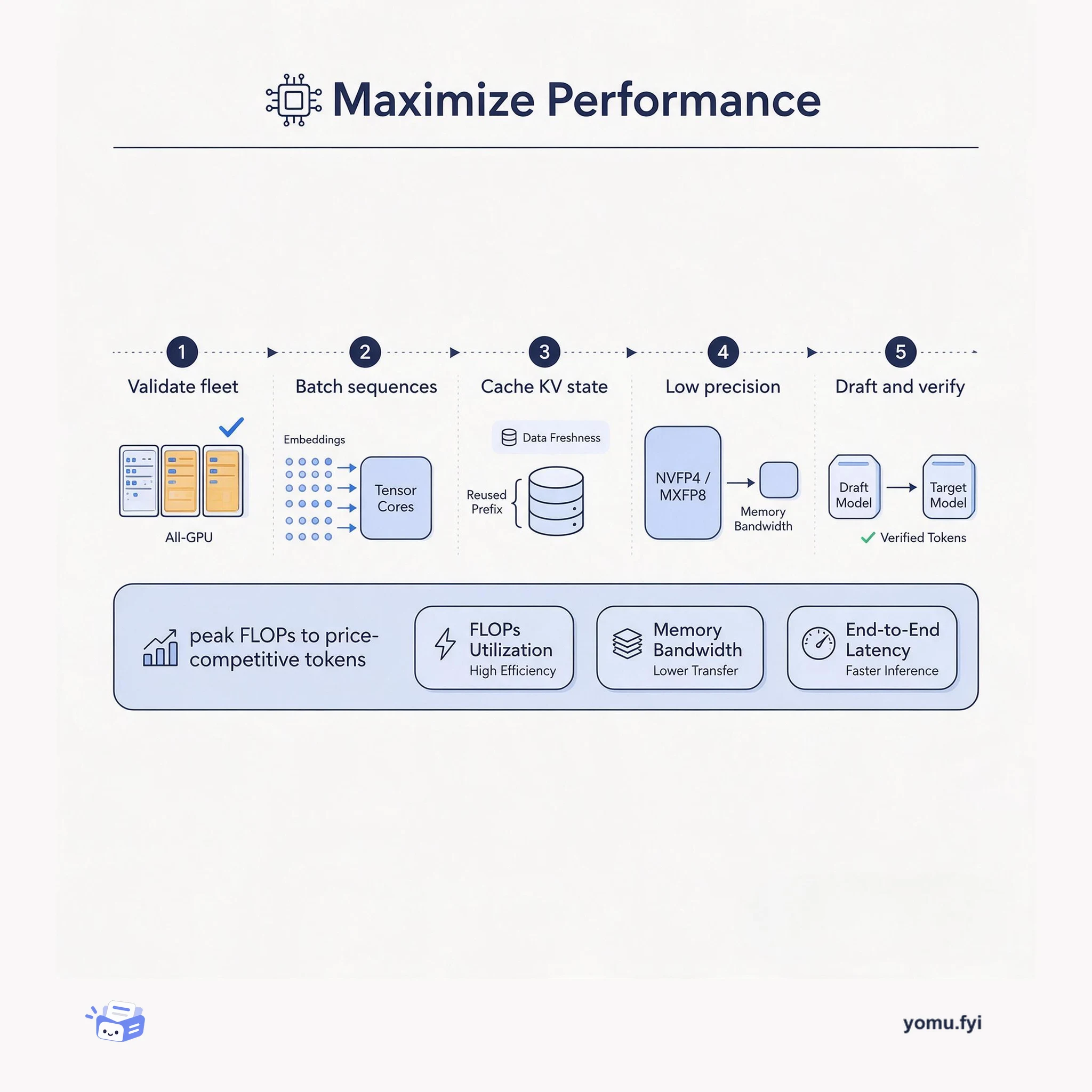
Meta launches Muse Spark Open, an 816B-parameter mixture-of-experts model with 42B active parameters and a 1M token context window, trained on NVIDIA GB300 NVL72 for agentic coding workflows. It plans, acts, observes, and self-corrects across multistep tasks like multifile refactoring, using tool calls and subagent coordination while holding an entire project in context without breaking it into pieces. Its 1.8B perception encoder natively processes interleaved text, images, video frames, and audio in a single pass. On GB300 NVL72 with speculative decoding, it achieves over 50K tokens per second per GPU and over 600 tokens per second per user. Sparse MoE routing activates only 42B parameters per token, and NVFP4 quantization reduces memory footprint for larger KV cache. The model is available via Hugging Face and NVIDIA NIM, with support from SGLang, vLLM, and TensorRT LLM for serving, and fine-tuning through NeMo AutoModel and Megatron Bridge.
 Red Hat
Red Hat AI released optimized FP8 and DSpark speculative decoding checkpoints for the Nemotron 3.5 Super VL 120B multimodal mixture-of-experts (MoE) model. These checkpoints are designed to double inference throughput on NVIDIA Hopper GPUs without compromising output accuracy. FP8 quantization uses LLM Compressor to reduce model weights and activations from BF16 to 8-bit floating point, cutting memory and storage requirements in half while preserving quality. DSpark speculative decoding proposes 8-16 tokens in a single forward pass and uses a lightweight Markov head to introduce dependencies between speculated tokens. Benchmarks on HumanEval, math_reasoning, and RAG datasets show that each technique delivers meaningful gains individually and combining them outperforms any intermediate configuration at every concurrency level.
NVIDIA
NVIDIA released Nemotron 3.5 Super VL, an open 120B-parameter multimodal model for specialized enterprise agents. Its mixture-of-experts architecture activates 12B parameters per token, balancing capacity and inference efficiency. The model combines reasoning, instruction following, tool use, and understanding of text, images, documents, and video for tasks including coding, web research, document intelligence, and cybersecurity. On a single GPU, it achieves up to 5x higher throughput for agentic tasks than competing open models, and it scores higher than the larger Nemotron 3 Ultra on Hermes Bench and LangChain evaluations. Early adopters report cost reductions of 40x for credit processing and 10x lower latency for receipt parsing, and organizations can post-train the model with NVIDIA NeMo for domain-specific workflows and deploy it with NVIDIA NIM and Dynamo, which serves up to 8x more users with 85% lower first-token latency.
 Hugging Face
Meta released Muse Spark Open, an open-weight multimodal mixture-of-experts model with approximately 816 billion total parameters and around 42 billion active per token. It processes text, images, audio, and video inputs while generating text output, supporting a context window of up to one million tokens. The model uses 256 experts per MoE layer with 8 selected per token, and the BF16 checkpoint requires about 1.5 TB of storage. Meta trained Muse Spark Open for agentic coding tasks including reading codebases, writing and debugging code, and calling tools. The post provides recipes for running the model using transformers, llama.cpp, vLLM, and SGLang, as well as fine-tuning with LoRA on 64 H100 GPUs.