Amazon RDS is a managed relational database layer. This architecture map shows where the provider boundary sits, what your app still owns, and how to size it with workload evidence rather than defaults.
Amazon RDS is a managed relational database layer, but the architectural question is where the managed boundary sits. The application still owns its schema, query patterns, connection lifecycle, and how state is split between RDS and document stores; cost and access accountability remain workload-level concerns. DBArena's hosted Postgres benchmarks show why sizing should be checked at matched vCPU counts using transactions per minute, price-performance, and p95 latency in cache-fit and cache-exceeding runs. If failover and pooling are requirements, compare the managed boundary with a self-managed Postgres stack like Multigres, which treats failover as a consensus problem across three AZs.
FAQ
What should my application still own when Amazon RDS manages the database?
Your application still owns the schema, query patterns, connection lifecycle, and how state is split across services. In the boAt example, encrypted user metrics and preferences live in Amazon RDS and Amazon DocumentDB while Lambda and Bedrock generate coaching plans. RDS changes who runs the database layer, not those application-level choices.
How should I size RDS instead of trusting default configurations?
Use workload evidence at the compute size you plan to run. DBArena compares hosted Postgres providers, including Amazon RDS, at matched vCPU counts with a TPC-C-derived workload, reporting transactions per minute, price-performance, and p95 latency for cache-fit and cache-exceeding scenarios. It publishes median results from repeated runs plus raw commands and configuration for reproducibility.
When should I compare RDS with a self-managed Postgres failover stack?
When failover and connection pooling are architectural requirements, a self-managed Postgres stack is one comparison point. Multigres runs three nodes across AZs, uses synchronous replication so acknowledged writes survive a primary failure, and includes built-in pooling. The trade-off is operational scope: its alpha is not covered by the SLA and lacks Realtime and point-in-time recovery.
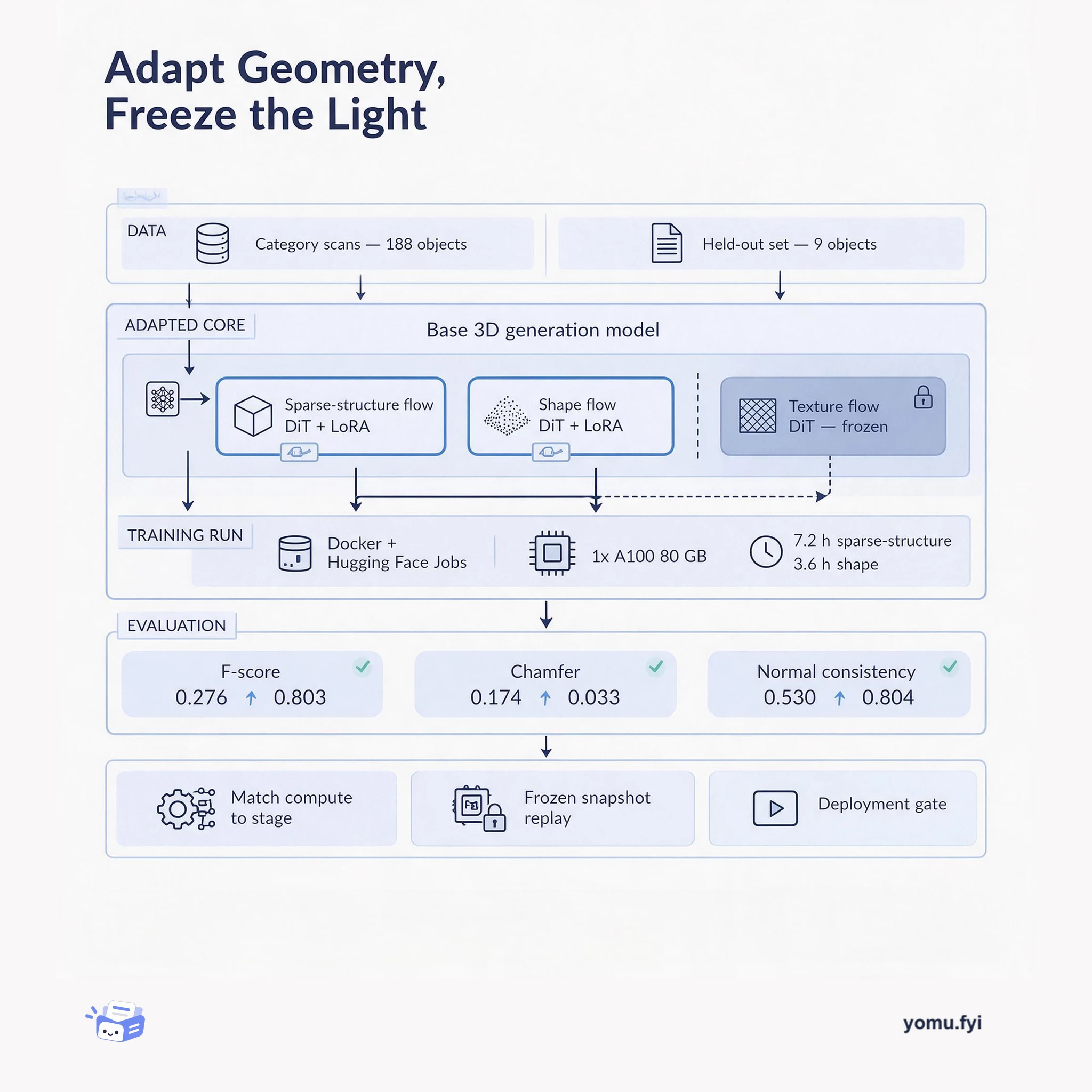
A layered architecture view of fine-tuning a 3D generation model: which flow DiT branches get LoRA adapters, which stay frozen, and how data, compute, and evaluation wrap the adapted core.
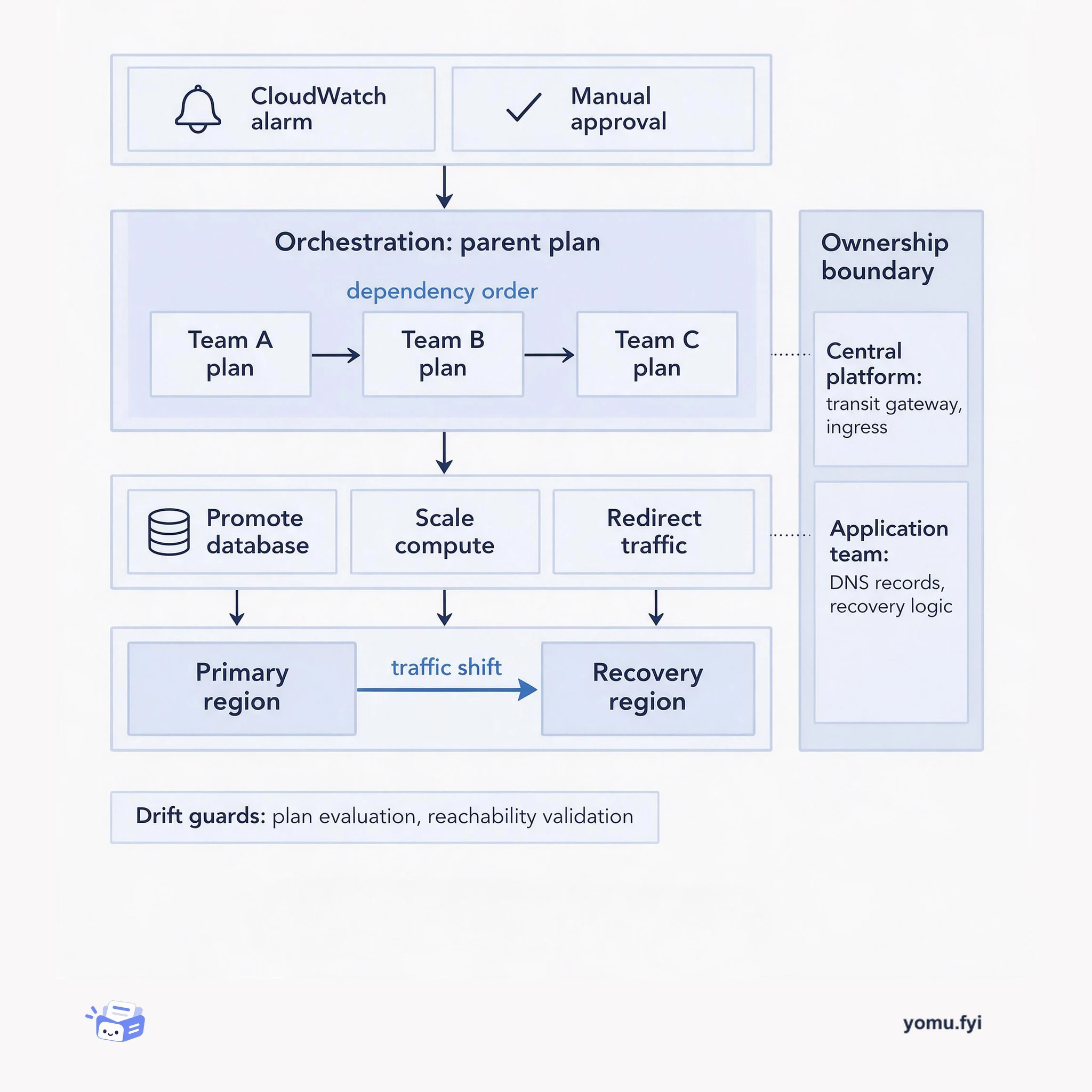
ARC Region Switch is a managed failover orchestrator that runs team-owned plans in dependency order. This diagram maps its trigger, orchestration, execution, and region layers and the ownership boundary.
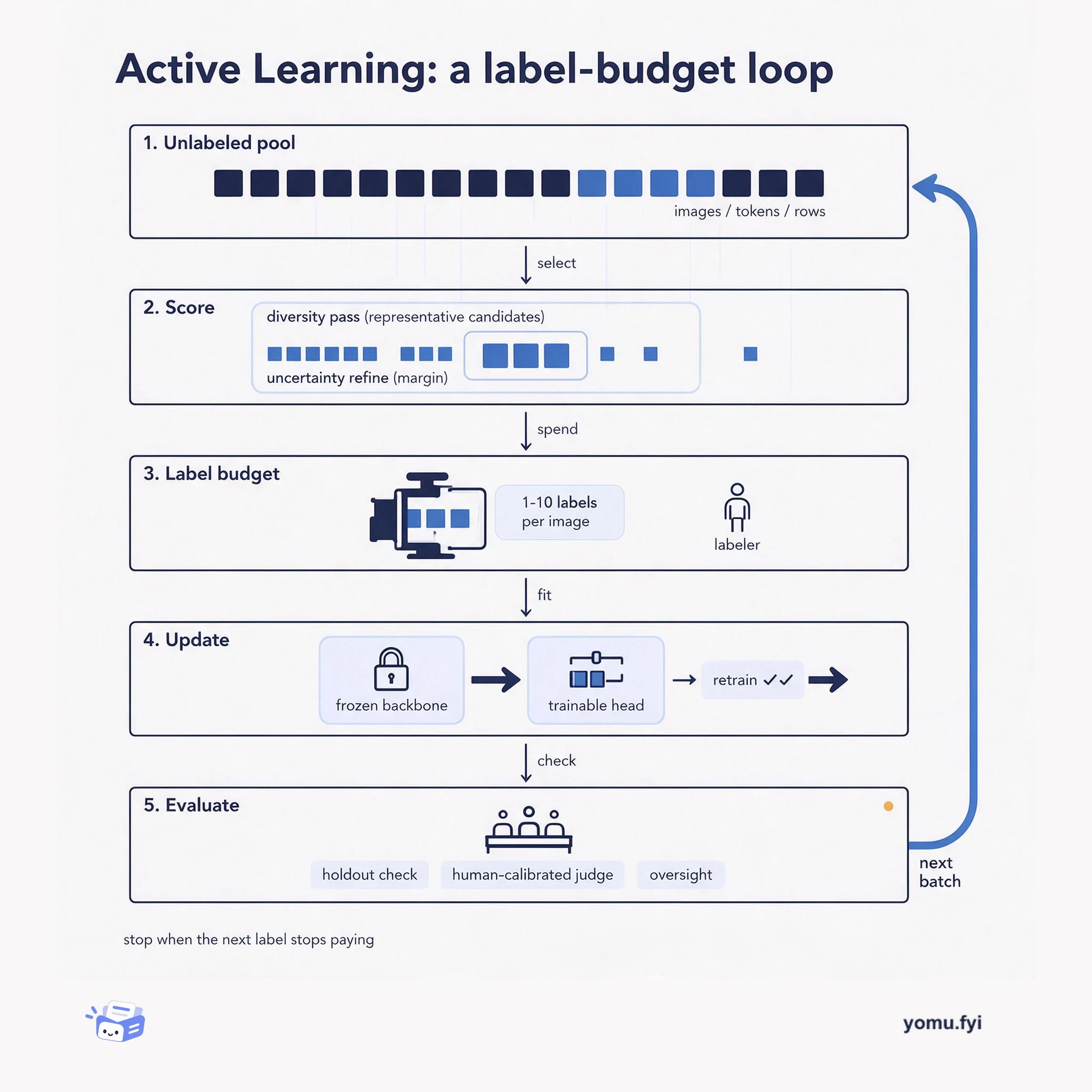
Active learning is a loop that spends a fixed labeling budget on the samples most worth annotating. This diagram maps its stages — pool, score, label, train, evaluate — and the return path that closes the cycle.
The Good Stuff
Paid picks we use ourselves. Links carry a referral code — a subscription through one earns us a commission at no extra cost to you.