Verified Is Not Trusted: A Five-Step Bot Accountability Loop
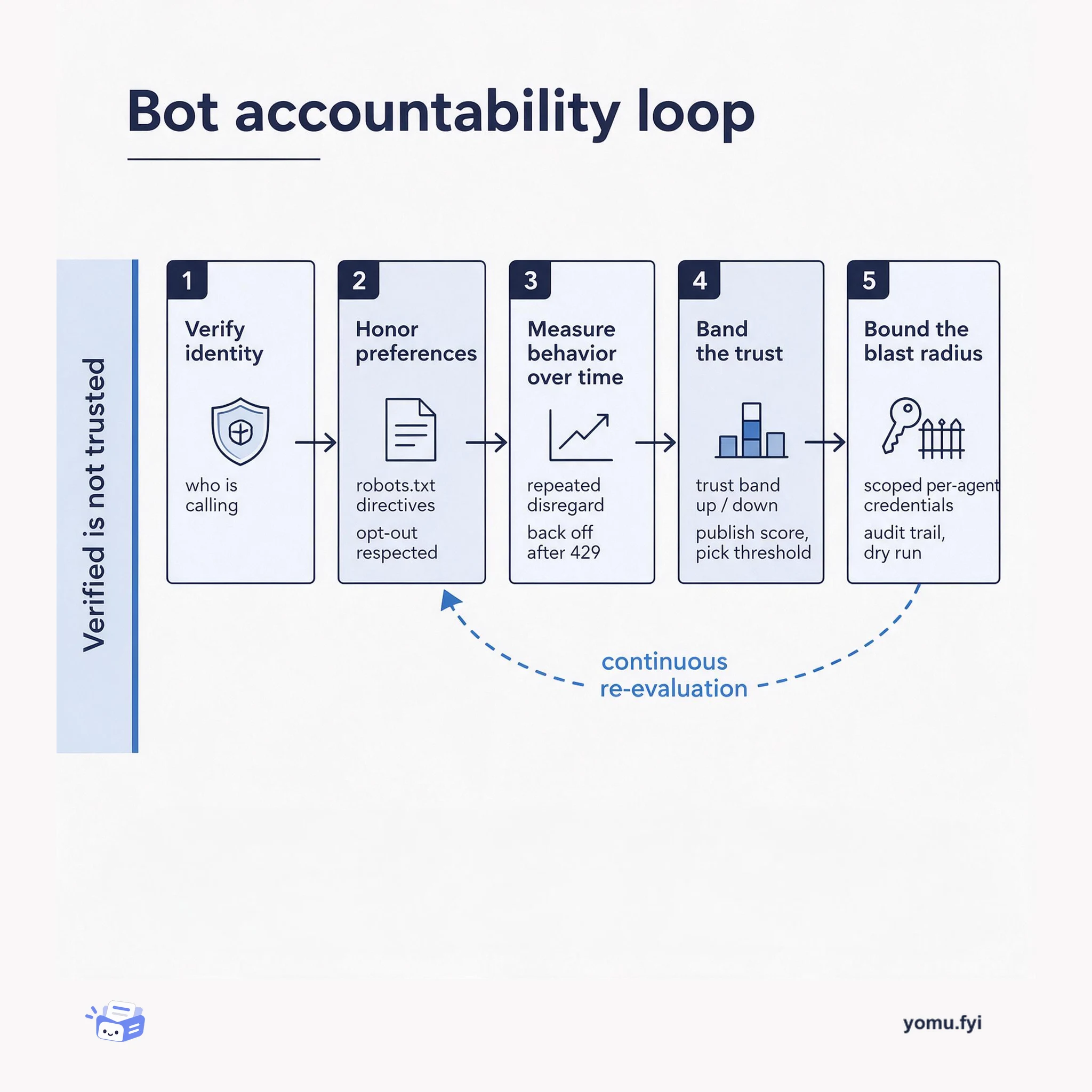
A five-step loop for treating bots as accountable actors: verify identity, honor opt-out preferences, measure sustained behavior, band trust, and bound blast radius.
A five-step path from fragmented payment silos to a canonical, governed record that AI agents can act on: model the payment, unify the copy, stream events, wrap writes in transactions, and scope agent authority.
Legacy payment stacks split logic across rails and across copies, so an agent acting on them sees stale or partial context. This explainer walks five checkpoints: decouple payment logic with a composable capability model and a canonical payment record; land operational writes in one governed store instead of CDC replicas; stream processor events in near real time; wrap multi-step money movement in multi-statement transactions with row-level concurrency; and scope what an agent may do through a unified identity layer with step-up checks. Each checkpoint names the outcome to verify before moving to the next.
A canonical payment model gives every payment one shared business vocabulary and identity across its lifecycle, accumulating context from validations, enrichments, and exceptions. New rails then extend that model rather than spawning another tightly coupled system, so agentic operations read consistent context instead of rail-specific fragments.
The LTAP approach removes the replication step entirely by landing operational writes in a single governed foundation, with a row-oriented engine for operational reads and a columnar engine for analytical scans over the same copy. That eliminates sync lag and the schema-change breakage that CDC copies introduce, so agents query current data without degrading transactional performance.
Use a unified identity layer that recognizes the agent, links it to the customer account, and scopes permissions per action, stepping up for high-risk changes and supporting one-click revocation. Signals like recent SIM swap data can inform that decision, but they should feed a holistic determination rather than stand alone.
The posts behind it
 Databricks · · Explainer
AI agents cannot compensate for stale data like humans, turning sync lags into machine-speed errors such as approving fraud. Traditional operational data stores (ODS) rely on CDC pipelines and separate copies, which add latency, break on schema changes, and remain ungoverned. LTAP (Lakehouse Transactional Analytical Processing) unifies storage so operational writes land directly in a single governed foundation, eliminating replication entirely. It uses two independent engines—a row-oriented engine for operational reads and a columnar engine for analytical scans—both accessing the same copy without duplication. This removes the sync step, reduces infrastructure complexity, and ensures agents always query current data without degrading transactional performance.
 MongoDB · · Explainer
Legacy payment architectures in financial institutions are fragmented, rigid, and deeply siloed, making adaptation to new payment rails and AI operations difficult. Banks can overcome this by adopting a composable business-capability architecture based on the BIAN standard, decoupling payment logic from tightly coupled systems. A canonical payment model gives each payment a common business vocabulary and identity throughout its lifecycle, accumulating context from validations, enrichments, and exceptions. MongoDB’s flexible document model, with search, vector search, change streams, and multi-document transactions, provides the unified data layer that enables these capabilities and agentic operations. For example, a cutoff-exception event allows an agent to read canonical context and recommend same-day processing with human review, and new rails like ACH are added by extending the canonical model rather than creating new silos.
 Auth0 · · Explainer
Agentic commerce identity authenticates autonomous AI agents acting for human shoppers, using open standards like Poppy and OAuth to verify the agent, the customer, and authorized actions. The post identifies four emerging channels: first-party embedded agents, third-party MCP connectors, UCP-based commerce protocols, and personal agents with their own browsers, each with different owners, protocols, and trust models. Each channel requires a unified identity layer that recognizes the agent, links customer accounts, scopes permissions, steps up for high-risk actions like address changes, and enables one-click revocation. Okta’s Auth0 supports open standards like Poppy and UCP to provide this layer, with Poppy standardizing personal agent recognition via cryptographic signatures and UCP’s Identity Linking carrying loyalty benefits across platforms. The commercial opportunity is significant, with Bain projecting $300-500 billion in US agentic commerce and Target reporting 2,000% year-over-year AI-driven traffic, and identity architecture determines how much of that spend a business captures.
 Twilio · · Tutorial
SIM swap attacks let attackers take over a phone number by convincing the carrier to link it to a new SIM, enabling them to receive all calls and SMS, including OTP codes for two-factor authentication. Twilio’s Lookup API provides real-time SIM swap data from mobile network operators, indicating if the SIM linked to a number has recently changed. This tutorial shows how to integrate SIM swap detection into Rust using the rustlio crate, with dependencies dotenvy, serde, serde_json, and tokio. The code loads environment variables from a .env file for Twilio Account SID and Auth Token, calls lookup_phone_data with DataPackage::SimSwap, and prints the last_sim_swap date (e.g., 2020-04-27T10:18:50Z), swapped_period (e.g., PT48H), and swapped_in_period boolean. The post notes legitimate SIM swaps happen for reasons like lost phones or porting numbers, so the data should always be used as part of a larger, more holistic determination rather than alone.
Databricks · · AnnouncementDatabricks made multi-statement transactions generally available on Delta Lake and Apache Iceberg tables, providing atomic guarantees for complex, multi-step workflows directly on the lakehouse. Previously, organizations had to rely on separate warehouse systems for these transactional guarantees, adding expensive data movement, duplicate copies, fragmented governance, and custom consistency workarounds. Row-level concurrency enables concurrent transactions to write to the same table as long as they do not update the same row, delivering significantly stronger performance than traditional cloud and legacy warehouses. The transactions are composable with stored procedures, temporary tables, and streaming tables, and they respect Unity Catalog attribute-based access controls including row-level security and column masking on both reads and writes. Fivetran used transactions to remove consistency-repair code for its slowly changing dimension updates using SCD Type 2, and Accolade processes roughly 1,700 transactions daily for claims and liabilities on the governed lakehouse.
Databricks · · AnnouncementStripe Data Pipeline now supports real-time sync to Postgres, with Databricks Lakebase as a supported destination. Stripe streams real-time API data into Lakebase and manages the sync end to end, eliminating the need for custom integrations with APIs or webhooks that require handlers, retry logic, and reconciliation processes for missed or out-of-order events. One Stripe account can feed two Databricks destinations: Unity Catalog for analytics and AI workloads, and Lakebase for applications. With real-time sync, payment, customer, subscription, refund, and payout data updates arrive in Lakebase within seconds, enabling applications to control product and feature access based on subscription status, keep billing and account details up to date without calling the Stripe API on every page load, and provide real-time financial visibility with dashboards showing daily sales volume, refunds, and payouts as they happen. The feature is available in public preview and free to get started.
More like this
A five-step loop for treating bots as accountable actors: verify identity, honor opt-out preferences, measure sustained behavior, band trust, and bound blast radius.
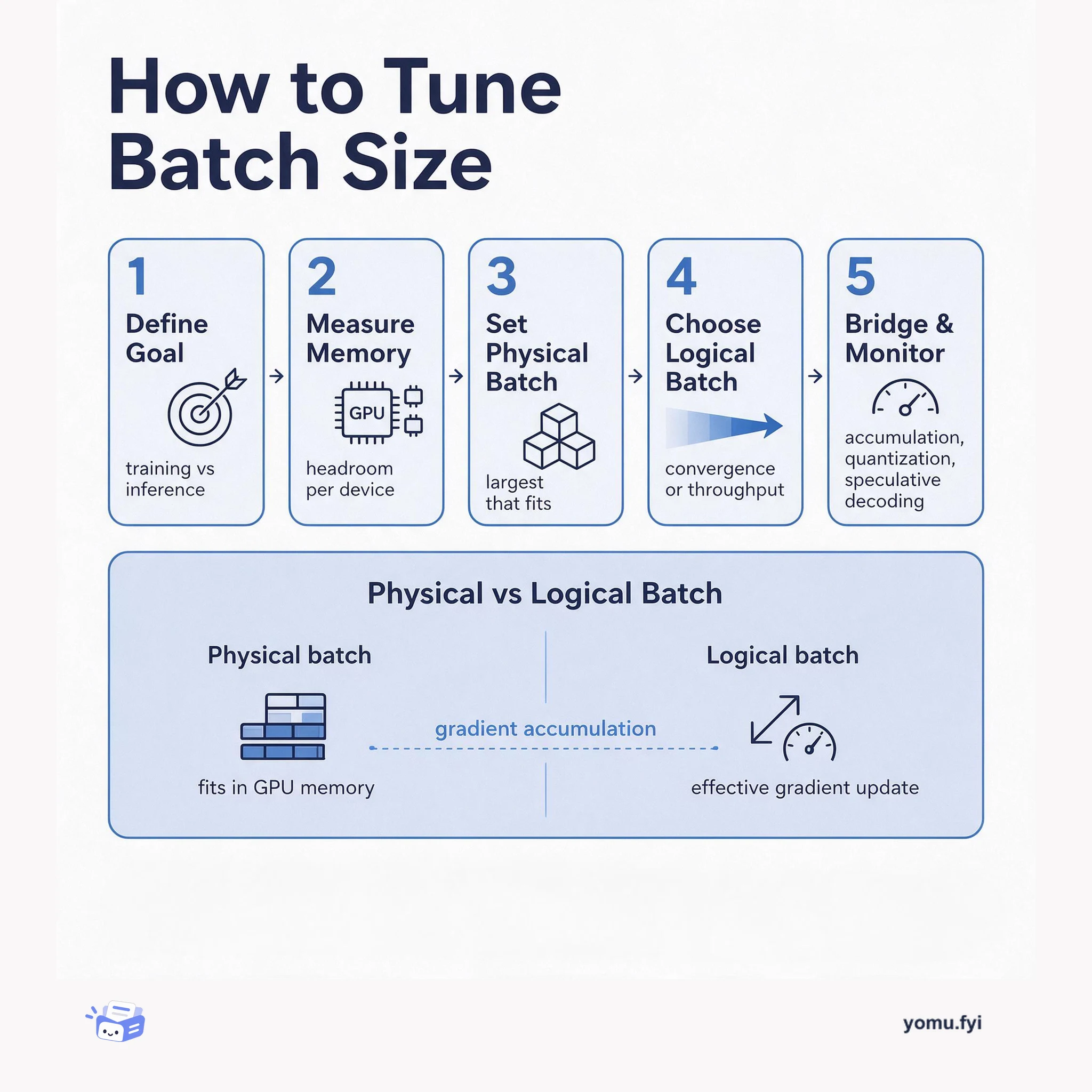
A practical workflow for choosing batch size in training and inference. Learn to separate physical memory limits from logical update size, then tune with gradient accumulation, quantization, and throughput monitoring.
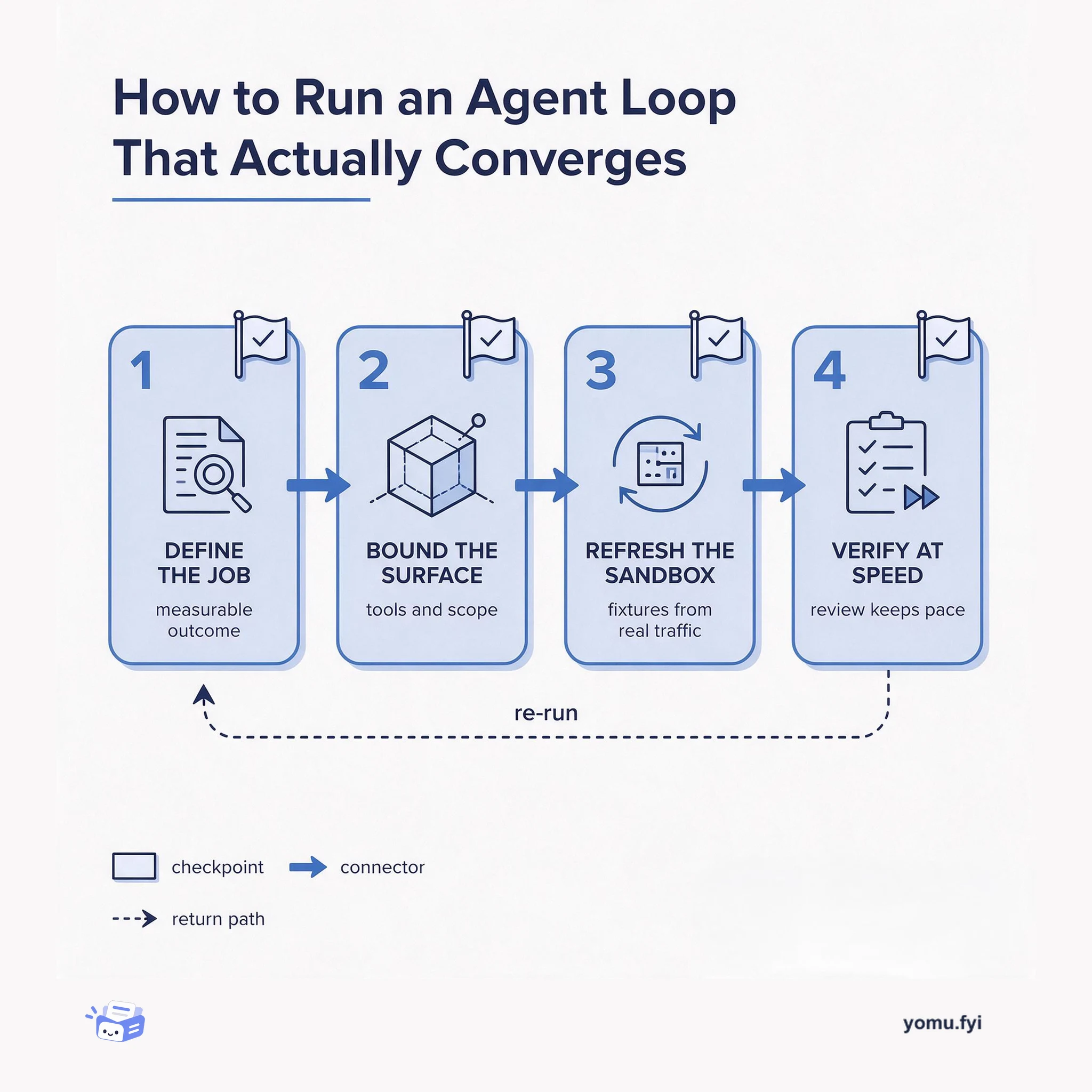
A four-checkpoint how-to for agent loops: name a measurable job, bound the tool surface, refresh sandbox fixtures from real traffic, and verify at agent speed.
The Good Stuff
Paid picks we use ourselves. Links carry a referral code — a subscription through one earns us a commission at no extra cost to you.
One useful email. Unsubscribe anytime.